BlackballingTimTebow

  • Subscribe to our RSS feed.
  • Twitter
  • StumbleUpon
  • Reddit
  • Facebook
  • Digg
Showing posts with label hebrew. Show all posts

Friday, 9 August 2013

Free Download of the Soncino Talmud in English Online at Halakhah.com: 25,000+ satisfied customers a month

Posted on 14:09 by Unknown
The Soncino Babylonian Talmud English translation is online - at a site that is not anti-Semitic or polemical.

Download the Talmud in English free at http://www.halakhah.com/ - 25,000+ downloads each month! 300,000+ each year.

TRANSLATED INTO ENGLISH WITH NOTES, GLOSSARY AND INDICES UNDER THE EDITORSHIP OF RABBI DR. I. EPSTEIN B.A., Ph.D., D. Lit. FOREWORD BY THE VERY REV. THE LATE CHIEF RABBI DR. J. H. HERTZ. INTRODUCTION BY THE EDITOR. THE SONCINO PRESS, LONDON.

Contains the Sedarim (orders, or major divisions) and tractates (books) of the Babylonian Talmud, as translated and organized for publication by the Soncino Press in 1935 - 1948.

The site has the entire Soncino Talmud edition in PDF format and  about 8050 pages on line in browser compatible HTML format, comprising 1460 files — of the Soncino Talmud.

Please add a link to the site http://www.halakhah.com on your web site or blog.

Highlights:
  • A newly formatted 2-column PDF version of the Soncino Talmud at Halakhah.com.
  • A Kindle edition of the Soncino Talmud available from Amazon.com: The Kindle Soncino Talmud in English


Read More
Posted in amazon, antiSemitism, bloggers, book club, books, dead-sea-scrolls, hebrew, history, Is-it-kosher?, israel, kindle, rabbis, religion, talmud, women, yeshiva | No comments

Sunday, 9 June 2013

Is Economist Nouriel Roubini Jewish?

Posted on 14:52 by Unknown
Yes, famous economist Nouriel Roubini is a Jew.

He was born in Istanbul, Turkey in 1959 to Iranian Jewish parents. He moved to Tehran, Iran, when he was two.  He is currently a U.S. citizen and speaks English, Farsi, Italian, and Hebrew.

Roubini spent one year in college at the Hebrew University of Jerusalem before moving to Italy and receiving his B.A., summa cum laude in Economics from the Bocconi University  in Milan in 1982.

He received his Ph.D. in international economics from Harvard University in 1988.

June 7, 2013 he predicted that gold prices will drop 30% to below $1000.
Read More
Posted in are-they-jewish?, hebrew, israel, money | No comments

Sunday, 5 May 2013

Announcing a new Edition of Shoroshim by Reuven Brauner

Posted on 11:29 by Unknown
BIGGEST HEBREW VERB BOOK

Shoroshim by Reuven Brauner may be the most comprehensive list of Hebrew Verb roots ever published with close to 3300 entries. The verb roots are presented with definitions, synonyms and derivative meanings in thesaurus form, laid out in a clear, delightful and aesthetic manner.

SMART

More than a conventional dictionary or lexicon, Shoroshim links different Hebrew word roots and shows how they derive from a "common" root form, often not obvious at first glance.

CLEAR

Unlike ordinary dictionaries which are cluttered with permutations and combinations of grammatical forms for the same root, Shoroshim efficiently cuts right to the root.

Shoroshim provides easy guidelines to assist in the often complex and frustrating effort to determine a verb root.

DEEP

Shoroshim covers all periods in the development of the Hebrew language, from the Biblical period through modern Hebrew. Shoroshim includes a large number of obscure and obsolete roots, particularly helpful to the scholar and academic.

FUN AND EASY

Shoroshim is fun and easy to use, an indispensable quick reference source for all students and translators of Hebrew.

EXCLUSIVE AND FREE

Shoroshim is a seminal unique work, available only from Talmudic Books at Halakhah.com. Please visit to peruse and download the work.

Enjoy and B'Hatzlahah!

Talmudic Books for Kindle on the Talmud, Bible, Kabbalah and Prayer
The Kindle Edition of the Classic Soncino Talmud in English
Read More
Posted in books, hebrew, Talmudic Books | No comments

Wednesday, 1 May 2013

Is the author and spiritual seeker Paulo Coelho Jewish?

Posted on 16:39 by Unknown
No Paulo Coelho is not a Jew. He was brought up Catholic and attended a Jesuit school in Brazil. Coelho is not a big fan of any organized religion. He speaks with lyrical disdain and disparagement in his books about the wisdom and ritual of religions.

His current publication, Manuscript Found in Accra, is set in Jerusalem before a battle. The people in the book gather to ask about life so that they can learn enough to save "the soul of Jerusalem." The publisher tells us:
July 14, 1099. Jerusalem awaits the invasion of the crusaders who have surrounded the city’s gates. There, inside the ancient city’s walls, men and women of every age and every faith have gathered to hear the wise words of a mysterious man known only as the Copt. He has summoned the townspeople to address their fears with truth:

“Tomorrow, harmony will become discord. Joy will be replaced by grief. Peace will give way to war. . . . None of us can know what tomorrow will hold, because each day has its good and its bad moments. So, when you ask your questions, forget about the troops outside and the fear inside. Our task is not to leave a record of what happened on this date for those who will inherit the Earth; history will take care of that. Therefore, we will speak about our daily lives, about the difficulties we have had to face.”

The people begin with questions about defeat, struggle, and the nature of their enemies; they contemplate the will to change and the virtues of loyalty and solitude; and they ultimately turn to questions of beauty, love, wisdom, sex, elegance, and what the future holds. “What is success?” poses the Copt. “It is being able to go to bed each night with your soul at peace.” ...

Now, these many centuries later, the wise man’s answers are a record of the human values that have endured throughout time. And, in Paulo Coelho’s hands, The Manuscript Found in Accra reveals that who we are, what we fear, and what we hope for the future come from the knowledge and belief that can be found within us, and not from the adversity that surrounds us.
This book is new age in every respect that we can think of especially in the way that it wanders through spiritual landscapes and themes without a care for a conventional framework of organization or presentation.

One passage struck us because it sounded like the utter opposite of the philosophy of life and values that we heard espoused at Yeshiva University by our teacher the Rav, Rabbi Soloveitchik and by his followers.

We will cite Coelho's passage and leave it without explanation; and we wish that understanding will flow to those who understand:
Beauty is present in all creation, but the dangerous fact is that, because we human beings are often cut off from the Divine Energy, we allow ourselves to be influenced by what other people think... And we become ugly and embittered.

At that moment, we can draw comfort from so-called wisdom, an accumulation of ideas put together by people wishing to define the world instead of respecting the mystery of life. This "wisdom" consists of all the unnecessary rules, regulation, and measurements intended to establish a standard of behavior. 
According to that false wisdom, we should not be concerned about beauty because it is superficial and ephemeral. 
That isn't true. All the beings created under the sun, from birds to mountains, from flowers to rivers, reflect the miracle of creation. 
If we resist the temptation to allow other people to define who we are, then we will gradually be able to let the sun inside our own soul shine forth... (pp. 60-61)
Back in 2011 we wrote about his previous book Aleph saying that the book... will greatly entertain the spiritual seeker. By that we mean if you are open to the concepts of past lives and the mystical energies of the universe, this book will speak to you. But even if you are such a seeker, you may feel, as we do, that at times the book overdoes some of its themes.

Within the story Coelho provides some gems of writing. We identified with his metaphor of the Chinese bamboo plant since we had spent several years putting down the roots of our latest book. And now, that book (God's Favorite Prayers) has sprouted up boldly after its publication.

Coelho explains that the Chinese Bamboo first, “...spends 5 years as a little shoot, using that time to develop its complex root system. And then from one moment to the next, it puts on a spurt and grows up to 25 meters high.”

Within the narrative Coelho casts in what can be wonderful observations, if they resonate for you. On the life-value of mistakes he tells us, “...only mediocrity is sure of itself, so take risk and do what you really want to do. Seek out people who aren’t afraid of making mistakes and who, therefore, do make mistakes. Because of that, their work often isn’t recognized, but they are precisely the kind of people who change the world and, after many mistakes, do something that will transform their own community completely”.

He does get this inspiring exhortation partly right. We'd say to seek out people who are afraid to make mistakes -- that is a human trait -- but who nevertheless go ahead and make them. And he does need to differentiate and specify what he means by "mistakes". He surely means the worthy and meaty and bold and creative mistakes, not the foolish ones. And then of course, we all need to know some definition of the notion of "transform" -- but we never do get that from most of those who throw out the idea. We just know that they mean that transformation is something good and different and fresh and original.

It's all in a narrative that is highly intuitive and new age. And we get it and we like it. We also like the title.
Read More
Posted in archetypes, are-they-jewish?, art, audio book, books, buddhism, christianity, dead-sea-scrolls, hebrew, islam, israel, kabbalah, kindle, meditation, prayer, religion, women | No comments

Monday, 25 March 2013

Free Passover Seder Haggadah Online Download

Posted on 08:35 by Unknown
Here are several of the best places you can go online to download a Passover Haggadah for your Seder.
  • The Jewish Agency Haggadah Links
  • About.com Online Haggadah Links
  • Wikisource Hebrew Haggadah Page
  • The Union Haggadah (CCAR Classical Reform)
  • Haggadah According to the Rite of Yemen: with the Arabic-Hebrew
  • The Kol Menachem Haggadah: Nusach Haarizal, by Chaim Miller
We give Chabad credit for a great resource if you want a wide selection of Hebrew Haggadahs.  
Download Hebrew Haggadahs here.

Library Makes 1,000 Rare Haggadahs Available Online
An illustration of King David praising G-d in a rare Haggadah published in 1710 in Frankfurt am Maine, Germany
By Dovid Zaklikowski

The central Chabad-Lubavitch library in New York made 1,000 Passover Haggadahs, many of them rare, available on the Internet for browsing by the public. The Agudas Chasidei Chabad Library has one of the largest collections of the Passover orders of service in the world.

Housed at the Lubavitch World Headquarters, the library's Haggadah collection began years ago with a nucleus of some 400 volumes purchased on behalf of the Sixth Lubavitcher Rebbe, Rabbi Yosef Yitzchak Schneersohn, of righteous memory, by renowned collector and bibliographer Shmuel Wiener in 1924.

The posting at ChabadLibraryBooks.com represents close to half of the library's total Haggadah collection and is part of chief librarian Rabbi Sholom Ber Levine's goal of making the library more accessible to the public. All told, the library possesses more than 2,200 editions of the Haggadah. Although the rarest of the books, all handwritten, are not yet available, Levine is looking for ways to post them next year. Hebrew Books, directed by Chaim Rosenberg, collaborated on the project.

Check Out 44 Talmudic Books
See the 36 Volume Kindle Talmud in English
Ponder the Questions of Whence and Wherefore
Experience God's Favorite Prayers


Read More
Posted in books, haggadah, hasidism, hebrew, orthodox, Passover, prayer, rabbis, religion | No comments

Saturday, 23 March 2013

Top Ten List for Seder Leaders

Posted on 19:20 by Unknown
Passover is coming... Time for our top ten tips for your Seder...

Most folks consider preparing and eating the festive meal to be the central focus of their Passover Seder. There's not much advice that we can offer to help improve upon that.

However, we have always had fun conducting the reading of the Haggadah. We learned this art as a child by watching our father masterfully conduct the communal synagogue Seders as the rabbi of the Park East Synagogue in Manhattan.

Sad. We will miss dad this year. Happy. We greet a new grandson this year. Barak and Miriam just had a boy!

So in the spirit of the season of rebirth and freedom, let us try to help free you from the dread of the task of conducting your family Seder this year.

If you follow these ten tips you will get rave reviews of your Seder from all of your guests. Guaranteed.

1. Know your Haggadah. This year, spend an hour before Passover reading through your favorite version of the Haggadah. Sort out the rituals (like Kiddush), the liturgies (like the Hallel) and the learning (like the ma nishtanah and what follows). Make marginal notes or use a highlighter.

2. Know your guests.
Find out who is coming (yes, Seder leaders need to know that). Think through what their skills are and what role they can play in the Seder. Remember some guests may be simple, some wise, some won't know how to ask a question. Try to meet the needs of everyone assembled.

3. Make a recitation assignment list (in your head or on paper).
The Best Ever Seder will be a collaboration of all the guests. Those who can't read Hebrew can read a passage from the Haggadah in translation (English, Russian or otherwise) or perform another essential task.

4. Prepare props for colorful explanations.
The matzo, maror, haroseth, shank bone, egg all have familiar symbolic meanings worth mentioning. You can include other props of your choosing for added flavor to the event: use miniature pyramids, toy or paper or chocolate frogs, relevant family memorabilia or a special illustrated Haggadah (hold it up to show it off or pass it around).

5. Buy toys for the children. Give them something nice at the retrieval of the afikomen or distribute something small anytime they start to lose interest.

6. Tell a (short) story (or two). During the reading of the Haggadah tell about how your family matriarch or patriarch conducted the Seder or prepared the meal. Reminiscing in small doses adds great flavor to your production.

7. Be dramatic.
The Seder is a drama. The guests are the actors. Yemenite Jews have the custom to dress up and walk around the table to reenact the exodus. Even if you are not much of an actor, at the very least, you can talk about how other people are dramatic.

8. Don't be melodramatic.
You and your guests all are on stage. This is not the time to bring up old family arguments. If you do, your Seder might become the "last supper" that you eat together.

9. Have the matriarchs (of the families) greet Elijah at the door.
Watch as the wine in Elijah's cup changes color as he sips from it. Talk about loss and the mystical redemption.

10. Sing the songs with gusto.
Sing the closing songs in all the ways you can remember. You can sing Chad Gadya in Yiddish, if someone knows how, or you can add the animal sounds. Have fun -- these are supposed to be rowdy songs that you sing after drinking four cups of wine.

These tips may be self evident to you -- or they may be new. Whatever the case, good luck and have a happy and kosher Pesach. [annual repost]
Read More
Posted in bible, haggadah, hebrew, history, humor, kosher, Passover, prayer, rabbis, religion, talmud, Thanksgiving, wine, women, zichron ephraim | No comments

The Sarajevo Haggadah -- the most Expensive Haggadah in the World

Posted on 18:00 by Unknown
We have posted here about all of the free Haggadahs for Passover Seders that are available on the Internet. That led us to consider asking -- what is the most expensive Haggadah in the world?

The answer is -- the rare illuminated Sarajevo Haggadah which also is said to be one of the most beautiful manuscripts and one of the most valuable books in existence.

Our facsimile of The Sarajevo Haggadah that we bought a while back is awesome.

If you are at all interested in this Haggadah, you must read People of the Book by Geraldine Brooks.

Wikipedia explains:
The Sarajevo Haggadah is an illuminated manuscript that contains the traditional text of the Passover Haggadah which accompanies the Passover Seder. It is the oldest Sephardic Haggadah in the world, originating in Barcelona around 1350. The Haggadah is presently owned by the National Museum of Bosnia and Herzegovina in Sarajevo, where it is on permanent display.

The Sarajevo Haggadah is handwritten on bleached calfskin and illuminated in copper and gold. It opens with 34 pages of illustrations of key scenes in the Bible from creation through the death of Moses. Its pages are stained with wine, evidence that it was used at many Passover Seders. It is considered to be the most beautiful illuminated Jewish manuscript in existence and one of the most valuable books in the world. In 1991 it was appraised at US $700 million....more...
You can view quite a few pages from the Sarajevo Haggadah here.  

Or you can purchase a facsimile edition of your own here: The Sarajevo Haggadah  or see this web site here.


More posts about the Haggadah...
Read More
Posted in books, haggadah, hebrew, money, Passover, prayer, rabbis, religion | No comments

Wednesday, 23 January 2013

DNAinfo.com Exposes Worst Scandal of the Brooklyn Yeshivas - Lack of Education for Boys

Posted on 12:47 by Unknown


They tell us who they are, "DNAinfo.com is New York's leading hyper-local news source, covering New York City's neighborhoods. We deliver up-to-the-minute reports on entertainment, education, politics, crime, sports, and dining. Our award-winning journalists find the stories — big or small — that matter most to New Yorkers."

And in a series of reports by Sonja Sharp they expose the biggest scandal of all at Brooklyn's Yeshivas:
  1. English is Absent and Math Doesn't Count at Brooklyn's Biggest Yeshivas 
  2. Barred From Talmud Studies, Girls Get English and Math at Brooklyn Yeshivas
Sonja quotes our friend Zalman Alpert, 
In Orthodox Judaism, men are religiously required to study the Torah, and only they are believed to have the intellectual and spiritual capacity to parse the Talmud. Put simply, Jewish boys are too important to be bothered with frivolous concepts like geometry and grammar, experts on the communities said.

“For a young Jewish teenager, it’s a waste of time because he’s supposed to be studying Talmud, Bible, Jewish codes,” said Zalman Alpert, a librarian at Yeshiva University and an expert on Brooklyn's Orthodox communities.

“No matter which Orthodox community you’re talking about, the girls end up getting a better education in secular studies.”
Read More
Posted in brooklyn, hebrew, talmud, universities, yeshiva, yiddish | No comments

Monday, 24 December 2012

Is Pink Jewish?

Posted on 04:09 by Unknown
Yes, Pink is a Jew. The star performer dazzled everyone at the Grammy's with her singing, acrobatics and revealing performance in 2010. Her mother is Jewish.

A 2006 interview with Pink says about her plans for tattoos,
Her Jewish mom will be honoured on her right arm, “with Hebrew writing and a cat ’cause she’s a snob and she’s a nurse and all that stuff,” she says cryptically. “And my dad is this country boy and he’s a wolf, or a tiger – I’m not sure which animal yet. And my mom grew up in Atlantic City so I’m gonna have all sort of casinos. And Carey has tattoos of Las Vegas casinos… Then for the country I want a spider’s web, Charlotte’s Web, all that stuff.”
Wikipedia says, "Pink was born (1979) Alecia Moore in Doylestown, Pennsylvania, the daughter of Judith Moore, a nurse, and James Moore, Jr., a Vietnam veteran. Her father is Catholic and her mother Jewish, and her ancestors immigrated from Ireland, Germany, and Lithuania."

We don't know if she got the Hebrew tattoo.

Pink's "Raise Your Glass" video below gets seriously into religion at about 2:00.


[repost from 3/2011]
Read More
Posted in are-they-jewish?, hebrew, music, religion, videos, women | No comments

Tuesday, 4 September 2012

Kindle Edition of the Talmud for Rosh Hashanah

Posted on 13:38 by Unknown
Everything you need to know about the Jewish New Year. Perfect for the High Holidays: Kindle edition of the Talmud Rosh Hashanah. Price: 99 cents.

From the book description:

The New Moon of the Jewish seventh month is a Festival of special solemnity known as Rosh Hashanah, New Year's Day.

This is the eighth treatise of the Babylonian Talmud order Mo'ed. It is composed of four chapters with rules for proclaiming New Moon, for the New Year liturgy and the blowing of the shofar (trumpet). It contains (1) the most important rules concerning the calendar year together with a description of the inauguration of the months by the nasi and ab bet din; (2) laws on the form and use of the shofar and on the service during the Rosh ha-Shanah feast.

The Mishnah commences with an account of the four beginnings of the religious and the civil year (i. 1); it speaks of the four judgment-days of the pilgrim festivals and Rosh ha-Shanah (i. 2); of the six months in which the messengers of the Sanhedrin announce the month (i. 3); of the two months the beginnings of which witnesses announce to the Sanhedrin even on the Sabbath (i. 4), and even if the moon is visible to every one (i. 5); Gamaliel even sent on the Sabbath for forty pairs of witnesses from a distance (i. 6); when father and son (who as relatives may otherwise not witness together) behold the new moon they must set out for the bet din (i. 7), since they do not absolutely belong to those that are legally unfit for this purpose (i. 8). The weak and sick are borne on litters, and are protected against the attacks of the Sadducees; they must be provided with food, for witnesses are bound to journey even on the Sabbath (i. 9). Others went along to identify the unknown (ii. 1). In olden times bonfire-signals on the mountains announced to all as far as Babylon that the month had been sanctified. The custom of having witnesses and messengers was introduced after the Sadducees had attempted to practise deception (ii. 2, 3, 4).

The large court was the assembly-place for the witnesses (ii. 5); bountiful repasts awaited them, and dispensations from the Law were granted to them (ii. 6); the first pair of witnesses was questioned separately concerning the appearance of the moon, and other witnesses cursorily (ii. 7). Then the ab bet din called out to a large assembly, "Sanctified!" all the people crying out aloud after him (ii. 8). Gamaliel II. had representations of the moon which he showed to the witnesses.

The Mishnah treats also of the shofar (iii. 2); the horn of the cow may not be used (iii. 3); the form of the trumpet for Rosh Hashanah, the fast-day, and Yobel is determined (iii. 5); injuries to the shofar and the remedies are indicated (iii. 6); in times of danger the people that pray assemble in pits and caves (iii. 7); they pass the house of worship only on the outside while the trumpets sound (iii. 8); they are exhorted to be firm by being reminded of Moses' uplifted hands in the war with the Amalekites.

Even if the festival fell on the Sabbath, Yohanan ben Zakkai had the trumpets blown at Yavneh, while at one time this was done only in the Temple and the surrounding places (iv. 1); he also fixed the lulab outside of the Temple for seven days, and forbade the eating of new grain on the second day of Passover (iv. 2); he extended the time for examining witnesses until the evening, and had them come to Yavneh even in the absence of the ab bet din (iv. 3). The Mishnah then treats of the order of the prayers (iv. 4), of the succession of the Malkuyot, Zikronot, and Shoferot, of the Bible sentences concerning the kingdom of God, Providence, and the trumpet-call of the future (iv. 5), and of the leader in prayer and his relation to the teki'ah (iv. 6); descriptions of the festival are given in reference to the shofar (iv. 7); then follows the order of the traditional trumpet-sounds (iv. 8); and remarks on the duties of the leader in prayer and of the congregation close the treatise (iv. 9). (From JE, s.v. Rosh Ha-Shanah)

Kindle Babylonian Talmud Rosh Hashanah

Also consider downloading the free PDF editions at halakhah.com and halakhah.com/indexrst.html

Single column edition: Rosh Hashana (New Year: 4 chapters, 35 folios, 174 pages) Rosh_HaShanah.PDF
2-column edition: Rosh Hashana (New Year) 18 Rosh Hashanna 2a-35a

44 Talmudic Books for Kindle | The Kindle Talmud in English | Whence and Wherefore | God's Favorite Prayers
Read More
Posted in hebrew, israel, rabbis, religion, synagogues, talmud, Talmudic Books | No comments

Monday, 23 July 2012

Is Tisha B'Av Relevant?

Posted on 18:03 by Unknown
Is Tisha B'Av relevant? No we do not think that the fast of Tisha B'Av is relevant anymore. We need a holiday from Tisha B'Av.

That day was for a long time a commemoration through fasting and prayer over the destroyed city of Jerusalem and the Temple. We've last visited Jerusalem in May of 2011 and can attest that the city is not desolate. It is without reservations, glorious.

Who then wants the bleak story to be told? Archetypally the "celebrity" archetype wants to keep recalling defeat, destruction and desolation, to spur team Jews on to fight the foes and to triumph at the end of time. That scheme may work for that archetype as long as the facts of reality do not fly smack in the face of the narrative. And when they do, what then? The narrative loses all of its force. We cannot imagine Jerusalem in ruins. Period. And indeed, why should we perpetuate an incendiary story of gloom and doom into a diametrically opposite positive world of building and creativity? The era of desolation has ended.

For at least twenty-five years, we've been lamenting the irony of lamenting over a city that is rebuilt. It's more rebuilt now -- way more -- than it was twenty five years ago. What do we do then about Tisha B'Av, the Jewish fast day of lament and mourning? Here is what we said those many years ago.

We wrote this op-ed for the Jerusalem Post in 1986 where we summed up many of our thoughts about Israel in our day, and of Jerusalem in particular. The article appeared in the Post on the day before Tisha B'Av:
I shall be fasting this week from sundown Wednesday until sundown Thursday. But this year, more than ever before, I feel silly mourning over the destruction of Jerusalem. I really do not know what to do when it comes time to listen to and to recite for myself the classical laments for the fast of Tisha B'Av.
Much of what we say about Jerusalem in the synagogue is just not true any more.

It is obvious to anyone and everyone that Jerusalem does not lay in ruins. On the contrary, this is my fourth extended visit to Jerusalem in the last seven years. [They say: your not in galut if you commute.] Over the last seven years I have watched as buildings spread out from the center of town to the new neighborhoods. Now Jerusalem sprawls across the hills of Judea, south and north from Gilo to Ramot and beyond.

On the ninth day of Av this year the observant Jews of Jerusalem will congregate in synagogues throughout the city to mourn and lament. What they say inside these halls will not reflect the reality immediately outside them.

And so this year I have resolved to add some few paragraphs for myself, silently, to my prayers. Then when I leave the synagogue and step out into the rebuilt city of our people, I will feel that I have been candid in my meditations and forthright in my worship. I shall say something like this:

"Jerusalem is not desolate. It stands glorious above our Land. Our capital looks down on the miracle of the modern state of our people, rebuilt by the sweat and labor of our brethren and sisters. A thousand settlements testify to our return and we our homeless no more.

"The inhabitants of Jerusalem are not homeless. Beautiful buildings abound. Apartments, condominiums, villas, large and small. Hotels and hostels, old and new. Whosoever wishes may come and live here. Whosoever is hungry shall find sustenance here.

"Enemies do not govern our land. The Kenesset building, the site of our self-government, stands at the center of our new metropolis, a vibrant testimony to our freedom. Independent and sovereign we struggle with each other, and with the states of the world, and somehow we manage to live in harmony among ourselves, and to survive in the swirling community of nations.
"Yes, the Temple was destroyed. But we have built other edifices in its stead. Long ago, in another age, our national center was taken from us by forces we could not resist. But now we have built new structures where we symbolize and express our spirit, our minds and our creative energies, and most of all, our freedom.

"A great synagogue and many more stand in our capital. They serve as the many beating hearts of our spiritual organs. In dozens of Yeshivot teachers build the religious minds of our youth. Schools abound. When school is in session, wherever you turn their are children on their way to classes from kindergartens to high schools, soaking up the knowledge of our world.

"A great Hebrew University answers to the essence of our wider educational appetites, right here in the capital of our nation. In its laboratories, classrooms and libraries, students try to unravel the mysteries of nature and society and strive to construct a new and better order.

"The Israel Museum, the Bezalel School, the Jerusalem Theater and other institutions small and large, cater to our cultural needs. In Jerusalem today we display our past and our present. We sing and dance and we mourn no more. We paint and draw and sculpt and adorn the urban hub of our people, the crown of our Land.

"As we watch, day-by-day, luxury hotels go up and up. Lush green gardens bloom before us. We repose in parks and swimming pools. We find our needs in supermarkets, bakeries, and department stores. And we indulge our extravagances in shops and markets, elegant restaurants and offbeat cafes.

"The city of Jerusalem has been rebuilt. Still, the work is never done. And the struggle will not end. But our city is not desolate. How can we mourn? We must, yes, we are obliged, indeed, it is the highest duty, for us to celebrate. For with God's help, but in accord with our own will and with our own hands we have raised Jerusalem beyond its highest heights. Never before in all of our history has this city attained such glory.

And so that is what I shall add as I conclude my lamentations on Tisha B'Av this year. I shall be cheerful this year, and I will not mourn. But I shall do so silently because this is my own private devotion. Will others join me?
In a public lecture in Minneapolis in October 1986 I read this editorial and expanded upon it:
The personal response I received to this article was enormous. More people read this than any other piece I have written and almost all agreed with its sentiments. Only a few Orthodox friends hesitated in their praise because they interpreted my words as a call to abolish Tisha B'Av. Not at all, I told them. And they had better be more careful in what they read lest they make a mistake in interpretation when they consult the shulchan aruch. More than a month later I am still hearing good words about my reflections on the rebuilding of our holy city.

I could say much more, though the Jerusalem Post is not the only forum for criticism and discussion of the impact of modern Israel on the future of Judaism.

I felt strongly and for the first time without equivocation that we in the galut do not adequately appreciate the achievements of those who built the modern state. Never, even in the greatest ages of our people's history, in the kingdoms of David and Solomon, after the rebuilding of the Temple by Ezra and Nehemiah, or in the era of Herod the Great, never did our people achieve so much in the building of our land. Israel today is a true marvel. Its streets and infrastructures in all of its settlements, its political system, and of course, its military might, make it one of the great countries in the world.

And this accomplishment is even greater in light of the destruction and devastation which preceded it in Jewish history. Yet does the average American Jew understand or appreciate the modern state? I often doubt it.
[edit and repost from 2007]
Read More
Posted in archetypes, are-they-jewish?, hebrew, history, Holocaust, islam, israel, kaddish, meditation, Minnesota, norman lamm, politics, pools, prayer, rabbis, religion, synagogues, terrorism, universities, zionism | No comments

Friday, 27 April 2012

Is Madonna Jewish?

Posted on 14:34 by Unknown
No, superstar singer and dancer Madonna is not a Jew. She was born and brought up Catholic. However in recent years she has been linked to the Jewish mystical practice called Kabbalah.

On Madonna's 2005 album, "Confessions on a Dance Floor" the tenth track is controversial because it is called Isaac and contains allusions to the Kabbalah. Rabbis in Israel (mistakenly) thought Madonna was trying to cash in on the good name of Isaac Luria, the Ari, the great founder of Lurianic Kabbalah. So those good men condemned the singer and the album.
It turns out that the singer named this song in homage to her quite living London spiritual guide, a Mr. Yitzhak Sinwani - Isaac is his English name. So what do we think? Is Madonna misappropriating the Kabbalah in this song, distorting it in her now-expected sacrilegious manner? (See below for the lyrics.)

There are elements of Jewish chant in this song with strings and guitars and guts and emotion - yes, a spiritual vibe. Yitzhak Sinwani of the London Kabbalah Centre, does sing several stanzas on the song in Aramaic and provides the soft-spoken English coda at its end.

Madonna has said to the press that the Aramaic chant by Yitzhak in the song made her cry. "I had tears in my eyes and did not even know what he was singing about," she told AOL. "Then he told me and I cried even more."

Is this Kabbalah? It's Madonna stringing together poetically some lines about heaven and angels and light and doors that are locked. Everyone that sings of light in heaven is not a Kabbalist. Locked doors of the heart are a classic Madonna theme. In fact, Open Your Heart is a Madonna standard from her True Blue album of 1986 (yes, twenty + years ago).

I'm more intrigued by the songs both before and after this cut on the album. In the one before she asks superstar mid-life crisis questions.

"How high are the stakes? How much fortune can you make? Should I carry on? Will it matter when I'm gone?" To me this sounds more like Kohelet (the philosophical biblical book of Ecclesiastes) than Kabbalah. How much is enough? How many Rolls Royces, villas, private jets?

"Was it all worth it? How did I earn it?" And Ms. Madonna forces herself to admit, "Nobody's perfect/I guess I deserve it." Now this is hardly a spiritual reflection. It sounds like the material girl is poking her head through here.

Okay, perhaps, I ruminated, the song Push that follows Isaac on the album moves in a mystical direction. But first you have to make one big rabbinic assumption that most critics and fans have not made. They all assume that this song is an homage to Madonna's (former) husband and lover, Guy Ritchie. "You push me to go the extra mile. You push me when it's difficult to smile. You push me, a better version of myself. You push me, only you and no one else. You push me, see the other point of view. You push me when there's nothing else to do. You push me when I think I know it all. You push me when I stumble and I fall."

However, one might presume - a la the midrash - that this song is a metaphor for the singer's reliance on a higher spiritual being, much as the rabbis interpret that the beloved in the Song of Songs is a metaphor for God.

Only then does Madonna tilt toward the spiritual and maybe - it is still a stretch - in the direction of the authentically kabbalistic content of Judaism.
Here are the lyrics:
Im-ninalu (if they are locked)
Daltey Nedivim (the doors of the generous)
Daltey Nedivim
Daltey Marom (the doors of heaven)

Im-ninalu x8

Staring up into the heavens
In this hell that binds your hands
Will you sacrifice your comfort?
Make your way in a foreign land?

Wrestle with your darkness
Angels call your name
Can you hear what they are saying?
Will you ever be the same?

Mmmmmm
Im-ninalu Im-ninalu
Mmmmmm
Im-ninalu Im-ninalu

Remember, remember and never forget
All of your life has all been a test
You will find the gate that's open
Even though your spirit's broken

Open up my heart
And cause my lips to speak
Bring the heaven and the stars
Down to earth for me

Im-ninalu
Daltey Nedivim

Mmmmmm
Im-ninalu Im-ninalu
Mmmmmm
Im-ninalu Im-ninalu

Mmmmmm
Im-ninalu Im-ninalu
Mmmmmm
Im-ninalu Im-ninalu

El-Hay (Living God)
El-Hay Merumam Al Keruvim (Living God, aloft above the Cherubs)
Kulam Be-Ruho Ya'alu (All of them will rise up through his spirit)

Wrestle with your darkness
Angels call your name
Can you hear what they are saying?
Will you ever be the same?

Mmmmmm
Im-ninalu Im-ninalu
Mmmmmm
Im-ninalu Im-ninalu

Mmmmmm
Im-ninalu Im-ninalu
Mmmmmm
Im-ninalu Im-ninalu

El-Hay
El-Hay Merumam Al Keruvim

[Spoken by Yitzhak Sinwani]

The generous truly know
What will be given
If they don't stop, you know
The gates of heaven are always open
And there's this God in the sky and the angels
How they sit, you know, in front of the light
And that's what it's about
- repost from 2006
Read More
Posted in hasidism, hebrew, kabbalah, madonna, meditation, music, prayer, religion, teaneck, women | No comments

Wednesday, 25 April 2012

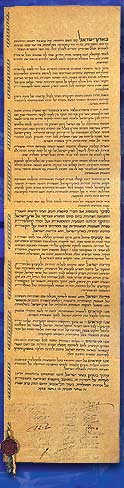
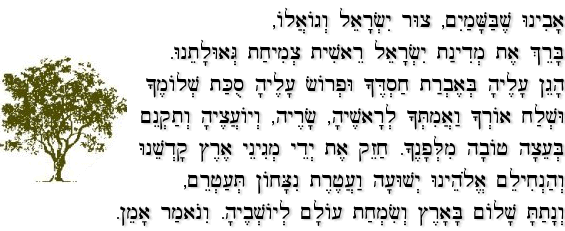
A prayer for Israel Independence Day

Posted on 21:01 by Unknown
Here is a poetic prayer for Yom Haatzmaut from Israel. (Hat tip to Menahem Mendel who has links to the other relevant and important sources for the IID liturgy as well.)

ŚąŚœ Ś”Ś Ś™ŚĄŚ™Ś Ś•ŚąŚœ Ś”Ś€Ś•ŚšŚ§ŚŸ Ś•ŚąŚœ Ś”Ś’Ś‘Ś•ŚšŚ•ŚȘ Ś•ŚąŚœ Ś”ŚȘŚ©Ś•ŚąŚ•ŚȘ Ś•ŚąŚœ Ś”ŚžŚœŚ—ŚžŚ•ŚȘ Ś©ŚąŚ©Ś™ŚȘ ŚœŚŚ‘Ś•ŚȘڙڠڕ Ś‘Ś™ŚžŚ™Ś Ś”Ś”Ś Ś‘Ś–ŚžŚŸ ڔږڔ

Ś‘ִּŚ™ŚžֵŚ™ ڧִŚ‘ּŚ•ּŚ„ Ś©ְׂŚšִڙړֵŚ™ Ś™ִŚ©ְׂŚšָڐֵڜ ŚžֵڐַŚšְŚŠŚ•ֹŚȘ Ś—ֹŚ©ֶׁښְ Ś•ְŚŠַڜְŚžָŚ•ֶŚȘ ڜְŚ—ֶŚžְŚ“ַּŚȘ Ś ַŚ—ֲڜָŚȘָŚ, ڧָŚžŚ•ּ Ś—ֲŚœŚ•ּŚŠֵŚ™ ڐֻŚžָּŚ”, Ś”ֵŚšִŚ™ŚžŚ•ּ Ś ֵŚĄ Ś•ְŚ—ִŚ‘ְּŚšŚ•ּ ŚžְŚ’ִڜָּŚ”, Ś•ְŚȘָŚ‘ְŚąŚ•ּ ڐֶŚȘ Ś–ְڛڕּŚȘ Ś”ָŚąָŚ ڜַŚąֲŚžֹŚ“ Ś‘ִּŚšְŚ©ׁŚ•ּŚȘ ŚąַŚŠְŚžŚ•ֹ, Ś›ְּŚžַŚžְڜָŚ›ָŚ” Ś™ְڔڕּŚ“ִŚ™ŚȘ Ś‘ְּڐֶŚšֶŚ„ ŚžŚ•ֹڜַŚ“ְŚȘּŚ•ֹ. Ś‘ְּŚȘֻŚ€ִּŚ™Ś Ś•ּŚ‘ִŚžְŚ—Ś•ֹŚœŚ•ֹŚȘ Śšָڧְړڕּ Ś‘ַּŚ—Ś•ּŚŠŚ•ֹŚȘ, ژַŚŁ Ś•ְŚ ָŚ©ִׁŚ™Ś, Ś–ְڧֵŚ ִŚ™Ś Ś•ּŚ ְŚąָŚšִŚ™Ś, Ś‘ְּڧڕֹŚœŚ•ֹŚȘ Ś©ִׂŚžְŚ—ָŚ” Ś•ּŚ‘ְŚŠָŚ”ֳڜָŚ”. Ś‘ְּڐڕֹŚȘָŚ”ּ Ś©ָׁŚąָŚ” ŚȘְּڧָڀڕּŚ Ś‘ְּŚ ֵŚ™ ŚąַŚ•ְڜָŚ”, ڜְŚ”ַŚ›ְŚ—ִڙړ Śžִڟ Ś”ָڐָŚšֶŚ„ Ś©ֵׁŚ Ś•ּŚ©ְׁڐֵŚšִŚ™ŚȘ, Ś•ְڜַŚ™ָּŚ ڜִŚ–ְŚšֹڧ Ś›ָּڜ Ś©ׁŚ•ֹŚžְŚšֵŚ™ ڐֱŚžŚ•ּŚ ֶڙڔָ. Ś•ְڐַŚȘָּŚ” ڜְŚ™ֵŚ©ַׁŚą ŚąַŚžְּښָ ŚžִŚ”ַŚšְŚȘָּ, Ś™ְŚ“ֵŚ™ ŚžְŚ’ִŚ ֵּڙڔֶŚ Ś—ִŚ–ַּڧְŚȘָּ, Ś•ּŚ›ְڜֵŚ™ ڐڕֹŚ™ְŚ‘ֵڙڔֶŚ Ś ִŚ€ַּŚŠְŚȘָּ. ŚȘְּڧڕּŚžַŚȘ Ś€ְּڐֵŚš ŚąָŚ©ִׂŚ™ŚȘָ Ś•ּŚžְŚ“ִڙڠַŚȘ Ś”ָŚ“ָŚš Ś”ֵڧַŚžְŚȘָּ, ŚšֵڐکִׁŚ™ŚȘ Ś©ְׁڐִڙڀַŚȘ Ś“ּŚ•ֹŚšŚ•ֹŚȘֶŚ™Śšָ, ŚžַŚ—ְŚĄֶŚ” Ś•ּŚžָŚąŚ•ֹŚ– ڜְŚ›ָڜ Ś©ְׁڑڕּŚȘ ŚąַŚžֶּښָ.

Ś Ś™ŚȘڟ ŚœŚ”Ś•ŚšŚ™Ś“ Ś’ŚšŚĄŚȘ Ś”Ś“Ś€ŚĄŚ” ڐڕ Ś’ŚšŚĄŚȘ Ś›Ś™ŚĄ

Ś—Ś•Ś‘Śš ڑڙړڙ ڐڑڙ Ś©ŚžŚ™Ś“ŚžŚŸ Ś•Ś‘ŚŸ-ŚŠŚ™Ś•ŚŸ کڀڙڄ. Ś”ŚŚšŚ•ŚȘ Ś•Ś”ŚąŚšŚ•ŚȘ ŚȘŚȘŚ§Ś‘ŚœŚ Ś” Ś‘Ś‘ŚšŚ›Ś”
Read More
Posted in antiSemitism, hebrew, history, Holocaust, israel, orthodox, politics, prayer, rabbis, religion, synagogues | No comments

Monday, 23 April 2012

Shouting in Shul About the Prayer for the State of Israel

Posted on 21:58 by Unknown
Originally posted 10/30/05...

There was a shouting match this past Shabbat morning at the 8:30 minyan at the Bnai Yeshurun synagogue in Teaneck. The Gabbai added the single word sheteheh to the Prayer for the State of Israel. That meant he said that we prayed that the Lord protect Israel and that the State will be the first flowering of our redemption -- instead of praying that the Lord protect it because it is the beginning of our redemption.

The policy at CBY officially is to add that will be qualifier. The 9:00 minyan always does. The 8:30 has not -- based on a "don't ask, don't tell" understanding. But then recently the Rabbi got wind of this unfortunate laxity. He scolded the Gabbai and insisted that the policy of qualifying the prayer be rigidly enforced. The resultant shouting match followed.

By Shabbat afternoon the rabbi felt compelled to make a speech between Minhah and Maariv about the matter. He chastised everyone ... for violating the charter of the synagogue, for being negative and just plain reminded folks that if they did not like his leadership they could choose to form another shul or release him in five years at the conclusion of his contract.

No matter. The issue here is not about a rabbi, but about why anyone cares about what words are said in this "prayer" for the State of Israel.

Common sense should tell everyone in the synagogue that this whole prayer is unimportant, peripheral, second rate, and really not a part of the davening.

First off, the "prayer" is recited by the gabbai, not the hazzan. Second, the "prayer" usually is recited in a monotone, not chanted, and from the side of the bimah, not from the front and center of the synagogue. Third, the "prayer" is recited after the Torah reading and before the Musaf service -- in between the "real" parts of the davening. It seems to me to be placed in a tertiary context that makes it even less official than the personal mesheberach blessings recited for individuals who receive aliyot to the Torah.

You don't have to be an expert in Jewish liturgy to conclude that this relatively recent "prayer" is treated like an afterthought, recited quickly, that has been pasted in to our davening. In fact in some synagogues, the text is actually pasted into the back cover of the siddur.

So really, why would anyone argue, shout or pout about what word is or is not said in this "prayer".

What people should be concerned with is real prayer-book reform. We should be integrating a real prayer for the modern state of Israel into the middle of the actual prayer services of our tradition. We should have the chazzan chant it properly from the bimah. We should have the congregation join in responsively or together with the chazzan in singing the prayer with joy.

Naturally, we should not hem and haw liturgically about the importance and centrality of the State of Israel. It is real. Most of our shul members have been there. Most of our shul members have been inspired by the State and its history. The State of Israel is a factual, powerful, pervasive, long-lasting creator of religious moods and motivations.

Honestly, I have never heard a shul member discuss, express interest in, or argue about the reinstitution of the cultic sacrifice in the Temple. Yet that topic has much more of a central place in our synagogue liturgy.

Those who shout at each other about this or that word in a second or third rate "prayer" -- one that is mumbled by the gabbai from the side of the bimah in between shacharit and musaf -- ought to reconsider.

Yes it is time to shout and argue about promoting the thanksgiving, praise and petition concerning the modern State of Israel as a real and central theme of all of our synagogue prayers.
Read More
Posted in brooklyn, hebrew, history, israel, New York Jews, orthodox, prayer, rabbis, religion, synagogues, teaneck, zionism | No comments

Saturday, 21 April 2012

Are iPhones, Android devices, iPads, and Blackberrys Kosher?

Posted on 18:21 by Unknown


David Assaf (in his wonderful Hebrew blog "Oneg Shabbat") writes at some length and detail about how a few 19th century rabbis apparently permitted speaking on a telephone on Shabbat.

He ends up with a "that was then, this is now" contrast citing a rabbinic wall poster that was seen in Givat Shaul in Jerusalem a few weeks ago. The poster warns Jews that "iPhones, Android devices, iPads, Blackberrys, MP4 and the like" and all video players and Internet devices, all of these "endanger the sanctity of the house of Israel" and they are bringing a "spiritual Holocaust" upon those who use them, "G-d Forbid..." 

"It is surely forbidden to own or use these devices" the rabbis warn. 

Just so there is no confusion, we disagree with those rabbis. We rule that these devices are kosher, permitted for use by all Jews. We are sure that is a relief for some of our readers.

Ads: Talmudic Books for Kindle on the Talmud, Bible, Kabbalah and Prayer
The Kindle Edition of the Classic Soncino Talmud in English
Read More
Posted in google, hebrew, humor, inventions, iPad, iPhone, Is-it-kosher?, israel, rabbis | No comments

Wednesday, 7 March 2012

The Sunrise and the Redemption of the Jews in Yerushalmi Berakhot and in the Book of Esther

Posted on 09:11 by Unknown


Talmudic life extends the space-time continuum with an acute awareness of the physical here-and-now and deepens the spectrum of thought and meaning with trajectories back into the distant past of the scripture and forward to the hopeful expectation for salvation.

This passage below from the Talmud Yerushalmi Tractate Berakhot demonstrates key aspects of the logic of a Talmudic life - what we explore every day in this blog. The rabbis in the passage practice a mindfulness of the natural world on a seamless continuum with thoughtfulness about their textual world, their imagined pasts and futures.

Below, in this passage that we cite, they want to understand the dynamics of sunrise, part of their everyday natural lives. They need to know when day begins so they can start to say their daily prayers at the correct hour.

On their way to determine this they talk about visual observation and use poetic terms from scripture. They measure the elapsed time of a pre-dawn period by specifying durations for physical activities of walking. But their walking has no physical or temporal boundaries. The dusty roads of the Land of Israel in late antiquity lead them directly into the book of Genesis.

The four miles that the rabbis might walk to determine a period of elapsed time are the same four miles that Lot and his wife and daughters would walk at the behest of heavenly angels. And if those biblical four miles were really not four miles, miracles made them so.

And yet the passage tells us, when rabbis Hiyya and Simeon once were walking in a real valley at daybreak, they were not satisfied to speak about the technical definitions of the durations of the pre-dawn periods, though they surely could have done just that and stopped.

They instead looked at the rays of the dawn and launched their time machine into the future, into a peroration on the redemption of the Jewish people. As they mindfully noted the real rays of that dawn, they pondered the equally real rays of the prophetic words of Micah and of the melodramatic story of biblical Esther.

(We cite the passage from our 1989 translation of Talmud Yerushalmi, The Talmud of the Land of Israel: Tractate Berakhot, University of Chicago Press, Chicago, page 13 and following.)

[X.A] [This unit expands upon the discussion of the terms used to refer to the period of time preceding sunrise.] Said R. Hinnena [vars: Hasna, Haninah], "From the [time in the morning sometimes called the] `hind of the dawn' [a poetic expression comparing the pattern of the first rays of light to the antlers of a deer,] until the [sky in the] east is lit [entirely] one [has enough time to] walk four miles. [`Mile' refers to 2000 paces, about 1470 meters, that is somewhat less than the modern English mile of about 1609 meters.] From [the time] the east is lit until sunrise [one has enough time to walk another] four miles."

[B] And whence [do we know] that from [the time] the east is lit until sunrise [one has enough time to walk] four miles? As it is written, "When morning dawned [the angels urged Lot saying, "Arise, take your wife and your two daughters who are here, lest you be consumed in the punishment of the city]" [Gen.19:15]. And it is written, "The sun had risen on the earth when Lot came to Zoar" [Gen. 19:23]. [Between the first light and the rise of the sun Lot walked from Sodom to Zoar.]

[C] But is the distance from Sodom to Zoar four miles? It is more!

[D] Said R. Zeira, "The angel shortened the way for them." [Though it was more, he made it as if it were four miles.]

[E] And whence [do we know] that from the first rays of dawn [`hind of dawn'] to [the time] the eastern sky is lit [completely, one can walk] four miles? [Scripture says,] "wkmw [lit: and like] When morning dawned" [Gen. 19:15]. And kmw is a comparative term. [It implies that the two intervals, from when the eastern sky is lit until dawn, and from when the first rays of light appear until the eastern sky is lit, are of equal duration.]

[F] Said R. Yose b. R. Bun, "[Concerning] this term `the [time of the appearance of the] hind of dawn,' he who says it refers to [time of the appearance of] a [morning] star, [presumably Venus,] is in error. For at times [this star] appears earlier, and at times, later."

[G] What is then [the definition of this term]? It refers to [the appearance of] two rays of light which originate in the eastern sky and illuminate [the heaven]. [The word qrn means both `ray' and `antler'.]

[H] And once R. Hiyya the great and R. Simeon ben Halafta were walking in the valley of Arbel at daybreak. And they saw the first rays of dawn [`hind of dawn'] as the daylight broke forth [into the sky].

[I] Said R. Hiyya the great to R. Simeon ben Halafta b. Rabbi, "[Like the break of day] so is the redemption of Israel. It begins little by little and, as it proceeds, it grows greater and greater."

[J] What is his basis [for this comparison of daybreak and redemption]? [Scripture says,] "When I sit in darkness the Lord will be a light to me" [Micah 7:8, i.e. he will redeem me].

[K] [By way of illustration of this last teaching:] So it was at the outset [the redemption of Israel in the time of Esther, for example, proceeded slowly as it says,] "And Mordecai was sitting at the king's gate" [Esther 2:21].

[L] And thereafter [it grew greater as the passage indicates], "So Haman took the robes and the horse [and he arrayed Mordecai]" [Esther 6:11].

[M] And thereafter, "Then Mordecai went out from the presence of the king in royal robes" [Esther 8:15].

[N] And thereafter, "The Jews had [the] light [of redemption] and gladness and joy and honor" [Esther 8:16]. [The redemption proceeds slowly at first and then quickly shines forth like light, a term used in the last verse.]
Read More
Posted in bible, bloggers, books, hebrew, history, israel, meditation, prayer, talmud | No comments

Monday, 9 January 2012

Link to the Reformatted Soncino Talmud in English Online at Halakhah.com

Posted on 16:48 by Unknown
The Reformatted Soncino Babylonian Talmud English translation is online.

Download this newly reformatted edition of the Talmud in English free at http://www.halakhah.com/indexrst.html

This new edition was reformatted by Reuven Brauner of Raanana Israel in 5771. It is in PDF file format in two-column pages.

The standard description of the publication is: TRANSLATED INTO ENGLISH WITH NOTES, GLOSSARY AND INDICES UNDER THE EDITORSHIP OF RABBI DR. I. EPSTEIN B.A., Ph.D., D. Lit. FOREWORD BY THE VERY REV. THE LATE CHIEF RABBI DR. J. H. HERTZ. INTRODUCTION BY THE EDITOR. THE SONCINO PRESS, LONDON.

This edition Contains the Sedarim (orders, or major divisions) and tractates (books) of the Babylonian Talmud, as translated and organized for publication by the Soncino Press in 1935 - 1948.

The site has the entire Soncino Talmud edition in the newly reformatted easy to read PDF format.

The earlier edition in one-column format in PDF and HTML is also available on the site.

Please add a link to the site http://www.halakhah.com on your web site or blog.

"God's Favorite Prayers"
Read More
Posted in bloggers, book club, books, dead-sea-scrolls, hebrew, history, israel, rabbis, religion, talmud, yeshiva | No comments

Monday, 2 January 2012

Is the Orthodox Spell Broken? Is Haredi Gender Segregation Harrassment and Self-defeating?

Posted on 18:25 by Unknown
Is the Orthodox spell broken? Is in fact Haredi gender segregation in Israel both illegal sexual harassment and also totally self-defeating?

Such is the claim of Zvi H. Triger of Israel's College of Management Academic Studies (COMAS) School of Law. He has published a closely argued and well documented 49 page paper with 244 footnotes that you can download and read at SSRN.

He examines numerous sides of the question: the historical, the ideological, the complicity of women in the segregation, and closely parses the legal modes of sexual harassment that the practices entail. His logic and rhetoric seem to us to be impeccable.

"Gender Segregation as Sexual Harassment" appears in the Tel Aviv University Law Review, Vol. 35, 2012. The abstract explains:
The Article argues that gender segregation in Israel is in fact a form of sexual harassment under Israeli Law. Section 3(a)(5) of the Israeli Prevention of Sexual Harassment Law of 1998 defines sexual harassment also as “[a]n intimidating or humiliating reference directed towards a person concerning his sex/gender or his sexuality, including his sexual orientation.” Analyzing the case of gender segregation in public transportation in certain cities in Israel, I argue that forcing women to sit in the back of the buses constitutes “an intimidating or humiliating reference directed towards” their sex/gender or their sexuality, and thus sexual harassment. I also argue that the current rising Jewish religious fundamentalism, with its relatively new demands for gender segregation (bus segregation began in 1997) is paradoxical in the sense that its motivation is to erase female sexuality, but by being so preoccupied with women’s “modesty” it in fact puts their sexuality at the center of attention. Therefore, gender segregation is not only sexual harassment; it is also a self-defeating concept from the religious point of view as well.
Building on this article, we encourage people to discuss and analyze this Orthodox practice of the segregation of women outside the synagogue.

Talmudic analysis: We do not think the article goes far enough in pressing both of its central claims. Orthodox actions in public against women as described are most certainly contrary to the "law of the land" in Israel (and in America). Furthermore, the claims that underpin gender differentiation in Orthodox practice are entirely arbitrary and contrary to our own average run-of-the-mill common sense life experiences, i.e., not just self-defeating, they are wrong. And more than wrong, they are rude.

Hat tips all around, especially to Menachem Mendel and Legal Theory Blog.

"God's Favorite Prayers" - equally accessible to men and women
Read More
Posted in hebrew, israel, orthodox, synagogues, talmud, universities, women | No comments
Older Posts Home
Subscribe to: Posts (Atom)

Popular Posts

  • Thanksgiving Turkey Drumstick Jack-O-Lantern Pumpkin Pie Table Song - A Lone Pumpkin Grew
    Thanksgiving will be upon us soon and we sing traditional holiday songs at our Thanksgiving dinner. Here are the words to one of our favorit...
  • Is Paul Volcker Jewish?
    No, we do not think that former Federal Reserve Chairman Paul Volcker is a Jew. According to reporter Roni Sofer of the usually reliable Is...
  • Is Carlos Slim HelĂș Jewish?
    No, Carlos Slim HelĂș is not a Jew. He is of Lebanese origins and a Maronite Catholic by religion. This Mexican businessman and philanthropis...
  • Is Sigourney Weaver Jewish?
    Now it is far-fetched that anybody would think that actress Sigourney Weaver is Jewish. No, Sigourney Weaver is not a Jew. The tall actress ...
  • Is Caroline Kennedy's Husband Edwin Schlossberg Jewish?
    Yes, Edwin Arthur Schlossberg is a Jew. All four of Schlossberg's grandparents were Russian (Ukranian) Jews born near Poltava and arrive...
  • Update on the Insults: A Battle Over a Book: Haym Soloveitchik v. Talya Fishman
    Our once-upon-a-time teacher at Yeshiva University has panned a new book about rabbinic cultural development. It's a veritable battle ov...
  • Free Download of the Soncino Talmud in English Online at Halakhah.com: 25,000+ satisfied customers a month
    The Soncino Babylonian Talmud English translation is online - at a site that is not anti-Semitic or polemical. Download the Talmud in Englis...
  • Rav Soloveitchik's Dissertation at the University of Berlin
    In honor of the 20th yahrzeit of the Rav's passing (on Hol HaMoed Pesach, the 18th of Nisan, in 1993) and of the 110th year since his bi...
  • Is Marissa Mayer Jewish?
    Yes, the new CEO of Yahoo!, Marissa Mayer is a Jew. Hat tip to our friend David who points out, "I find it interesting that Google, Fac...
  • Note to Self: Do not wear Geox shoes in the rain or snow. They have little holes in soles!
    We wear Geox shoes almost all the time nowadays. They are truly more comfortable for someone like us who mainly sits at a desk throughout th...

Categories

  • 9/11 (1)
  • Alan F. Segal (1)
  • amazon (33)
  • antiSemitism (14)
  • apocalyptic (1)
  • apple (11)
  • archetypes (35)
  • are-they-jewish? (73)
  • ariely (1)
  • art (18)
  • atlantic beach (3)
  • audio book (1)
  • barack (20)
  • baseball (2)
  • beyond belief (1)
  • bible (48)
  • bloggers (12)
  • bobby knight (1)
  • book club (3)
  • book serialization (14)
  • books (83)
  • boteach (2)
  • brooklyn (10)
  • buddhism (5)
  • christianity (59)
  • circumcision (3)
  • copyright (4)
  • daf yomi (4)
  • daphne (1)
  • dead-sea-scrolls (4)
  • dirty tricks (4)
  • egalitarianism (3)
  • einstein (2)
  • film (20)
  • footnote (2)
  • gay rights (12)
  • golf (8)
  • google (15)
  • haaretz (5)
  • haggadah (9)
  • Harvard (1)
  • hasidism (17)
  • health (36)
  • heath (1)
  • hebrew (18)
  • history (12)
  • Holocaust (18)
  • huckabee (1)
  • hullin (3)
  • humor (76)
  • inventions (30)
  • iPad (12)
  • iPhone (9)
  • Is-it-kosher? (46)
  • islam (19)
  • israel (108)
  • juergensmeyer (2)
  • kabbalah (12)
  • kaddish (6)
  • kindle (33)
  • kosher (16)
  • kugel (1)
  • kushner (1)
  • laptops (1)
  • lex talionis (1)
  • madoff (15)
  • madonna (4)
  • Maimonides (5)
  • meditation (22)
  • menorah (2)
  • Merkin (10)
  • microsoft (1)
  • Minnesota (8)
  • Mishnah (2)
  • money (65)
  • mormons (5)
  • morton smith (3)
  • music (29)
  • nazis (3)
  • netanyahu (1)
  • New York Jews (46)
  • norman lamm (5)
  • obama (19)
  • orthodox (86)
  • Passover (20)
  • politics (91)
  • pools (13)
  • prayer (92)
  • Purim (9)
  • rabbis (124)
  • rahm emanuel (1)
  • rav (15)
  • recipes (2)
  • religion (170)
  • schachter (1)
  • science (45)
  • shaiel (1)
  • sikhs (3)
  • smoking (2)
  • software (6)
  • soloveitchik (17)
  • soul (2)
  • sports (47)
  • statins (1)
  • supreme court (1)
  • Surfing (1)
  • synagogues (73)
  • talmud (117)
  • Talmudic Books (30)
  • teaneck (37)
  • terrorism (6)
  • texas (1)
  • Thanksgiving (4)
  • theodicy (1)
  • tim tebow (3)
  • universities (56)
  • videos (19)
  • wikipedia (1)
  • wine (3)
  • wingnuts (22)
  • women (64)
  • yeshiva (41)
  • yiddish (5)
  • youkilis (2)
  • zev zahavy (21)
  • zichron ephraim (12)
  • zionism (21)

Blog Archive

  • ▼  2013 (187)
    • ▼  August (5)
      • Free Download of the Soncino Talmud in English Onl...
      • Selichot are Not Outcries
      • Is Google NOW incredible or creepy? Is NOW kosher?
      • Is Israel's National bird the Hoopoe - Duchifat - ...
      • JStandard: My Dear Rabbi Talmudic Advice Column fo...
    • ►  July (30)
    • ►  June (23)
    • ►  May (25)
    • ►  April (30)
    • ►  March (33)
    • ►  February (17)
    • ►  January (24)
  • ►  2012 (313)
    • ►  December (31)
    • ►  November (23)
    • ►  October (16)
    • ►  September (15)
    • ►  August (20)
    • ►  July (20)
    • ►  June (34)
    • ►  May (19)
    • ►  April (38)
    • ►  March (39)
    • ►  February (31)
    • ►  January (27)
Powered by Blogger.

About Me

Unknown
View my complete profile