BlackballingTimTebow

  • Subscribe to our RSS feed.
  • Twitter
  • StumbleUpon
  • Reddit
  • Facebook
  • Digg
Showing posts with label history. Show all posts

Friday, 9 August 2013

Free Download of the Soncino Talmud in English Online at Halakhah.com: 25,000+ satisfied customers a month

Posted on 14:09 by Unknown
The Soncino Babylonian Talmud English translation is online - at a site that is not anti-Semitic or polemical.

Download the Talmud in English free at http://www.halakhah.com/ - 25,000+ downloads each month! 300,000+ each year.

TRANSLATED INTO ENGLISH WITH NOTES, GLOSSARY AND INDICES UNDER THE EDITORSHIP OF RABBI DR. I. EPSTEIN B.A., Ph.D., D. Lit. FOREWORD BY THE VERY REV. THE LATE CHIEF RABBI DR. J. H. HERTZ. INTRODUCTION BY THE EDITOR. THE SONCINO PRESS, LONDON.

Contains the Sedarim (orders, or major divisions) and tractates (books) of the Babylonian Talmud, as translated and organized for publication by the Soncino Press in 1935 - 1948.

The site has the entire Soncino Talmud edition in PDF format and  about 8050 pages on line in browser compatible HTML format, comprising 1460 files — of the Soncino Talmud.

Please add a link to the site http://www.halakhah.com on your web site or blog.

Highlights:
  • A newly formatted 2-column PDF version of the Soncino Talmud at Halakhah.com.
  • A Kindle edition of the Soncino Talmud available from Amazon.com: The Kindle Soncino Talmud in English


Read More
Posted in amazon, antiSemitism, bloggers, book club, books, dead-sea-scrolls, hebrew, history, Is-it-kosher?, israel, kindle, rabbis, religion, talmud, women, yeshiva | No comments

Monday, 22 April 2013

Introduction to Judaism - Online Course

Posted on 16:45 by Unknown

Open publication
Introduction to Judaism
Online Course Guide
Professor Tzvee Zahavy
Read More
Posted in books, history, Holocaust, israel, kabbalah, Maimonides, talmud, universities, yeshiva | No comments

Saturday, 23 March 2013

Top Ten List for Seder Leaders

Posted on 19:20 by Unknown
Passover is coming... Time for our top ten tips for your Seder...
Most folks consider preparing and eating the festive meal to be the central focus of their Passover Seder. There's not much advice that we can offer to help improve upon that.

However, we have always had fun conducting the reading of the Haggadah. We learned this art as a child by watching our father masterfully conduct the communal synagogue Seders as the rabbi of the Park East Synagogue in Manhattan.

Sad. We will miss dad this year. Happy. We greet a new grandson this year. Barak and Miriam just had a boy!

So in the spirit of the season of rebirth and freedom, let us try to help free you from the dread of the task of conducting your family Seder this year.

If you follow these ten tips you will get rave reviews of your Seder from all of your guests. Guaranteed.

1. Know your Haggadah. This year, spend an hour before Passover reading through your favorite version of the Haggadah. Sort out the rituals (like Kiddush), the liturgies (like the Hallel) and the learning (like the ma nishtanah and what follows). Make marginal notes or use a highlighter.

2. Know your guests.
Find out who is coming (yes, Seder leaders need to know that). Think through what their skills are and what role they can play in the Seder. Remember some guests may be simple, some wise, some won't know how to ask a question. Try to meet the needs of everyone assembled.

3. Make a recitation assignment list (in your head or on paper).
The Best Ever Seder will be a collaboration of all the guests. Those who can't read Hebrew can read a passage from the Haggadah in translation (English, Russian or otherwise) or perform another essential task.

4. Prepare props for colorful explanations.
The matzo, maror, haroseth, shank bone, egg all have familiar symbolic meanings worth mentioning. You can include other props of your choosing for added flavor to the event: use miniature pyramids, toy or paper or chocolate frogs, relevant family memorabilia or a special illustrated Haggadah (hold it up to show it off or pass it around).

5. Buy toys for the children. Give them something nice at the retrieval of the afikomen or distribute something small anytime they start to lose interest.

6. Tell a (short) story (or two). During the reading of the Haggadah tell about how your family matriarch or patriarch conducted the Seder or prepared the meal. Reminiscing in small doses adds great flavor to your production.

7. Be dramatic.
The Seder is a drama. The guests are the actors. Yemenite Jews have the custom to dress up and walk around the table to reenact the exodus. Even if you are not much of an actor, at the very least, you can talk about how other people are dramatic.

8. Don't be melodramatic.
You and your guests all are on stage. This is not the time to bring up old family arguments. If you do, your Seder might become the "last supper" that you eat together.

9. Have the matriarchs (of the families) greet Elijah at the door.
Watch as the wine in Elijah's cup changes color as he sips from it. Talk about loss and the mystical redemption.

10. Sing the songs with gusto.
Sing the closing songs in all the ways you can remember. You can sing Chad Gadya in Yiddish, if someone knows how, or you can add the animal sounds. Have fun -- these are supposed to be rowdy songs that you sing after drinking four cups of wine.

These tips may be self evident to you -- or they may be new. Whatever the case, good luck and have a happy and kosher Pesach. [annual repost]
Read More
Posted in bible, haggadah, hebrew, history, humor, kosher, Passover, prayer, rabbis, religion, talmud, Thanksgiving, wine, women, zichron ephraim | No comments

Monday, 23 July 2012

Is Tisha B'Av Relevant?

Posted on 18:03 by Unknown
Is Tisha B'Av relevant? No we do not think that the fast of Tisha B'Av is relevant anymore. We need a holiday from Tisha B'Av.

That day was for a long time a commemoration through fasting and prayer over the destroyed city of Jerusalem and the Temple. We've last visited Jerusalem in May of 2011 and can attest that the city is not desolate. It is without reservations, glorious.

Who then wants the bleak story to be told? Archetypally the "celebrity" archetype wants to keep recalling defeat, destruction and desolation, to spur team Jews on to fight the foes and to triumph at the end of time. That scheme may work for that archetype as long as the facts of reality do not fly smack in the face of the narrative. And when they do, what then? The narrative loses all of its force. We cannot imagine Jerusalem in ruins. Period. And indeed, why should we perpetuate an incendiary story of gloom and doom into a diametrically opposite positive world of building and creativity? The era of desolation has ended.

For at least twenty-five years, we've been lamenting the irony of lamenting over a city that is rebuilt. It's more rebuilt now -- way more -- than it was twenty five years ago. What do we do then about Tisha B'Av, the Jewish fast day of lament and mourning? Here is what we said those many years ago.

We wrote this op-ed for the Jerusalem Post in 1986 where we summed up many of our thoughts about Israel in our day, and of Jerusalem in particular. The article appeared in the Post on the day before Tisha B'Av:
I shall be fasting this week from sundown Wednesday until sundown Thursday. But this year, more than ever before, I feel silly mourning over the destruction of Jerusalem. I really do not know what to do when it comes time to listen to and to recite for myself the classical laments for the fast of Tisha B'Av.
Much of what we say about Jerusalem in the synagogue is just not true any more.

It is obvious to anyone and everyone that Jerusalem does not lay in ruins. On the contrary, this is my fourth extended visit to Jerusalem in the last seven years. [They say: your not in galut if you commute.] Over the last seven years I have watched as buildings spread out from the center of town to the new neighborhoods. Now Jerusalem sprawls across the hills of Judea, south and north from Gilo to Ramot and beyond.

On the ninth day of Av this year the observant Jews of Jerusalem will congregate in synagogues throughout the city to mourn and lament. What they say inside these halls will not reflect the reality immediately outside them.

And so this year I have resolved to add some few paragraphs for myself, silently, to my prayers. Then when I leave the synagogue and step out into the rebuilt city of our people, I will feel that I have been candid in my meditations and forthright in my worship. I shall say something like this:

"Jerusalem is not desolate. It stands glorious above our Land. Our capital looks down on the miracle of the modern state of our people, rebuilt by the sweat and labor of our brethren and sisters. A thousand settlements testify to our return and we our homeless no more.

"The inhabitants of Jerusalem are not homeless. Beautiful buildings abound. Apartments, condominiums, villas, large and small. Hotels and hostels, old and new. Whosoever wishes may come and live here. Whosoever is hungry shall find sustenance here.

"Enemies do not govern our land. The Kenesset building, the site of our self-government, stands at the center of our new metropolis, a vibrant testimony to our freedom. Independent and sovereign we struggle with each other, and with the states of the world, and somehow we manage to live in harmony among ourselves, and to survive in the swirling community of nations.
"Yes, the Temple was destroyed. But we have built other edifices in its stead. Long ago, in another age, our national center was taken from us by forces we could not resist. But now we have built new structures where we symbolize and express our spirit, our minds and our creative energies, and most of all, our freedom.

"A great synagogue and many more stand in our capital. They serve as the many beating hearts of our spiritual organs. In dozens of Yeshivot teachers build the religious minds of our youth. Schools abound. When school is in session, wherever you turn their are children on their way to classes from kindergartens to high schools, soaking up the knowledge of our world.

"A great Hebrew University answers to the essence of our wider educational appetites, right here in the capital of our nation. In its laboratories, classrooms and libraries, students try to unravel the mysteries of nature and society and strive to construct a new and better order.

"The Israel Museum, the Bezalel School, the Jerusalem Theater and other institutions small and large, cater to our cultural needs. In Jerusalem today we display our past and our present. We sing and dance and we mourn no more. We paint and draw and sculpt and adorn the urban hub of our people, the crown of our Land.

"As we watch, day-by-day, luxury hotels go up and up. Lush green gardens bloom before us. We repose in parks and swimming pools. We find our needs in supermarkets, bakeries, and department stores. And we indulge our extravagances in shops and markets, elegant restaurants and offbeat cafes.

"The city of Jerusalem has been rebuilt. Still, the work is never done. And the struggle will not end. But our city is not desolate. How can we mourn? We must, yes, we are obliged, indeed, it is the highest duty, for us to celebrate. For with God's help, but in accord with our own will and with our own hands we have raised Jerusalem beyond its highest heights. Never before in all of our history has this city attained such glory.

And so that is what I shall add as I conclude my lamentations on Tisha B'Av this year. I shall be cheerful this year, and I will not mourn. But I shall do so silently because this is my own private devotion. Will others join me?
In a public lecture in Minneapolis in October 1986 I read this editorial and expanded upon it:
The personal response I received to this article was enormous. More people read this than any other piece I have written and almost all agreed with its sentiments. Only a few Orthodox friends hesitated in their praise because they interpreted my words as a call to abolish Tisha B'Av. Not at all, I told them. And they had better be more careful in what they read lest they make a mistake in interpretation when they consult the shulchan aruch. More than a month later I am still hearing good words about my reflections on the rebuilding of our holy city.

I could say much more, though the Jerusalem Post is not the only forum for criticism and discussion of the impact of modern Israel on the future of Judaism.

I felt strongly and for the first time without equivocation that we in the galut do not adequately appreciate the achievements of those who built the modern state. Never, even in the greatest ages of our people's history, in the kingdoms of David and Solomon, after the rebuilding of the Temple by Ezra and Nehemiah, or in the era of Herod the Great, never did our people achieve so much in the building of our land. Israel today is a true marvel. Its streets and infrastructures in all of its settlements, its political system, and of course, its military might, make it one of the great countries in the world.

And this accomplishment is even greater in light of the destruction and devastation which preceded it in Jewish history. Yet does the average American Jew understand or appreciate the modern state? I often doubt it.
[edit and repost from 2007]
Read More
Posted in archetypes, are-they-jewish?, hebrew, history, Holocaust, islam, israel, kaddish, meditation, Minnesota, norman lamm, politics, pools, prayer, rabbis, religion, synagogues, terrorism, universities, zionism | No comments

Wednesday, 25 April 2012

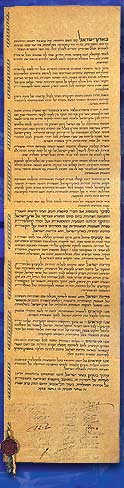
A prayer for Israel Independence Day

Posted on 21:01 by Unknown
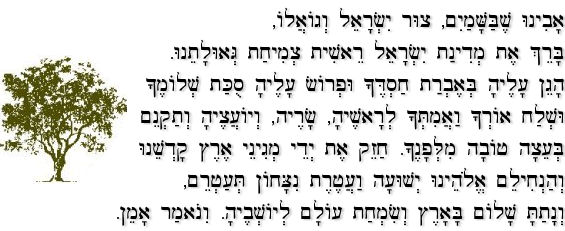
Here is a poetic prayer for Yom Haatzmaut from Israel. (Hat tip to Menahem Mendel who has links to the other relevant and important sources for the IID liturgy as well.)

על הניסים ועל הפורקן ועל הגבורות ועל התשועות ועל המלחמות שעשית לאבותינו בימים ההם בזמן הזה

בִּימֵי קִבּוּץ שְׂרִידֵי יִשְׂרָאֵל מֵאַרְצוֹת חֹשֶׁךְ וְצַלְמָוֶת לְחֶמְדַּת נַחֲלָתָם, קָמוּ חֲלוּצֵי אֻמָּה, הֵרִימוּ נֵס וְחִבְּרוּ מְגִלָּה, וְתָבְעוּ אֶת זְכוּת הָעָם לַעֲמֹד בִּרְשׁוּת עַצְמוֹ, כְּמַמְלָכָה יְהוּדִית בְּאֶרֶץ מוֹלַדְתּוֹ. בְּתֻפִּים וּבִמְחוֹלוֹת רָקְדוּ בַּחוּצוֹת, טַף וְנָשִׁים, זְקֵנִים וּנְעָרִים, בְּקוֹלוֹת שִׂמְחָה וּבְצָהֳלָה. בְּאוֹתָהּ שָׁעָה תְּקָפוּם בְּנֵי עַוְלָה, לְהַכְחִיד מִן הָאָרֶץ שֵׁם וּשְׁאֵרִית, וְלַיָּם לִזְרֹק כָּל שׁוֹמְרֵי אֱמוּנֶיהָ. וְאַתָּה לְיֵשַׁע עַמְּךָ מִהַרְתָּ, יְדֵי מְגִנֵּיהֶם חִזַּקְתָּ, וּכְלֵי אוֹיְבֵיהֶם נִפַּצְתָּ. תְּקוּמַת פְּאֵר עָשִׂיתָ וּמְדִינַת הָדָר הֵקַמְתָּ, רֵאשִׁית שְׁאִיפַת דּוֹרוֹתֶיךָ, מַחְסֶה וּמָעוֹז לְכָל שְׁבוּת עַמֶּךָ.

ניתן להוריד גרסת הדפסה או גרסת כיס

חובר בידי אבי שמידמן ובן-ציון שפיץ. הארות והערות תתקבלנה בברכה
Read More
Posted in antiSemitism, hebrew, history, Holocaust, israel, orthodox, politics, prayer, rabbis, religion, synagogues | No comments

Monday, 23 April 2012

Shouting in Shul About the Prayer for the State of Israel

Posted on 21:58 by Unknown
Originally posted 10/30/05...

There was a shouting match this past Shabbat morning at the 8:30 minyan at the Bnai Yeshurun synagogue in Teaneck. The Gabbai added the single word sheteheh to the Prayer for the State of Israel. That meant he said that we prayed that the Lord protect Israel and that the State will be the first flowering of our redemption -- instead of praying that the Lord protect it because it is the beginning of our redemption.

The policy at CBY officially is to add that will be qualifier. The 9:00 minyan always does. The 8:30 has not -- based on a "don't ask, don't tell" understanding. But then recently the Rabbi got wind of this unfortunate laxity. He scolded the Gabbai and insisted that the policy of qualifying the prayer be rigidly enforced. The resultant shouting match followed.

By Shabbat afternoon the rabbi felt compelled to make a speech between Minhah and Maariv about the matter. He chastised everyone ... for violating the charter of the synagogue, for being negative and just plain reminded folks that if they did not like his leadership they could choose to form another shul or release him in five years at the conclusion of his contract.

No matter. The issue here is not about a rabbi, but about why anyone cares about what words are said in this "prayer" for the State of Israel.

Common sense should tell everyone in the synagogue that this whole prayer is unimportant, peripheral, second rate, and really not a part of the davening.

First off, the "prayer" is recited by the gabbai, not the hazzan. Second, the "prayer" usually is recited in a monotone, not chanted, and from the side of the bimah, not from the front and center of the synagogue. Third, the "prayer" is recited after the Torah reading and before the Musaf service -- in between the "real" parts of the davening. It seems to me to be placed in a tertiary context that makes it even less official than the personal mesheberach blessings recited for individuals who receive aliyot to the Torah.

You don't have to be an expert in Jewish liturgy to conclude that this relatively recent "prayer" is treated like an afterthought, recited quickly, that has been pasted in to our davening. In fact in some synagogues, the text is actually pasted into the back cover of the siddur.

So really, why would anyone argue, shout or pout about what word is or is not said in this "prayer".

What people should be concerned with is real prayer-book reform. We should be integrating a real prayer for the modern state of Israel into the middle of the actual prayer services of our tradition. We should have the chazzan chant it properly from the bimah. We should have the congregation join in responsively or together with the chazzan in singing the prayer with joy.

Naturally, we should not hem and haw liturgically about the importance and centrality of the State of Israel. It is real. Most of our shul members have been there. Most of our shul members have been inspired by the State and its history. The State of Israel is a factual, powerful, pervasive, long-lasting creator of religious moods and motivations.

Honestly, I have never heard a shul member discuss, express interest in, or argue about the reinstitution of the cultic sacrifice in the Temple. Yet that topic has much more of a central place in our synagogue liturgy.

Those who shout at each other about this or that word in a second or third rate "prayer" -- one that is mumbled by the gabbai from the side of the bimah in between shacharit and musaf -- ought to reconsider.

Yes it is time to shout and argue about promoting the thanksgiving, praise and petition concerning the modern State of Israel as a real and central theme of all of our synagogue prayers.
Read More
Posted in brooklyn, hebrew, history, israel, New York Jews, orthodox, prayer, rabbis, religion, synagogues, teaneck, zionism | No comments

Thursday, 19 April 2012

How can we better Memorialize the Shoah in our Synagogues?

Posted on 17:39 by Unknown
The Holocaust now is memorialized in synagogues mainly peripherally through added events and tacked on references or via artwork in the building vestibule. We think that the Shoah must be more tightly integrated into the ritual and symbolism of every Jewish place of worship.

We have pondered over the years how we could make this particular meaningful change in our synagogue. We want to add tasteful and appropriate symbolism for the Shoah in a more central shul location, to commemorate and offer a pause for reflection for the Holocaust, the most traumatic epoch in Jewish history.

Modifying a synagogue in any way is a difficult project for anyone. There are many pitfalls that can get in your way. You may find obstinate trustees, reluctant rabbis, timid members and the like that make accomplishing any change in a synagogue - no matter how well-justified - at least utterly aggravating and probably well nigh impossible.

As a result, as we said, most projects of this nature - adding a Holocaust memorial symbol to the synagogue - are relegated to a hallway or basement - not to the main sanctuary. But like us, many of you will prefer to have your own chosen symbol centrally located - in the main sanctuary in a more meaningful place of honor and prominence.

Accordingly we suggest it is best and most practical that you follow these five steps to complete your own synagogue-symbol-project promptly and without interference, rejection or aggravation from others.

Step #1
Enter your synagogue and visually locate the Ner Tamid, the Eternal Light, in your synagogue's sanctuary. This perpetual light is commonly installed right above the Aron Kodesh, the Ark, at the front and center of the synagogue.

If you ask, officials of the synagogue may tell you that this light currently signifies either the menorah of the ancient Temple, or God's presence in the chapel, or the spiritual light that emanated from the Temple of old. Be that as it may, you are going to make a change in that signifier.

Step #2
This is the tricky part. Do not even think about touching the light. It is tempting to try to make some physical change during a revision project. However you must resist this impulse.

As we intimated, every shul has people who make it their business to oppose any visible improvement in the structure or decor of the synagogue. You do not want to run afoul of these folks. Your project is a work that you create independently with the help of your imagination.

Step #3
Close your eyes and imagine an inverted Hebrew letter vav. Yes, the eternal candle or lamp with its flame looks to us like an upside down vav, the letter that has the numeric value of six. Recall that six million Jews were murdered in the Holocaust.

Step #4
Say to yourself the words, Ner Tamid lezichron Hashoah - meaning, this is the eternal light in memory of the Holocaust.

Step #5
Open your eyes. You have change the signification of a symbol that stands front and center in every synagogue sanctuary and you have completed your project.

Now you can meaningfully remember each time you enter the synagogue to look first at that eternal light at the focal center of your house of worship - to take a moment to reflect on the enormity of the suffering of the Shoah - and to give thanks for the constant resilience of the Jewish people.

[Repost from 2007.]
Read More
Posted in art, history, Holocaust, inventions, meditation, menorah, religion, synagogues, theodicy | No comments

Sunday, 15 April 2012

Will the War Against Religious Terrorism Ever End?

Posted on 09:45 by Unknown
Will the War Against Religious Terrorism Ever End?

Mark Juergensmeyer, in Terror in the Mind of God, lays out five ways that the reign of religious terror can come to an end. Let's consider each. First consider the end will come with the forceful eradication of the terrorists, what appears to have been the US response to the 9/11 attacks, continued with the more recent killing of OBL.

Juergensmeyer outlines,
The first scenario is one of a solution forged by force. It encompasses instances in which terrorists have literally been killed off or have been forcibly controlled. If Osama bin Laden had been in residence in his camp in Afghanistan on August 10, 1998, along with a large number of leaders of other militant groups when the United States launched one hundred Tomahawk cruise missiles into his quarters, for instance, this air strike might have removed some of the persons involved in planning future terrorist acts in various parts of the world.

It would not have removed all of them, however, and the attempt may well have elevated the possibility of more terrorist acts in reprisal. The war-against-terrorism strategy can be dangerous, in that it can play into the scenario that religious terrorists themselves have fostered: the image of a world at war between secular and religious forces. A belligerent secular enemy has often been just what religious activists have hoped for. In some cases it makes recruitment to their causes easier, for it demonstrates that the secular side can be as brutal as it has been portrayed by their own religious ideologues.

The 1998 U.S. attack on Osama bin Laden's camp neither destroyed the militant Muslim's operations nor deterred his aggression. Immediately after the attack several other American embassies were targeted, and several months later, in February
1999, George Tenet, head of the U.S. Central Intelligence Agency, announced to the press that he had "no doubt" that "Osama bin Laden and his world-wide allies and sympathizers" were plotting "further attacks" against U.S. installations and symbols of American power. In Algeria, attempts to eliminate Muslim militants also had violent repercussions. When the military junta in Algeria halted the elections and began running the country with an iron hand, popular support for the Islamic party and violent resistance against the junta escalated.
In order for the destructive strategy to work, a secular government must be willing to declare total war against religious terrorism and wage it over many years, as the Israeli government attempted to do against its terrorist opponents.
Second consider the approach of "cracking down" -- one step back from wiping them out. Juergensmeyer suggests this has not been and will not be a fruitful path.
A second scenario is once in which the threat of violent reprisals or imprisonment so frightens religious activists that they hesitate to act. This is the strategy adopted by many law enforcement agencies to "crack down" on terrorists: even if the authorities cannot eliminate the terrorists completely, they can at least frighten them by raising the stakes associated with involvement in terrorist activity.

Though some fringe members of activist groups may have been sobered by such threats, it is doubtful that the "get tough with terrorists" strategy has had much of an effect on the more dedicated members. In the view of most of them, the world is already at war, and they have always expected the enemy to act harshly. In fact, they would be puzzled if it did not. So the threat of an additional increment of penalty to be meted out for their actions has had little if any deterrent effect.

The case that is sometimes offered as a successful instance of terrorist intimidation is the one involving Libya. In the mid-1980s Libya was thought to harbor Muslim activists responsible for a series of acts of international terrorism against the United States. In 1986 the United States undertook an air strike against the leader of the country, Muammar el-Qaddafi, in reprisal. The missiles were aimed at one of his residences, and in fact a member of his family was killed in the attack, but el-Qaddafi himself survived. Over ten years later there were very few terrorist acts aimed at the United States attributed to Libya. Were the air strikes effective?

It is doubtful. Although it is possible that Libya was eventually intimidated by the strikes, the immediate response was quite different. According to the RAND--St. Andrews Chronology of International Terrorism, the number of terrorist incidents linked to Libya and directed against the United States rose in the two years following the U.S. air strikes: fifteen in 1987 and eight in I988. The most devastating terrorist attack against the United States in which Libya has been implicated--the tragic explosion of Pan Am flight 103 over Lockerbie, Scotland, killing all 259 on board--occurred in December 1988.
Third consider the possibility of violence winning. This example that Juergensmeyer cites seems less compelling when you consider that Rantisi was assassinated in April 2004:
The third scenario is the reverse of those cases in which terrorism is defeated or diffused: it is when terrorism, in some way, wins. This is the outcome for which every religious activist, understandably, has yearned. When I asked the Hamas leader Dr. Abdul Aziz Rantisi whether Jews and Muslims could live in harmony in the area he described as Palestine, he affirmed that they could--but not under the present arrangement. He could not accept "Israel's sovereignty over Palestinian land," he said. But the two groups could live in peace if the situation were reversed and the land were controlled by Palestinian Arabs. "Jews would be welcomed in our nation," Rantisi explained, adding that he did not hate Jews as such. He pledged not to mistreat them "when we become strong." He hoped for a South Africa-type solution, where the whole of the area would be united--Israel, Gaza, and the West Bank--and the Palestinians who had left the region would be allowed to return. With Arabs then a majority, Rantisi would accept democratic rule over the united region, which would be called something other than Israel.
It is a solution that would delight Palestinians both inside and outside the Hamas movement. Needless to say, it has not been a solution enthusiastically embraced by Israel. Given that fact, and considering that Israel holds a preponderance of military power in the region, could any part of the radical Islamic Palestinian objective be achieved? As I suggested earlier, acts of terrorism tend to be strategically unproductive and do not usually lead to transformations of power. If one is not willing to wait, as Dr. Rantisi claimed he was willing to do, beyond his own generation and perhaps the next, symbolic action will have to be replaced by the kind of strategic planning aimed at achieving goals either totally or incrementally. Revolutionary changes can occur through a well-organized mass movement, as in Iran, or an effective military force, as in Afghanistan. They might also come about through political pressures, as in Sudan and Pakistan, where regimes have capitulated to religious nationalist ideologies in what have been incremental but virtually bloodless coups. But as noted earlier, none of these cases has involved terrorist acts as the primary means of achieving power.
A fourth path to resolution entails the separation of religion from politics. Many would like to see this happen, but the likelihood now seems more remote than ever. Juergensmeyer discusses,
The fourth scenario for peace is one in which religion is taken out of politics and retired to the moral and metaphysical planes. As long as images of spiritual warfare remain strong in the minds of religious activists and are linked with struggles in the social world around them, the scenarios we have just discussed--achieving an easy victory over religious activists, intimidating them into submission, or forging a compromise with them--are problematic at best. In some cases where religious politics had previously been strong, however, the image of cosmic war itself has been transformed. A more moderate view of the image of religious warfare has been conceived, one that is deflected away from political and social confrontation.

The extreme form of this solution--one in which religion returns to what Casanova described as its privatization in the post-Enlightenment world--is unlikely, however. Few religious activists arc willing to retreat to the time when secular authorities ran the public arena and religion remained safely within the confines of churches, mosques, temples, and synagogues. Most religious activists regard the social manifestation of cosmic struggle to be at the very heart of their faith and dream of restoring religion to what they regard as its rightful position at the center of public consciousness.

Yet, in the 1990s, many Islamic countries witnessed a certain reaction against politicized religion. In 1999, Iranian students demonstrated in support of such leaders as the moderate theologian Abdol Karim Soroush, who argued that interpretations of religion are relative and change over time. He made a distinction between ideology and religion, and claimed that Muslim clergy had no business being in politics. Similar statements have been made by such moderate Islamic thinkers as Hassan Hanafi in Egypt, Rashid Ghannouchi in Tunisia, and Algeria’s Mohammed Arkoun. For them, the image of struggle consists largely of a spiritual battle or a contest between moral positions rather than between armed enemies.
The fifth path is one wherein, "secular authorities embrace moral values, including those associated with religion." Juergensmeyer gives several examples,
These moderate solutions have required the opponents in the conflict to summon at least a minimal level of mutual trust and respect. This respect has been enhanced and the possibilities of a compromise solution strengthened when religious activists have perceived governmental authorities as having a moral integrity in keeping with, or accommodating of, religious values. This, then, is the fifth solution: when secular authorities embrace moral values, including those associated with religion.

In some cases where religious violence has been quelled, religion has literally been subsumed under the aegis of governmental authorities. In Sri Lanka, for instance, the efforts of the government to destroy the Janarha Vimukthi Peramuna (JVP)--the People's Liberation Front--a movement supported by many radical Buddhist monks, were double-pronged. The harsh measures involved tracking down and killing the most dedicated members of the movement. The more accommodating measures included efforts to win the support of militant religious leaders. In 1990
President Ranasinghe Premadasa provided a fund for the financial support of Buddhist schools and social services, and created a Ministry of Buddhist Affairs, naming himself the first minister. Premadasa created a council of Buddhist advisers, including Buddhist monks who had been quite critical of the secular government previously. One of these told me in 1991 that after Premadasa's pro- religious measures, the government was finally beginning to "reflect Buddhist values."

In other cases, such as the British response to Irish terrorism, the government's stance in following the rule of law and not overreacting to terrorist provocations demonstrated its subscription to moral values. This made it difficult for religious activists--with the exception of Rev. Ian Paisley--to portray the government as a satanic enemy. It also increased the possibility of some sort of accommodation with religious activists on both sides of the Northern Ireland dispute--leading to the signing of a peace accord in 1998.
So, will the War Against Religious Terrorism Ever End? We hope it will. [reposted]
Read More
Posted in 9/11, history, islam, israel, juergensmeyer, politics, religion, sikhs, terrorism, wingnuts | No comments

Thursday, 5 April 2012

Rabbi Eleazar ben Azariah - a Star of the Seder

Posted on 13:27 by Unknown
Passover once again. We will soon open our Haggadahs and find the familiar prologue stories to the Maggid section of the Seder. And soon we all will wonder, Who was Rabbi Eleazar ben Azariah?

Maggid is literally the "telling" of the story of the Exodus from Egypt, the event that we celebrate in our evening of dramatic activity. My teacher Rabbi Soloveitchik always underscored that this is not a mere retelling of a story. The Maggid is an archetypal session of rabbinic Torah study. The major section that we read is a classic rabbinic midrash that expounds upon a few condensed biblical verses. This is the exodus story as told by the rabbis, not by the Torah of Moses. To make the point unmistakably clear, the rabbis go so far as to omit the mention of Moses altogether in the Haggadah.

The rabbis do mention several of their own rabbis by name and top among them is my favorite, Eleazar ben Azariah. He was a second century rabbi in Israel who also held the highest political position in his community.

He teaches (in the name of Ben Zoma, another rabbi) that we recite at the Seder because it provides us with the license for our gathering at home at night to perform all of our Seder rituals. Otherwise, we might still be celebrating our Seder during the day in accord with the practice of the anonymous Sages.
We mention the exodus from Egypt at night.
Said R. Eleazar ben Azariah, ``I am now like a seventy year old and was not worthy [of understanding] that the exodus from Egypt be said at night, until Ben Zoma expounded it:
``As it is stated: `So that you may remember the day on which you left Egypt all the days of your life (Deut. 16:3).'
`` `The days of your life' [would have implied only] the days. `All the days of your life' [includes] the nights.''
 And the sages say, `` `The days of your life' [would have included only] this world. `All the days of your life' [includes] the days of the messiah.''
[M. Ber. 1:5; Sifré, ed. Finkelstein, p. 188; Tos. Zer., Lieberman, p. 4, ls. 40-46 (Mekhilta, Horowitz-Rabin, p. 60 omits attribution to Eleazar)]
Later rabbis delve into the meaning of the cryptic phrase, "I am now like a seventy year old." Some take it to mean that a young Eleazar turned grey overnight to help him gain respect as the new political leader of the Jewish nation, to facilitate his ascent in Israel.

In the narrative of the deposition of Rabban Gamaliel from his position as Patriarch which led to Eleazar's elevation to the post, we have two variants on this element -- the quasi-miracle that Eleazar's hair turned grey.
Yerushalmi Berakhot 4:1 says:

They went and appointed (mynw) R. Eleazar b. Azariah to the academy (yšybh).
He was sixteen years old and all his hair turned grey (ntml' kl r'šw sybyt).

Bavli Berakhot 27b-28a informs us that Eleazar's wife had observed his deficiency:

She said to him, ``You have no white hair.''
On that day he was eighteen years old. A miracle befell him and eighteen rows of his hair turned white.
All this is discussed -- in the context of the exciting agenda of critical and analytical questions that we were asking of our rabbinic sources at the time -- in my doctoral thesis from 1977, which you can now purchase for your Kindle, "Eleazar: Rabbi, Priest, Patriarch" .

Yes, I did my thesis on Eleazar ben Azariah (at a time before I had any white hair). And each year at the Seder I bring a copy of my book on Eleazar to the table and hold it up - to add a personal touch at the outset of our annual Seder dissertation. /reposted/
Read More
Posted in books, haggadah, history, Passover, politics, rabbis, soloveitchik, talmud, universities | No comments

Wednesday, 7 March 2012

The Sunrise and the Redemption of the Jews in Yerushalmi Berakhot and in the Book of Esther

Posted on 09:11 by Unknown


Talmudic life extends the space-time continuum with an acute awareness of the physical here-and-now and deepens the spectrum of thought and meaning with trajectories back into the distant past of the scripture and forward to the hopeful expectation for salvation.

This passage below from the Talmud Yerushalmi Tractate Berakhot demonstrates key aspects of the logic of a Talmudic life - what we explore every day in this blog. The rabbis in the passage practice a mindfulness of the natural world on a seamless continuum with thoughtfulness about their textual world, their imagined pasts and futures.

Below, in this passage that we cite, they want to understand the dynamics of sunrise, part of their everyday natural lives. They need to know when day begins so they can start to say their daily prayers at the correct hour.

On their way to determine this they talk about visual observation and use poetic terms from scripture. They measure the elapsed time of a pre-dawn period by specifying durations for physical activities of walking. But their walking has no physical or temporal boundaries. The dusty roads of the Land of Israel in late antiquity lead them directly into the book of Genesis.

The four miles that the rabbis might walk to determine a period of elapsed time are the same four miles that Lot and his wife and daughters would walk at the behest of heavenly angels. And if those biblical four miles were really not four miles, miracles made them so.

And yet the passage tells us, when rabbis Hiyya and Simeon once were walking in a real valley at daybreak, they were not satisfied to speak about the technical definitions of the durations of the pre-dawn periods, though they surely could have done just that and stopped.

They instead looked at the rays of the dawn and launched their time machine into the future, into a peroration on the redemption of the Jewish people. As they mindfully noted the real rays of that dawn, they pondered the equally real rays of the prophetic words of Micah and of the melodramatic story of biblical Esther.

(We cite the passage from our 1989 translation of Talmud Yerushalmi, The Talmud of the Land of Israel: Tractate Berakhot, University of Chicago Press, Chicago, page 13 and following.)

[X.A] [This unit expands upon the discussion of the terms used to refer to the period of time preceding sunrise.] Said R. Hinnena [vars: Hasna, Haninah], "From the [time in the morning sometimes called the] `hind of the dawn' [a poetic expression comparing the pattern of the first rays of light to the antlers of a deer,] until the [sky in the] east is lit [entirely] one [has enough time to] walk four miles. [`Mile' refers to 2000 paces, about 1470 meters, that is somewhat less than the modern English mile of about 1609 meters.] From [the time] the east is lit until sunrise [one has enough time to walk another] four miles."

[B] And whence [do we know] that from [the time] the east is lit until sunrise [one has enough time to walk] four miles? As it is written, "When morning dawned [the angels urged Lot saying, "Arise, take your wife and your two daughters who are here, lest you be consumed in the punishment of the city]" [Gen.19:15]. And it is written, "The sun had risen on the earth when Lot came to Zoar" [Gen. 19:23]. [Between the first light and the rise of the sun Lot walked from Sodom to Zoar.]

[C] But is the distance from Sodom to Zoar four miles? It is more!

[D] Said R. Zeira, "The angel shortened the way for them." [Though it was more, he made it as if it were four miles.]

[E] And whence [do we know] that from the first rays of dawn [`hind of dawn'] to [the time] the eastern sky is lit [completely, one can walk] four miles? [Scripture says,] "wkmw [lit: and like] When morning dawned" [Gen. 19:15]. And kmw is a comparative term. [It implies that the two intervals, from when the eastern sky is lit until dawn, and from when the first rays of light appear until the eastern sky is lit, are of equal duration.]

[F] Said R. Yose b. R. Bun, "[Concerning] this term `the [time of the appearance of the] hind of dawn,' he who says it refers to [time of the appearance of] a [morning] star, [presumably Venus,] is in error. For at times [this star] appears earlier, and at times, later."

[G] What is then [the definition of this term]? It refers to [the appearance of] two rays of light which originate in the eastern sky and illuminate [the heaven]. [The word qrn means both `ray' and `antler'.]

[H] And once R. Hiyya the great and R. Simeon ben Halafta were walking in the valley of Arbel at daybreak. And they saw the first rays of dawn [`hind of dawn'] as the daylight broke forth [into the sky].

[I] Said R. Hiyya the great to R. Simeon ben Halafta b. Rabbi, "[Like the break of day] so is the redemption of Israel. It begins little by little and, as it proceeds, it grows greater and greater."

[J] What is his basis [for this comparison of daybreak and redemption]? [Scripture says,] "When I sit in darkness the Lord will be a light to me" [Micah 7:8, i.e. he will redeem me].

[K] [By way of illustration of this last teaching:] So it was at the outset [the redemption of Israel in the time of Esther, for example, proceeded slowly as it says,] "And Mordecai was sitting at the king's gate" [Esther 2:21].

[L] And thereafter [it grew greater as the passage indicates], "So Haman took the robes and the horse [and he arrayed Mordecai]" [Esther 6:11].

[M] And thereafter, "Then Mordecai went out from the presence of the king in royal robes" [Esther 8:15].

[N] And thereafter, "The Jews had [the] light [of redemption] and gladness and joy and honor" [Esther 8:16]. [The redemption proceeds slowly at first and then quickly shines forth like light, a term used in the last verse.]
Read More
Posted in bible, bloggers, books, hebrew, history, israel, meditation, prayer, talmud | No comments

Tuesday, 17 January 2012

Can You Read a Book on the Sabbath?

Posted on 14:02 by Unknown
Centuries ago, when the codex first came out and began to replace scrolls, it took the rabbis years before they permitted Jews to use a codex on the Sabbath. The Torah is still read in 2012 in the synagogue from a scroll.

So too with the Kindle.

And this reminds us of a funny Norwegian video, a call to the medieval monastic codex help desk. With the famous Talmudic objection, "Are you sure I won't lose any text?" from the show "Øystein og jeg" on Norwegian Broadcasting (NRK) 2001.


Orig. post 2/07.
Read More
Posted in amazon, bible, books, history, humor, inventions, iPad, iPhone, kindle, universities | No comments

Monday, 9 January 2012

Link to the Reformatted Soncino Talmud in English Online at Halakhah.com

Posted on 16:48 by Unknown
The Reformatted Soncino Babylonian Talmud English translation is online.

Download this newly reformatted edition of the Talmud in English free at http://www.halakhah.com/indexrst.html

This new edition was reformatted by Reuven Brauner of Raanana Israel in 5771. It is in PDF file format in two-column pages.

The standard description of the publication is: TRANSLATED INTO ENGLISH WITH NOTES, GLOSSARY AND INDICES UNDER THE EDITORSHIP OF RABBI DR. I. EPSTEIN B.A., Ph.D., D. Lit. FOREWORD BY THE VERY REV. THE LATE CHIEF RABBI DR. J. H. HERTZ. INTRODUCTION BY THE EDITOR. THE SONCINO PRESS, LONDON.

This edition Contains the Sedarim (orders, or major divisions) and tractates (books) of the Babylonian Talmud, as translated and organized for publication by the Soncino Press in 1935 - 1948.

The site has the entire Soncino Talmud edition in the newly reformatted easy to read PDF format.

The earlier edition in one-column format in PDF and HTML is also available on the site.

Please add a link to the site http://www.halakhah.com on your web site or blog.

"God's Favorite Prayers"
Read More
Posted in bloggers, book club, books, dead-sea-scrolls, hebrew, history, israel, rabbis, religion, talmud, yeshiva | No comments
Older Posts Home
Subscribe to: Posts (Atom)

Popular Posts

  • Thanksgiving Turkey Drumstick Jack-O-Lantern Pumpkin Pie Table Song - A Lone Pumpkin Grew
    Thanksgiving will be upon us soon and we sing traditional holiday songs at our Thanksgiving dinner. Here are the words to one of our favorit...
  • Is Paul Volcker Jewish?
    No, we do not think that former Federal Reserve Chairman Paul Volcker is a Jew. According to reporter Roni Sofer of the usually reliable Is...
  • Is Carlos Slim Helú Jewish?
    No, Carlos Slim Helú is not a Jew. He is of Lebanese origins and a Maronite Catholic by religion. This Mexican businessman and philanthropis...
  • Is Sigourney Weaver Jewish?
    Now it is far-fetched that anybody would think that actress Sigourney Weaver is Jewish. No, Sigourney Weaver is not a Jew. The tall actress ...
  • Is Caroline Kennedy's Husband Edwin Schlossberg Jewish?
    Yes, Edwin Arthur Schlossberg is a Jew. All four of Schlossberg's grandparents were Russian (Ukranian) Jews born near Poltava and arrive...
  • Update on the Insults: A Battle Over a Book: Haym Soloveitchik v. Talya Fishman
    Our once-upon-a-time teacher at Yeshiva University has panned a new book about rabbinic cultural development. It's a veritable battle ov...
  • Free Download of the Soncino Talmud in English Online at Halakhah.com: 25,000+ satisfied customers a month
    The Soncino Babylonian Talmud English translation is online - at a site that is not anti-Semitic or polemical. Download the Talmud in Englis...
  • Rav Soloveitchik's Dissertation at the University of Berlin
    In honor of the 20th yahrzeit of the Rav's passing (on Hol HaMoed Pesach, the 18th of Nisan, in 1993) and of the 110th year since his bi...
  • Is Marissa Mayer Jewish?
    Yes, the new CEO of Yahoo!, Marissa Mayer is a Jew. Hat tip to our friend David who points out, "I find it interesting that Google, Fac...
  • Note to Self: Do not wear Geox shoes in the rain or snow. They have little holes in soles!
    We wear Geox shoes almost all the time nowadays. They are truly more comfortable for someone like us who mainly sits at a desk throughout th...

Categories

  • 9/11 (1)
  • Alan F. Segal (1)
  • amazon (33)
  • antiSemitism (14)
  • apocalyptic (1)
  • apple (11)
  • archetypes (35)
  • are-they-jewish? (73)
  • ariely (1)
  • art (18)
  • atlantic beach (3)
  • audio book (1)
  • barack (20)
  • baseball (2)
  • beyond belief (1)
  • bible (48)
  • bloggers (12)
  • bobby knight (1)
  • book club (3)
  • book serialization (14)
  • books (83)
  • boteach (2)
  • brooklyn (10)
  • buddhism (5)
  • christianity (59)
  • circumcision (3)
  • copyright (4)
  • daf yomi (4)
  • daphne (1)
  • dead-sea-scrolls (4)
  • dirty tricks (4)
  • egalitarianism (3)
  • einstein (2)
  • film (20)
  • footnote (2)
  • gay rights (12)
  • golf (8)
  • google (15)
  • haaretz (5)
  • haggadah (9)
  • Harvard (1)
  • hasidism (17)
  • health (36)
  • heath (1)
  • hebrew (18)
  • history (12)
  • Holocaust (18)
  • huckabee (1)
  • hullin (3)
  • humor (76)
  • inventions (30)
  • iPad (12)
  • iPhone (9)
  • Is-it-kosher? (46)
  • islam (19)
  • israel (108)
  • juergensmeyer (2)
  • kabbalah (12)
  • kaddish (6)
  • kindle (33)
  • kosher (16)
  • kugel (1)
  • kushner (1)
  • laptops (1)
  • lex talionis (1)
  • madoff (15)
  • madonna (4)
  • Maimonides (5)
  • meditation (22)
  • menorah (2)
  • Merkin (10)
  • microsoft (1)
  • Minnesota (8)
  • Mishnah (2)
  • money (65)
  • mormons (5)
  • morton smith (3)
  • music (29)
  • nazis (3)
  • netanyahu (1)
  • New York Jews (46)
  • norman lamm (5)
  • obama (19)
  • orthodox (86)
  • Passover (20)
  • politics (91)
  • pools (13)
  • prayer (92)
  • Purim (9)
  • rabbis (124)
  • rahm emanuel (1)
  • rav (15)
  • recipes (2)
  • religion (170)
  • schachter (1)
  • science (45)
  • shaiel (1)
  • sikhs (3)
  • smoking (2)
  • software (6)
  • soloveitchik (17)
  • soul (2)
  • sports (47)
  • statins (1)
  • supreme court (1)
  • Surfing (1)
  • synagogues (73)
  • talmud (117)
  • Talmudic Books (30)
  • teaneck (37)
  • terrorism (6)
  • texas (1)
  • Thanksgiving (4)
  • theodicy (1)
  • tim tebow (3)
  • universities (56)
  • videos (19)
  • wikipedia (1)
  • wine (3)
  • wingnuts (22)
  • women (64)
  • yeshiva (41)
  • yiddish (5)
  • youkilis (2)
  • zev zahavy (21)
  • zichron ephraim (12)
  • zionism (21)

Blog Archive

  • ▼  2013 (187)
    • ▼  August (5)
      • Free Download of the Soncino Talmud in English Onl...
      • Selichot are Not Outcries
      • Is Google NOW incredible or creepy? Is NOW kosher?
      • Is Israel's National bird the Hoopoe - Duchifat - ...
      • JStandard: My Dear Rabbi Talmudic Advice Column fo...
    • ►  July (30)
    • ►  June (23)
    • ►  May (25)
    • ►  April (30)
    • ►  March (33)
    • ►  February (17)
    • ►  January (24)
  • ►  2012 (313)
    • ►  December (31)
    • ►  November (23)
    • ►  October (16)
    • ►  September (15)
    • ►  August (20)
    • ►  July (20)
    • ►  June (34)
    • ►  May (19)
    • ►  April (38)
    • ►  March (39)
    • ►  February (31)
    • ►  January (27)
Powered by Blogger.

About Me

Unknown
View my complete profile