BlackballingTimTebow

  • Subscribe to our RSS feed.
  • Twitter
  • StumbleUpon
  • Reddit
  • Facebook
  • Digg
Showing posts with label zichron ephraim. Show all posts

Monday, 8 July 2013

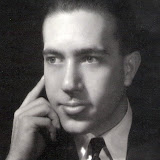
Rabbi Dr. Zev Zahavy Photos

Posted on 08:15 by Unknown
Photos
Rabbi Dr. Zev Zahavy

New York City 
September 8, 1918 - May 1, 2012

Nine Minute Slideshow
edited by Barak

Sermons - View Online
Sermons - Download PDF
edited by Tzvee

Donate in Memory of Zev Zahavy
Read More
Posted in rabbis, universities, yeshiva, zev zahavy, zichron ephraim, zionism | No comments

Thursday, 18 April 2013

What is Kaddish?

Posted on 19:04 by Unknown


We said Kaddish for our dad this past year. Some writers responded to their year of saying Kaddish by writing books about it. Four good ones are shown above.

We published a popular book about prayer a in July 2011, so we don't feel the need to go ahead and write another one about our Kaddish year.

In fact in that book, we resolved our main understanding of the meaning of the Kaddish. We have not changed our mind. Here is some of what we said in "God's Favorite Prayers" as explained by our archetypal mystic, Hannah, on pages 59-61:
Hannah invites us to examine next the well-known and practiced Kaddish prayer, a second case of the entry level mystic’s prayers.

There are several varieties of Kaddish recited in the synagogue, enough to confuse the beginner. One of them, called the Half (chatzi) Kaddish, because a few sentences are left off of it, is recited by the leader of the services as a framing mechanism to mark the end of each major section of the liturgy. And, coincidentally, the term ‘half’ (chatzi) relates to the Hebrew word for a dividing or framing action.

The second Kaddish variety, called the complete one (shalem), marks the very end of the services proper.

The best-known Kaddish in the synagogue though is the mourner’s Kaddish (yatom), the one that is employed as a mourner’s doxology (i.e., a praise of God). The practice of associating this prayer with a mourner first appears in the thirteenth century. The synagogue authorities endorsed the custom that mourners during the first eleven months after losing a close relative ought to rise and recite a Kaddish on their own. In the case of this Kaddish Yatom, the mourner rises in his place in the synagogue and recites the doxology at a few appointed times in the daily, Sabbath, and festival services.

I ask Hannah, What is it that the prayer tells us? And, in particular, what makes the prayer an apt mystical enactment for the mourner who recites it? She explains that the substance of the prayer is not at all philosophical or deep. It is a litany, as a mystical prayer is wont to be, of the right words of praise of God in the correct order. She shows us the mystical component of the Kaddish, those lines that cite for us the adoration that is recited by the angels in heaven.

Hannah explains then that reciting the Kaddish provides an appropriate vicarious association for the mourner—to stand and recite a prayer on behalf of the departed souls of the dead:

Magnified and sanctified may his great name be in the world he created by his will. May he establish his kingdom in your lifetime and in your days, and in the lifetime of all the house of Israel, swiftly and soon—and say: Amen.
May his great name be blessed forever and all time.
Blessed and praised, glorified and exalted,
raised and honored, uplifted and lauded
be the name of the Holy One, blessed be he,
beyond any blessing, song, praise and consolation
uttered in the world—and say: Amen
May there be great peace from heaven,
and life for us and for all Israel—and say: Amen.
May he who makes peace in his high places,
make peace for us and for all Israel—and say: Amen.
(Koren Siddur, p. 178)
This lilting and poetic passage does have a certain unique cadence, yet it seems to us in its words to be no more than a standard glorification of God, nothing about death or dying or the deceased. I ask again, why then is this prayer especially apropos for a mourner? Hannah proposes that it is because reciting this heavenly angelic Aramaic praise is the epitome of a mystic’s liturgy. It is a stand-in enactment by the mourner on behalf of the departed loved one. The mourner stands in place in the synagogue and recites the words.

But acting in the mode of the mystic archetype, the mourner advances to the next level of mystical prayer. She is not just addressing God with the outpourings of her personal anxiety and vexation, but imagining that she is standing aloft in heaven, representing the soul of her beloved departed, knocking on heaven’s door to seek entry for that spirit into a secure, eternal place close to the divine light and near the warmth of God. 
I pressed Hannah on this matter. I asked her to clarify to us what is going on when she recites the Kaddish. Is she addressing God from her pew, using the words authorized by the angels on behalf of the deceased? Or is she imagining her ascent to heaven to plead there for the soul of the departed?

Hannah did not know the origins of the Kaddish as a mystic’s prayer on behalf of the soul. Alan Mintz explained that this association began in the Middle Ages (Hurban: Responses to Catastrophe in Hebrew Literature
In the generations immediately following the First Crusade the ceremony of remembering the dead began to be practiced not only in the case of renowned rabbinical martyrs of public persecution but also simply for all who died natural deaths, entirely irrespective of the conditions of persecution. A bereaved son would recite the Kaddish, an Aramaic doxology, for the memory of his recently departed father or mother, in the conviction that such recitation had the power to save the deceased’s soul from tortures beyond the grave. The practice gained headway in the thirteenth century and by the fifteenth a new custom emerged: the Yorzeit, the recitation of the Kaddish on the anniversary of the death of a relative. And soon there was further established the Yizkor or Hazkarat Neshamot, the Kaddish together with various supplications for the souls of the departed, recited on the Day of Atonement and the last days of the Pilgrimage Festivals. Taken together, this amounts of a kind of cult of the dead that began in medieval Ashkenaz and later spread to all of world Jewry.
Mintz commented further about the deep personal attachment that Jews have to this prayer:
The astounding tenacity of this outlook is observable in the simple sociological fact, known to all, that in the process of secularization, and especially in the acculturation of Jewish immigrants from Eastern Europe to America, the recitation of the mourner’s Kaddish with its attendant rites is the very last particle of tradition to be given up.
Without knowing anything about the historical development of the Kaddish, the entry-level mystic in the synagogue does engage in some prayer, emulating the angels and sending praises and petitions heavenward. She also may practice an intermediate form of mystical prayer, an imagined ascent to stand in another realm and importune her case before the angels and before God....
Talmudic Books for Kindle | The Amazing Kindle Talmud in English | Whence and Wherefore | God's Favorite Prayers


Read More
Posted in archetypes, kaddish, prayer, religion, synagogues, Talmudic Books, women, zev zahavy, zichron ephraim | No comments

Saturday, 23 March 2013

Top Ten List for Seder Leaders

Posted on 19:20 by Unknown
Passover is coming... Time for our top ten tips for your Seder...

Most folks consider preparing and eating the festive meal to be the central focus of their Passover Seder. There's not much advice that we can offer to help improve upon that.

However, we have always had fun conducting the reading of the Haggadah. We learned this art as a child by watching our father masterfully conduct the communal synagogue Seders as the rabbi of the Park East Synagogue in Manhattan.

Sad. We will miss dad this year. Happy. We greet a new grandson this year. Barak and Miriam just had a boy!

So in the spirit of the season of rebirth and freedom, let us try to help free you from the dread of the task of conducting your family Seder this year.

If you follow these ten tips you will get rave reviews of your Seder from all of your guests. Guaranteed.

1. Know your Haggadah. This year, spend an hour before Passover reading through your favorite version of the Haggadah. Sort out the rituals (like Kiddush), the liturgies (like the Hallel) and the learning (like the ma nishtanah and what follows). Make marginal notes or use a highlighter.

2. Know your guests.
Find out who is coming (yes, Seder leaders need to know that). Think through what their skills are and what role they can play in the Seder. Remember some guests may be simple, some wise, some won't know how to ask a question. Try to meet the needs of everyone assembled.

3. Make a recitation assignment list (in your head or on paper).
The Best Ever Seder will be a collaboration of all the guests. Those who can't read Hebrew can read a passage from the Haggadah in translation (English, Russian or otherwise) or perform another essential task.

4. Prepare props for colorful explanations.
The matzo, maror, haroseth, shank bone, egg all have familiar symbolic meanings worth mentioning. You can include other props of your choosing for added flavor to the event: use miniature pyramids, toy or paper or chocolate frogs, relevant family memorabilia or a special illustrated Haggadah (hold it up to show it off or pass it around).

5. Buy toys for the children. Give them something nice at the retrieval of the afikomen or distribute something small anytime they start to lose interest.

6. Tell a (short) story (or two). During the reading of the Haggadah tell about how your family matriarch or patriarch conducted the Seder or prepared the meal. Reminiscing in small doses adds great flavor to your production.

7. Be dramatic.
The Seder is a drama. The guests are the actors. Yemenite Jews have the custom to dress up and walk around the table to reenact the exodus. Even if you are not much of an actor, at the very least, you can talk about how other people are dramatic.

8. Don't be melodramatic.
You and your guests all are on stage. This is not the time to bring up old family arguments. If you do, your Seder might become the "last supper" that you eat together.

9. Have the matriarchs (of the families) greet Elijah at the door.
Watch as the wine in Elijah's cup changes color as he sips from it. Talk about loss and the mystical redemption.

10. Sing the songs with gusto.
Sing the closing songs in all the ways you can remember. You can sing Chad Gadya in Yiddish, if someone knows how, or you can add the animal sounds. Have fun -- these are supposed to be rowdy songs that you sing after drinking four cups of wine.

These tips may be self evident to you -- or they may be new. Whatever the case, good luck and have a happy and kosher Pesach. [annual repost]
Read More
Posted in bible, haggadah, hebrew, history, humor, kosher, Passover, prayer, rabbis, religion, talmud, Thanksgiving, wine, women, zichron ephraim | No comments

Saturday, 17 November 2012

Thanksgiving Sermon of Rabbi Zev Zahavy 1943

Posted on 22:43 by Unknown
Here is my dad's sermon from 1943 for the holiday of Thanksgiving.

Click here for Rabbi Zev Zahavy's 1943 Thanksgiving Sermon, published by the RCA, Rabbinical Council of America.


A big hat tip to Zechariah for finding this and sending it to us.
Read More
Posted in rabbis, synagogues, Thanksgiving, zev zahavy, zichron ephraim | No comments

Thursday, 27 September 2012

The Theological Cosmology of Rabbi Dr. Zev Zahavy - on Kindle from Amazon

Posted on 16:37 by Unknown
Talmudic Books has published for Kindle, "Whence and Wherefore" a major work of theological cosmology by Rabbi Dr. Zev Zahavy, of blessed memory.

Here is the final chapter of the book:

14 THE PLIGHT OF THE PARTICULAR

A very sagacious cocoon for emergent life was spun on Planet Earth by Mother Nature. However, her main concern seems to be the fostering of species, and ensuring their perpetuation. Nature patently ignores the trials and tribulations of the particular. Nature is clement toward her family, but obdurate toward its individual members. Small wonder, then, that an analysis of the human situation reveals wholesale anguish and anxiety as the forerunners of despair and hopelessness.
Such forlorn attitudes are quite prevalent in contemporary society. The atheist-existentialist, for example, moans about the vacuity of human existence. There is no logical explanation for the inanity of man’s being. In fact, it appears that nature played a cruel hoax on its supreme product, man. It endowed man with an intellect, with which he was enabled to perceive the utter futility of his own essence.
It is not easy to suffer the awareness of a meaningless existence. No organic specimen, other than man, has been inflicted with such a prepotent imposition. It hardly inspires a zest for life when one observes nature smiling broadly upon the species as an entity, and favoring the biologically superior product, while brusquely turning her back upon the tortured human psyche. Why was man chastised by being granted a brain that may apprehend all this?
Has man’s superior mental apparatus brought him greater security or happiness? An ego-awareness faculty, such as man possesses, becomes a hollow mockery in face of the emotional torment it causes him to endure. His intellect weighs upon him like a burdensome albatross. It would have been a far better thing for man to have been deprived of such a keen, discerning thinking-equipage, because as a simple biological creature, he would never have comprehended the sordid plight of mortal existence. If man were nothing more than a menial biped, he would have been spared the voluminous psychological stress and emotional sorrow to which he is presently subject.

Now that man, through his superior intellect, has unlocked a Pandora’s box revealing the gross human condition in all of its misery, to whom may the pitiful individual turn for comfort, solace, and sympathy in the dark hours of isolated suffering and loneliness? Shall he call upon Mother Nature? But Mother Nature could not care less about his pathetic predicament. If the distressed subject persistently squints at the world through a constricted, agnostically dominated vision, then, indeed, there is no one to turn to but himself. Life, as seen by the atheist-existentialist, is an absurd carousel. It comes from nowhere and it goes nowhere, all to the accompaniment of a garish musical clatter. Existence is a kaleidoscope of crazy-quilt patterns; and because it makes no sense, being may be equated with nothingness.
Accordingly, the atheist should not misrepresent the fact that in the eyes of Mother Nature, the plight of the particular evokes little sympathy. Once nature’s callous demeanor toward the particular is acknowledged, the atheist becomes hard-pressed to offer a sensible explanation for the evolution of a unique human ego. If man, as a biological product, is nothing more than the chance eruption of a peculiar specimen, whose only function as a particular is to interlink another element of the human concatenation for the simple perpetuation of an irresolute species, then what is the purpose of endowing him with a faculty for self-conscious awareness?
This question becomes an especially thorny issue for the Darwinians and contemporary behaviorists, who conceive the cosmic cycle of nature as operating through a doctrine of “natural selection,” so that nature only produces that which is required for the survival of the species. If such is the case, the highly developed brain of species Homo sapiens serves no valid purpose. In fact, in view of his marked penchant for fratricidal demolition and global suicidal behavior, modern man represents a blatant antithesis to the law of “natural selection. “
There was no biological compulsion on the part of the evolutionary process to produce a rationally minded, egoconscious, and self-analytical specimen. It would have been more within the operational design and function of nature to generate an emotionally sterile and rationally supine creature bearing the same image as man. Such an anthropomorphous being could adequately populate a planet through the instinctive procreation of a subintelligent, but psychologically tranquil, species, “Homo simpleton.” A species “Homo simpleton” would have been the logical Darwinian progression beyond the higher primates, and endowed with an appropriate set of animal instincts necessary to conform with the survival pattern of nature, it would have made a logical capstone for the evolutionary process. Not Homo-sapiens, but “Homo-simpleton” should have populated this planet, because nothing more than an exceedingly shallow-minded folk should have appeared at the end of the long, Darwinian chain.
The facts of life, however, are otherwise. Modern man emerges as a paramount prodigy of the extensive cosmic scheme of nature, and this poses a baffling situation. In the eyes of the atheist-existentialist, man’s appearance is inexplicable; in the sight of the honest scientist, he is an anomaly. Furthermore, the human acquisition of a high-grade intellect discredits the theoretical structure dogmatically developed by the Darwinians and the latter-day behaviorists.
Why should a universe emerging through the rigorous throes of pure accident and sheer chance evolve an intelligent specimen of matter who has the ability to analytically contemplate his own ego structure? As a product of mere coincidence, the formulation of an advanced, rationally equipped entity makes little sense. Even from an orthodox pantheist’s point of view, the chief purview of nature suggests a desire to activate a biologically thriving universe, which requires nothing more elaborate than a variety of creatures endowed with instinctive awareness for survival and propagation. An emotionally turbulent, psychologically complex, and intellectually superior human species should never have appeared on a cosmic menu, if it is assumed that the Master Chef is nonexistent. Under such conditions, man is not only unnecessary, but in contrast to rationally deficient and mechanically or instinctively motivated matter, he appears to be an incongruous absurdity.
The absolute emergence of rational man, therefore, indicates that the cosmos is not the consequence of an accidental cataclysmic catastrophe. This conclusion, however, does not yet explain the circumstance of the disaffected particular. The impersonal, mechanistic disposition of nature toward the individual embodiment of a species remains a disturbing enigma. Why does nature hardly exhibit any concern for the destiny of the specific particular? Her only interest is to preserve a particular so that it may service and perpetuate the species.
Nature’s lack of interest in the particular is quite evident in the area of propagation. Nature disperses its seeds in such generous proportions that one may chide her for exercising impetuous wastefulness. For every seed that takes root or that germinates, there are many dozens, hundreds, and thousands that are scattered uselessly, and their fruition never sees the light of day. Furthermore, man is appalled at nature’s indiscriminate exercise of her powers. Her destructive fury may strike forth against the wicked and the innocent alike. Why, indeed, does Mother Nature display a heartless amoral attitude toward the struggling particular?
This brings us to a vexing dilemma that determines the entire outcome of man’s personal relationship with God. Since the Divine Personality radiates its message through nature, does the lack of biological concern for the welfare of the particular, as found in the cosmic scheme of nature, reflect the divine will of God? If it does indicate the divine attitude, then the abyss between man and God can never be bridged, and the human endeavor to address the Supreme Being is hopelessly futile.
An understanding of man’s position as a particular must be two-fold. On the one hand, man is nought but an innocuous particle of nature, and in this respect his particular identity is of slight consequence. However, man is also something else; but this supernumerary status depends upon the point of view man, himself, assumes toward the cosmos.
If man decides that he will occupy only the biological lowlands where the law of the jungle prevails, then his particular existence fades in importance and diminishes in its specific significance. Neither Brute Biological Man, nor Domesticated Biological Man, nor Civilized Biological Man can file a claim for meaningful existence, because they choose to identify solely with the base biological thrust of life, where the particular survives in an impersonal atmosphere of dispassionate instinctive awareness.
In the valley of selfish biological survival, man fails to perceive a higher ego identity. It is when man arrives on the Theological Plateau, and certainly on the Prophetic Summit, that a distinguished ego consciousness comes into view. Lower Biological Man, however, is so busily engaged with matters of the flesh that he ignores the opportunities to reach the higher spheres in life. Resolutely, he prefers to occupy his sordid environment, where the chief occupation is to satiate crude biological appetites and, principally, the sex drive. Lower Biological Man swings with nature-in-the-raw, and in so doing, he slips to the nadir of existence. As a particular in that realm, he commands an insignificant status.
Despite its shortcomings, the domain of Lower Biological Man appears to be exceedingly popular. It attracts vast numbers of the global population to its banner, and they render it homage fit for a deity. Formal philosophical schools of thought have been devised to accommodate the mass penchant for a life-style extolling the biological motif above all else. Atheist-existentialism stands out as a notable example.
The atheist-existentialist relates the particular to the en soi category of biological instinctive awareness. For this reason, the atheist-existentialist deems life to be a futile struggle. Human existence is confined to the biological valley of the three lower biological specimens: Brute Biological Man, Domesticated Biological Man, and Civilized Biological Man. The upright two-legged creature is conceived as nothing more than an educable beast. Man must struggle along for survival with all other instinctively aware creatures in nature. As a consequence, despair, anguish, and futility prevail.
In a broader sense, man is more than an instinctively aware creature. Man has developed the unique ability for self-conscious cognition. With the inimitable capacity to identify his own ego, man advances to a higher status of existence. He becomes superior to the common category of organisms who thrive through instinctive awareness. Simply stated, man, alone, knows that he has an ego. Only man is cognizant of an ego within himself and within his fellowman. An important facet of ego-cognition is the aptitude to perceive that, within a fellow human being, there also resides the power for ego-cognition.
The intellectual expansion of man through his power for ego-cognition inspires within him an intrepid resoluteness to identify his own particular being as an essence of vital significance in the universe. His self-knowing skill convinces the individual that he is endowed with a sense of special importance and purposefulness.
If the outlook of man is a criterion, then an ego-cognizable specimen finds existence unbearable unless the particular is invested with meaning. If no purpose is evident for the creature blessed with ego-cognition, then life becomes a harrowing drama of grievous anguish and wearisome despair. To the atheist-existentialist, who nullifies all raison d’ĂȘtre, existence becomes a burdensome exercise in futility. Man finds it difficult to endure a situation whereby his particular essence is merely meshed into the survival pattern of non essential flotsam floating along a stream of cosmic residue. Man cannot abide the existence of an en soi if life is to convey even the slightest apparition of meaning. Unfortunately, the atheist-existentialist, in directing man toward a pour soi essence, fails ignominiously to provide the human specimen with a worthwhile prescription for achieving a valid goal in life. The pour soi directive of the atheist-existentialist is as empty, vapid, and nugatory as is his otiose en soi.
A creature possessing the potential for ego-cognition represents an extraordinary breakthrough in the normal functional pattern of nature. Heretofore, all existence was either inorganically automated, or if organic, instinctively motivated. One could hardly anticipate the emergence of a human specimen with the power to rationally analyze and influence nature’s organic and inorganic operation.
Man is indeed an anomaly. In one sense he is a biological product with hardly any redeeming features to warrant special notice. In another sense, however, he stands squarely above all nature as a regal and supremely intellectual giant. As a percipient persona, man cannot sustain a limited state of simple instinctual awareness. He feels impelled to generate an essence that may transform his existence into a meaningful adventure.
Although the psychological essence of human ego-cognition is biologically dependent, it nevertheless encourages man to assume that he is the proprietor of a unique being, and therefore, he is vastly superior to the diverse miscellany of nature. Man asserts that his particular essence does qualify for a distinctively respectable status of incomparable significance. Because he is equipped with such a highly proficient intellectual talent, man makes bold to declare that his particular being arises as a purposeful event in cosmological history. In fact, man knows that he does relate meaningfully to the stars, the galaxies, and the universe.
Ultimately, it dawns upon man that the special endowment of a profound intellectual capability is not merely a fatuous license for his own sophisticated, biological amusement; rather it is an imperious mandate charging him with the obligation to search beyond nature for the source of all things. Man’s ability to postulate the query “wherefore” imposes upon him an imminent responsibility to seek the “Who.” The process of this search for the Grand Master is marked by a somewhat devious route. Man must first embark upon a penetrating, introspective ego analysis before he may acquire a discerning revelation of the universal absolute.
The circuit to the Divine Personality commences with the unfolding of the mortal “I” ego. Through ego-cognition, man may assume that he holds a more valid status in the cosmic identity. His existence exudes the quality of a vital essence. His particular ego occupies an eminent category in the unfolding destiny of the universe, because man knows that he relates historically to the first proton. By reason of this primary awareness, he recognizes that he shares in some small fashion in the determination of cosmic eschatology. Man discovers a unique relevance in tracing the source of his own being. By further extension of the faculty for self-conscious cognition, man is able to discern a meaningful premise for his own identity.
How does man proceed to certify his endorsement as a meaningful particular in the cosmos? He records his biography from generation to generation, and he ratifies his book of existence as an important volume in universal eschatology. In fact, he believes that each individual record in his encyclopedia of life is an essential text in cosmic history.
Man concludes that his existence does leave a mark upon the world. He is convinced that the consequences of his own particular adventure stamp an indelible imprint on the destiny of the cosmos. His being is a microcosmos reflecting the macrocosmos. His life is not a mere shadow flitting from insignificance to nothingness, because through the remarkable identification of his I/mortal ego, he can postulate the divination of God. Indeed, through the awareness of his own “I” ego, he can infer the presence of a Divine “I” ego. Authentic existence is thereby within the reach of man. To qualify for authentic existence, the self-conscious cognition faculty expands its comprehension of the particular “I” ego, and eventually, it becomes possible for man to conceive God as an “I” Divine.
Man’s particular being, therefore, is vitally significant, and the diminution of his “I” ego through his passing is a tragic event. Moreover, if man ever becomes extinct as a result of his own malevolent disposition, no front-page headline type will ever be large enough to justifiably herald such a horrendous catastrophe. Of course, no typesetters will have remained, anyhow, to record such a disastrous event.
It is therefore reasonable for man to consider the emergence of his ego-cognition faculty as an indication that such a largess is a special grant from a power beyond the instinctual, automated operational design that is so clearly manifest in nature. There is no doubt but that the species Homo sapiens arises as an unusual phenomenon in the universe. Here is a strange particle of matter of the cosmos that developed the skill to comprehend its environment; the ability to contemplate itself; and the proficiency to search for its source in time and space. Could such a being be the quite accidental consequence of an impersonal, natural occurrence? The rare thinking organism could only conclude otherwise. Man’s appearance had to be the divinely inspired and divinely ordained consummation of a cosmic scheme.
Rational man refuses to credit a blind, coincidental interaction of impercipient atoms with the competence to formulate its own paradigm for the emergence of a specimen able to contemplate itself. The appearance of a self-conscious awareness factor in nature must have been conceived through the grace of a higher intellect. On the entire horizon of nature within the periphery accessible for human analysis, man alone stands out as a specimen who may study his “I” ego. No other organism known to man can recite the apparently simple first-person pronoun, “I,” and comprehend its significance.
The special human capacity for ego contemplation opens the intellectual gateway for the postulation of a Divine Personality iridescently resplendent within the sacred folds of its own Supreme “I” Ego. In taking this bold step forward toward a more personalistic identification of an Eternal, Immutable God, man presumes to impart a distinctive and meaningful quality to his own particular being. No other creature exhibits a personalistic analysis of its own ego. No other living specimen known to man discerns the concept of God, let alone a Divine Ego. The exclusivity of this profound eruditeness achieved by man is reason enough for him to assume a superior posture of purposefulness.
With such a keen analytic aptitude, man rises above the vortex of nugacious biological existence and invests his individual appearance with meaning. He refuses to accept the nondescript designation that Mother Nature customarily imposes upon her offspring. Man substantiates the claim for individual pertinence by endowing each particular with its own characteristic name. The particular’s importance and singularity are confirmed by assigning each individual member with a personalized nomenclature. This practice certifies the distinctive identity of the I/ego. In a similar vein, man assumes that God must also be known by name, so that His all-meaningful being may remain supreme in the eyes of His creatures. Subsequently, the custom of name-calling is applied to the rest of organic and inorganic matter, but this measure is undertaken by man merely for the sake of establishing a convenient means of description and identification by which they, too, become part of a universe of meaning.
The fact remains that man, alone, communicates through the process of names. Man, alone, resists nature’s impersonal attitude toward the individual specimen. Man defies nature’s callous disposition toward the particular by providing the persona with purposeful significance through a historically applicable relationship involving the cosmos and the Creator.
Man may take pride in the fact that his unique cognitive ability is withheld from every other earthly, organic creature. The singular manifestation of ego-cognition accorded to man, therefore, marks him as a distinguished and purposeful existent being in nature.
A more profound revelation of ego-cognition occurs with the enunciation of the divine Decalogue’s first commandment: “I am the Lord, thy God....” God is identified as exhibiting a self-conscious awareness faculty. Inasmuch as self-conscious awareness is evident only in the intellect of man, its parallel source must be located in a superior realm, namely, in the domain of the divine. It is therefore considered to be a divine gift to be able to enunciate the word [. Man has been so blessed, only because he reflects the image of the Divine Personality. The revelation of a divine ethos in the universe becomes possible when God’s identity is formulated and expressed as Supreme “I.” The I/mortal may then relate to the I/Divine, following which, man may proceed to perfect his intellectual prowess so that he may discern the universal moral directive within the design of a divinely inspired universe.
The unfoldment, then, of the I/mortal leads to an apocalyptic unveiling of the I/Divine. When man discovers that he is an “I,” he feels impelled to adduce a similar transference of ego manifestation to the Divine Personality. If man displays an “I,” then God must surely exhibit the Supreme “I,” and it is through the omnipresence of the Supreme “I” that man may experience a divine revelation. Thus, the divulgence of the I/Divine enables man to perceive the will of God in the universe.
The quintessence of authentic existence resides in the essence of divinity. God’s being is the purest and most perfect form of existence. If man could reflect some aspect of the Divine Being, he possibly may acquire a modicum of authenticity for his own mortal being. If man gains even a whit of authenticity in his life, he may justly claim a token of special respect and meaning for his particular identity.
In what manner, then, may man demand to be distinguished from the ordinary existence of a commonplace substance whose particular is of little interest to Mother Nature? How may man garner the appropriate esteem so that he may claim a meaningful measure of relevance for each single human specimen? Such a role is fulfilled when mortal ego-cognition basks in the resplendency of the I/Divine. Since the I/Divine formulates the basis of all authentic existence, the I/mortal, by emulating the divine essence of ego-cognition, justifiably may conclude that in the Divine-mortal ego-similitude, human existence acquires authenticity. When man, in enunciating “I,” perceives that he is afforded the awareness of his own humble mortal ego only by virtue of the beneficent grace of the supremely Divine “I,” then he may infer the unfoldment of such similarities in personality structure as being a coadunate concomitance of authentic existence.
God emerges from His role as the transcendent composer of the glorious cosmic epic, and reveals Himself as the supreme I/Divine, whose particular essence manifests a unique singularity and individuality. By emulating the ego cognition evinced by the I/Divine, the I/mortal, although trivial by comparison, nevertheless, through the privilege of imitatio deus, assumes for its own mortal particular a singular quality of unique identity and significance in the cosmic drama of the universe.
As indicated, an interpretive analysis of the self-conscious awareness faculty encourages man to conceive himself as bearing an I/mortal ego that is a minute reflection of the I/Divine. Man should not be too harshly criticized if, subsequently, he boastfully announces, as is recorded in an early Genesis passage, that he was made “in the image of God.” Indeed, if both man and God exhibit ego-cognition, then an imagery parallel between them is not too facetious a pronouncement for the ancient biblical scribe.
A sharp contrast becomes evident as life casts its flickering shadows across the screen of existential reality. Whereas in the broad sweep of nature the particular is of little concern, on the Theological Plateau and on the Prophetic Summit of man’s domain the particular is never regarded as blithely expendable. Nature exercises a cold, impartial attitude toward the particular. The single specimen is of interest only as it serves to sustain the propagation and continued survival of the species. On the higher plateaus of man, however, the particular enters into a covenental relationship with God. The particular speaks to God; the particular considers the mysterious personality of God; the particular ponders on the problem of life’s purpose, and therefore, searches assiduously for the divine message. This rapport and communion that the I/mortal endeavors to establish with the I/Divine helps to convince man that he is granted the privilege of considering his ego-being as engendering a meaningful significance. Man cannot help but conclude that he is a vital link in the chain of cosmic destiny as outlined by the recondite master plan of the Supreme Being.
The enlightenment that man derives on the upper intellectual plateaus in relation to the identity and aspirations of the ego, fills him with a true sense of worth. He deems it valid to pursue the enigma of life, and in this metempirical search, he hopes to gain authentic existence. Man is convinced that authentic existence is within his reach. Where, however, does it seem most propitious to encompass it?
The lower Biological mode of subsistence offers small hope for capturing the authentic in life. Little wonder, then, that the particular on the lower Biological levels is so ruthlessly ignored and so harshly disdained. One must climb, therefore, to the intellectual plateaus, and particularly to the Theological and Prophetic heights, if one is to discern authenticity. In the rarefied atmosphere of the upper Intellectual realm, the distinctive recognition of the I/mortal ego, and its relation to the revelation of the I/Divine, invests man with a noble posture for living.
As man descends from the upper Intellectual spheres along the incline leading to the Majestic Biological Plain, he feels that his life is filled with a sense of meaning; his singular appearance is important; and his particular identity has purposeful value. A basic element in man’s search for authentic existence, therefore, is the appropriate identification of the I/mortal ego, so that it may fulfill its function in the establishment of a meaningful relationship with the I/Divine. The I/mortal must strive to reach the plateau that is most promising for a rendezvous with the I/Divine.
In a frantic desire to reach God, man has applied his creative talents to the maximum, hoping thereby to arrive at the proper formula. As a consequence, a plethora of ritualistic doctrines were developed over the centuries, and these were designed for the purpose of making available to man a prescription for divine communication. The rituals established in the course of many generations as a means of reaching God now possess the distinguished characteristic of tradition. In addition to his many other traits, man is a decidedly sentimental creature, and an identification with tradition, therefore, promotes a more favorable psychological climate for intrepid living.
Assuredly, both ritual and liturgy are important elements in man’s search for authentic existence. They are essential as expressions of his determination to reject the stigma of expendability that nature stamps upon the individual specimen. By pridefully addressing God, and this is usually accomplished through established ritual and liturgy, man asserts that he is not expendable. He declares in stentorian tones that his particular ego identity is not a passing fancy in the wind. His essence, although mortal, has value, significance, and purpose.
Man, however, recognizes that he is weak, both physically and psychologically. He therefore requires the gracious guidance of a higher power to aid him in securing a significant essence. In order to win a seal of meaningful approval for his own humble status, man suppliantly turns heavenward and implores that his own “I” ego—his own I/mortal-may relate in parallel conjunction to the I/Divine. Just as the I/Divine is unique and supremely indispensable in its particular identity, so does man beseech that his mortal “I” may reflect a spark of this uniqueness, a spark of this indispensability—in short, a spark of meaningfulness in the dispassionate cosmic panorama of the universe.
The classic outcry of the Psalmist, “Bless my soul, O God!,” well reflects this notion. It suggests through implication: “Exhibit Thy awareness of my essence; of my egoidentity; because only through my relationship with Thee, O God, does my life assume extraordinary value. Grant unto me the privilege of being acknowledged as a significant particular. Do not cast me into the melting-pot of estranged biological phenomena. Do not relegate me unto the meaningless maelstrom of lower biological subsistence, where the particular is measured only in terms of its pragmatic biological efficiency. I implore Thee, O God, bless me with a more meaningful cognizance of Thy Being, so that my own being may thereby acquire a greater degree of authenticity.”
Thus, by pleading for a demeanor of worthiness, man hopes to find the way to perfect his own existence so that it may be authentically developed. The alternative is to float aimlessly along the broad, impersonal stream of purportless, particular matter scattered throughout the universe. Man, however, is impelled to presume that his being is different, because he is the only identifiable specimen possessing the rare quality of ego self-cognition.
Man’s particular identity, therefore, is important. His unique essence has significance, and somehow, man concludes, his being does affect the destiny of the cosmic drama. Man interprets his appearance as the crowning-point of nature; and why should he not assume such a regal stature? Consider, in all of creation to which man has access, there appears no other creature endowed with the unique capacity to conceive through a self-conscious awareness of a mystifying, mortal personality, a glimmer of the ineffable I/Divine. As a fitting climax to such a profound revelation, may not man boldly presume to endow the whole universe with meaning?
Therefore, man should not be branded as being overly arrogant when he concludes that nature produced a whole cosmic panorama of matter, so that one of its products may look in on itself; analyze its own condition; declare its independence from the apparent absurdity of the en soi; identify itself by name; perceive the Divine Being; and furnish its own particular entity with meaning by relating in a personalistic manner, through confrontation and dialogue, to God.
The problems that arise at this point become quite profound and abstruse. How near can man come unto God? How much of the Divine Personality can man truly discern? How involved a dialogue can the human persona develop? The analysis of these enigmas calls for the most concentrated application of human rational perspicuity.
In order to comprehend the futility of any mission, it is necessary to attain a high level ·of knowledge in that specific field of endeavor. The incongruity of advanced mathematical equations that have no solution can best be understood by one who has achieved the astute sagacity of an expert mathematician. The futility of the quest to discern the ultimate secrets of nature that lie beyond the reach of the human finite mind can best be appreciated by those who explore the domains of the higher plateaus.
Technological Man gains a modicum of awareness of the formulation of nature through a patient, persistent, and thoroughgoing analysis of the universe of relational knowledge. He finally learns “how” nature operates. Although he does not learn the “why” of things, because he lacks the inspiration to know the “who,” Technological Man nevertheless makes an extremely valuable contribution to the storehouse of human knowledge by developing man’s ability to compose the necessary question—to arrange the puzzling equation that has no answers.
In his “how” research, Technological Man peers into the complicated strata of nature, only to discover that the configurations and the aspects of relational knowledge eschew any semblance of personality. Within the limited accommodations of a “how” investigation, Technological Man may find an “it,” but never a “who.”
Philosophical Man, in his search for “why,” finds that the answer points to the mysterious “who,” and identifies this being as “He”—the hidden Divine Personality—or more appropriately, for Philosophical Man, the Supreme Being. Technological Man never confronts a personality, and therefore, he can never perceive a “He.” It is a concept beyond the most advanced cognitive faculty with which Technological Man is concerned on his domain.
Theological Man, searching for a Divine Thou, soon learns that man can never attain the answer to the ultimate “who.” At best, all that Theological Man can hope to achieve is a proper phrasing of the question. The essential significance of the Personality Mysterium is beyond human comprehension.
In view of the fact that his quest is so hopeless, shall Theological Man succumb to a mood of despair? Decidedly not, because a knowledge of certain aspects of the personality of the Supreme Creative Intellect may be derived from finite nature. The perception of the glittering rays of the Divine Intellect sparkling within the bosom of nature like precious gems is reward enough for the soulful human rational faculty.
Although the Master of the Palace seems to be beyond the pale of immediate recognition, nevertheless, the aura of His Divine Presence pervades its stunning, elaborately designed chambers, which exhibit the grandeur of elegant accoutrements. Consider the experience of entering a magnificent, yet strange mansion. In the owner’s absence, one may strive to ascertain aspects of the owner’s personality through a visual assessment of the architectural design, decor, and furnishings. The excitement of recognizing within each artifact a reflection of the taste and possibly personality of the owner becomes an intriguing task in itself.
So is it with God. As the Supreme Creative Intellect, the Divine Persona may never be known; and it therefore appears that a direct confrontation is impossible; nevertheless, we continue our search, and we are delighted when we discern a fresh facet of the Divine Personality emerging from our scrupulous analysis of definitive clues in nature.
Ultimately, we find that not only is a normative structure visible in the universe, but a unified communion of matter becomes more logically evident. A single strand of causal relationships appears to flow from the atom to the far-flung galaxies—in the refrain of the learned astronomer: “ ... the existence even of stars and galaxies depends in a delicate manner on the force of attraction between two protons”—and the radiant glow of the Divine Personality emerges. To such a Personality, we may find it possible to relate.
An ensuing dialogue between two personalities—one mortal-and One Divine—becomes not alone a possibility, but moreso, a human responsibility; and again, the strain of the learned astronomer resounds: “A remarkable and intimate relationship between man, the fundamental constants of nature and the initial moments of space and time seems to be an inescapable condition of our existence.”
From this “remarkable and intimate relationship,” there arises a discernment of moral law and order. It is the consequence of an exercise of extraordinary cognition between the I/mortal and the I/Divine. Man communicates with God, and majestically rises to the Prophetic Summit, from whence he may carry away divine tables of testimony inscribed with a meaningful ethos; as the lyrical prose of the learned astronomer avers: “Human existence is itself entwined with the primeval state of the universe and the pursuit of understanding is a transcendent value in man’s life and purpose.”
As man regards the grandiose panorama of his universe, and struggles to fathom its meaning, he is struck by the innate apperception that one of the great miracles of man is his ability to comprehend. Physiologically, the human rational organ consists of a complicated myriad of nerves, tissues, and brain cells. It has no rival on this planet in its capability for conscious awareness. Man is so greatly impressed with his own thinking mechanism that it appears correct for him to assume that his cognitive apparatus is a keystone target of the universal design. Through this faculty of prodigious perception, species Homo sapiens is able to postulate meaning for existent matter and life.
Under the spell of sentimental romanticism, literary artists have assumed that God created an impressive universe for an awe-inspiring apprehension by man. They ponder: To what avail is the glory of creation and the imposing majesty of nature, if there be no other aesthetic consciousness to appreciate its splendor besides God? Empty, cold, and foreboding is the vast spectrum of starry space, if no conscious mind other than God perceives its ineffable beauty. Furthermore, man’s appraisal of nature yields significant principles for conduct. It will be a tragic moment in the universe when human consciousness disappears, for then aesthetic judgment subsides, moral apperception fades into oblivion, and the comprehensible schema radiated from nature is lost to mortal awareness.
The learned astronomer taught that “the pursuit of understanding is a transcendent value in man’s life and purpose.” The measure of man and his status in relation to the universe and the Divine Being depends upon the manner of understanding that he seeks.
Biological Man achieves existential awareness of the crudest sort. He knows that things exist. Technological Man gains existential consciousness. He comprehends “how” things exist. Philosophical Man cognizes abstract awareness. He acknowledges a “why” in the universe. Theological Man attains moral perception. He searches for the “who” beyond the universe. Prophetic Man conceives moral discernment, for he discovers a Divine omniscient deontology operating behind the facade of the natural universe. He discerns the ultimate “Who,” the Divine “I.”
Finite man eventually comprehends the futility of seeking knowledge beyond the limits of human cognition. Although man becomes resigned to the hopeless situation of “never to know,” nonetheless, he is ever impelled to set forth on the quest for the ultimate source of all knowledge time and time again.
It is important that a perversion of the distinctive levels should not occur as a consequence of careless behavior. Such an event betokens a pathetic absurdity within the ranks of human existence. When Philosophical Man cavorts in the manner of Brute Biological Man, he distorts the human image and may be chastised for succumbing to idiotic behavior. When Domesticated Biological Man presumes to determine policy and practice for Theological Man, he may be castigated for appropriating unto himself an arrogance of license.
In a logical situation, from both a personal and communal standpoint, the higher plateaus should inspire and direct the lower categories so that they may endorse a humane and beneficial subsistence. However, when a superior sphere is subjugated and controlled by a lower level, a travesty of rational behavior may result. Life, then, becomes meaningless, and a fearful absurdity of being overwhelms the human population. Man cringes under the burden of existential insecurity; his survival is imperiled; and all hope for the future subsides. An illogical hierarchy convulses the stability of human development. The dire consequences evoke a mood of deep anguish, leading to futility, despair, and inauthentic existence.
What is the key to authentic existence? How shall man overcome the ominous threat of anguish and despair? Man must determine that all is not futile and hopeless; that it is possible to “apprehend the ethos of the evening star”; and that this noble task may be accomplished by drawing ever closer to God.
Man must seek to relate to God in a personal intimate fraternity. If intimacy suggests a romantic affair with God —so be it. Indeed, man has the capacity to indulge in an affair of intellectual romance with the Divine Personality, and he should not overtly evade this splendid opportunity. A romance-experience with God directs man to his finest hour of authentic existence. There are, however, certain prerequisites.
The Divine romance-experience cannot be fulfilled on the lower Biological Plain; nor can it be consummated on the Intellectual Plateau in the regions of Technological and Philosophical Man. Lower Biological Man sees only his own ego; with him, narcissism is possible, but not romance. Amour is futile on the Technological Plateau, because it is absurd to establish an affair of the heart with an “it.” Philosophical Man is deficient, because one cannot enter into a reciprocal love affair with a “He.”
The first meaningful opportunity for a Divine romance occurs on the Theological Plateau. A liaison becomes possible when God is envisaged in an “I-Thou” relationship. On the Prophetic Summit, where man exercises his maximum intellectual capacity by aspiring for an “I/mortal—I/Divine” encounter, the Divine romance-experience blossoms into its fullest expression.
Where should man seek his rendezvous with God? The atmosphere of the research laboratory is hardly conducive for such a demanding encounter; nor is the marketplace any better; nor is the mystic atmosphere of a guru parlor propitious for such a courtship. Where, then, indeed shall man turn? The answer is remarkably simple.
In view of the unique nature of the human aesthetic character, the most desirable appointment for a Divine meeting occurs in the House of Prayer. Man’s ability to experience and express deep-felt emotions makes it appropriate, as well as practical, to identify with a respectable and a well-established theological discipline. The individual passion for Divine adoration is best suited to the milieu and format of formalized religion. A more meaningful religious experience may be developed in a theologically dominated environment. Although a Divine communion may be consummated almost anywhere, God seems to be more readily accessible in a respected place of worship.
Plainly stated, the gateway to God is available to all. To reach it, one need only seek the Divine Thou as echoed by the fervent cry of His dedicated servant, the prophet Jeremiah. In a historic hour of deep anguish and despair, he implored with heartfelt simplicity: “Turn us unto Thee, o God, so that we may return.”
44 New Talmudic Books for Kindle | The Amazing 36 Volume Kindle Talmud in English | Whence and Wherefore | God's Favorite Prayers
Read More
Posted in rabbis, science, zev zahavy, zichron ephraim | No comments

Sunday, 17 June 2012

Happy Father's Day? Celebrate the Life of Your Dad

Posted on 05:31 by Unknown
How can you be happy on Father's day when your dad just passed away a few weeks before?

I guess you celebrate his life and his achievements.

Here is an excerpt from the Kindle Edition which I published in honor of Zev Zahavy's recent sheloshim, thirty days after his passing. This book was originally published by my dad in 1978.

Whence and Wherefore by Zev Zahavy
The Cosmological Destiny of Man Scientifically and Philosophically Considered. An Analysis Relating to "In the Centre of Immensities" by Sir Bernard Lovell

Wherefore

1 A COURAGEOUS QUESTION

One wonders how many of the distinguished scholars who listened to the significant presidential address delivered by Sir Bernard Lovell on that singular summer day in August 1975 recognized immediately its extensive ramifications. The subject of the paper at the time of its presentation was pointedly designated, “In the Centre of Immensities.” Its title relates to the classic work Sartor Resartus, by Thomas Carlyle, which first appeared in Fraser’s Magazine in 1833-34, at about the time when England’s leading men of science were advancing the cause of their newly formed organization, the British Association for the Advancement of Science. Among others, Carlyle boldly addressed science and expressed his concern for man’s basic existentialist identity and destiny. He was prompted by a desire to develop meaningful relationships between man and the mysterious universe of extensive expanse.
It is my estimation that the purposeful selection of a quotation from Carlyle before a body representing the distinguished scientific establishment conveys more than merely a setting for cosmological analysis. I believe that it contains a hint of majestic proportions insofar as amending the current materialistic outlook and philosophy of science. It points the way for the assumption of a new posture by men of science in their encounter with problems of existentialist overtones, and this is somewhat implied by placing before them for serious consideration, Carlyle’s inquiry, wherein he says of man, “Stands he not thereby in the centre of Immensities, in the conflux of Eternities?”
The New York Times deserves a measure of credit for exhibiting an alertness to the full significance of Professor Lovell’s presentation. It was published with some slight revisions as the lead cover-article in the Sunday magazine section on November 16, 1975, where it was endowed with the simple, but extremely provocative title, “Whence,” to which was further appended a rather enigmatic, philosophical subtitle, “We Are What We Know About Where We Came From.”
Quite appropriately, then, “Whence” may portray a milestone in the maturing of modern scientific thought. The essence of “Whence” signals to the contemporary scientist the explicit fact that other questions besides the normal “how” of the laboratory should come to the awareness of the researching mind. Perhaps this may come as a surprise to the current scientific generation, who, for the most part, are steeped in a materialistic attitude toward life and toward the tasks in their demanding discipline. Most of them, since their early freshman years, were indoctrinated with a scientific spirit that stressed the virtue of committing all investigations to the arena of “how.” Now, thanks to the courage of a leading scientist in the British Association, the staid rank and file are suddenly confronted with the challenge “whence.”

At first glance it may seem that the question “whence” may ruffle the traditional tranquility of the heretofore impregnable laboratory fortress of science and disturb its tidy security. After all, the query is a cardinal interpolation and points to an ultimate origin of some sort. “Whence” suggests the need to explore a philosophical abode where abstract concepts prevail. It anticipates the need to consider the broad domain of idealism. Science, however, is committed mainly to research in the world of concrete substance, and indeed the physical cosmos is now envisaged as extending into the remote areas of the atom’s invisible nucleus as well as unto the farout reaches of space. Does “whence” imply that the candid scientist in the coming space age must inevitably turn his sights in the direction of the divine domain?
Let us further consider the implications of Professor Lovell’s reference to an essential motif in Sartor Resartus. It is possible to discern in Carlyle’s work additional parallels that are quite relevant to our contemporary turbulent era of advanced technology. Some of the problems viewed by Carlyle in his generation may currently apply to our own day and age, as well. Behind a facade of amusing satire and frivolity, Sartor Resartus enunciates some very earnest and prudent thoughts.
For example, Carlyle was moved to produce his masterful work as an expression of disdain for the extensive materialistic outlook of his generation. Like the prophet of old, he ranted against the spiritual deficiencies of his age. The book’s title is commonly translated “Tailor Retailored,” and the philosophical influence of German spiritual idealism is strongly evident.
According to Carlyle, civilization is a tired robe enveloping the essential. world soul. Since appearances are deceiving, physical Identities can hardly claim reality. The most important aspect of life is the divine principle, but it is concealed by the extensive garment of nature. While the godless ones experience negative points in a life bereft of spiritual values, the Godly ones endeavor to retrieve valid meaning from life’s depths through dedication and spiritual heroism.
Life is woven with tragic elements such as the finitude of worldly dimensions dominated by time and space. Nature’s garments symbolically conceal from man the true essence and meaning of the universe. God’s divine spirit is hidden behind the .splendorous vesture of creation. Contrary to popular belief, which sets happiness as the ultimate goal III life, Carlyle suggests that communion with God is a greater achievement. Life’s enigmas are not readily discerned, nor can life’s rewards be easily attained.
In reference to the science of his day, Carlyle notes that It had hardly penetrated the shrouded spiritual mysteries concealed behind the outer vestment of nature. Carlyle abhors the condition of man enslaved to custom. The seeker of truth must wage relentless battle against the futile elements of custom. Science, however, is enamored with custom, and in dogmatic fashion, it helps to maintain human bondage.
Sartor Resartus reflects Carlyle’s own spiritual struggles to set a meaningful course in life. In some respects, his work evokes an existentialist mood. Carlyle rejects the assumption of a negative attitude toward life, since it would eradicate God and foster a hopeless existence. Instead, he announces his faith in God, and he endorses the possibility of reaching divinity through hard labor and courage.
If we may assume that Professor Lovell’s citation from Carlyle is indicative of a sympathy toward its broader, general implications, then we are presented with a statement of far-reaching proportions. Let us examine at further length the text of the selected quotation. The passages appear in chapter ten of Sartor Resartus, which is endowed with the title “Pure Reason.” This calls to mind Kant, who was one of the foremost discoursers on pure reason.
The paragraph containing the quotation commences in the following manner: “To the eye of vulgar Logic ... what is man? An omnivorous Biped that wears Breeches.” The famed exponent of logic is Aristotle. Carlyle here indicates a none-too-great affection for that peripatetic philosopher. Carlyle returns to the Platonic theme of his literary symphony, and continues his exposition with evident warmth.
To the eye of Pure Reason what is he? A Soul, a Spirit, and divine Apparition. Round his mysterious ME, there lies, under all those wool rags, a Garment of Flesh (or of Senses), contextured in the Loom of Heaven; whereby he is revealed to his like, and dwells with them in Union and Division; and sees and fashions for himself a Universe, with azure Starry Spaces, and long Thousands of Years. Deep-hidden is he under that strange Garment; amid Sounds and Colours and Forms, as it were, swathed-in, and inextricably over-shrouded: yet it is sky-woven and worthy of a God. Stands he not thereby in the centre of Immensities, in the conflux of Eternities? He feels; power has been given him to know, to believe; nay does not the spirit of Love, free in its celestial primeval brightness, even here, though but for moments look through? Well said Saint Chrysostom, with his lips of gold, “the true SHEKINAH is Man”: where else is the GOD’S-PRESENCE manifested not to our eyes only, but to our hearts, as in our fellow-man?
The strains of idealism continue to flow from the philosopher’s pen with delicate charm:
In such passages, unhappily too rare, the high Platonic Mysticism of our Author, which is perhaps the fundamental element of his nature, bursts forth, as it were, in full flood: and, through all the vapour and tarnish of what is often so perverse, so mean in his exterior and environment, we seem to look into a whole inward Sea of Light and Love; –though, alas, the grim coppery clouds soon roll together again, and hide it from view.
Carlyle invokes a thoughtful mood of theistic idealism, which suggests the revelation of the Divine Presence, the Shekinah, so to speak, through an awareness of ego noesis; and a brief glimpse of the Divine Personality through the appearance of natural law from whence emanates the vibrations of dynamic moral norms. We shall discuss such concepts more fully in a later chapter. At the moment, let us briefly examine some aspects of idealism and materialism that prominently relate to the contemporary scene.
There are some who submit that basically philosophy is comprised of two principle systems: idealism and materialism. Idealism sponsors the view that mind or spirit is primary in the universe. Materialism proposes that matter is primary in the universe. More specifically, idealism looks beyond that which appears to common sense experience in search of an ultimate nonphysical abstract reality. It considers the concepts and values consequently emerging from such an exploration as the fundamental mainstay of the cosmos. Materialism, on the other hand, regards all such emergent notions as items readily reducible to material things and processes.
Idealism embraces a number of subordinate doctrines such as subjective idealism, objective idealism, and to some extent, pantheism. The latter would come under this heading by virtue of its opinion that only God, including His attributes, alone exists. For the pantheist, the material world is either an aspect of God, or the entire appearance of God. As an aspect of God, some elements of idealism may be professed; however, if the universe is considered to embrace the entire appearance of God, then such a pantheistic notion could better serve the interests of the materialist. In all, idealism entails a divergent spectrum of classifications ranging from Platonism and panpsychism to personalism and absolutism. Our interest in the term refers to a thesis common to all elements of Idealism. Perhaps we may offer as its identification the term “theistic idealism.” In contrast, when we speak of materialism, we refer to what could be called “atheistic materialism.”
The idealists reflect an essential aspect of Platonism by regarding ideas and ideals as prior to and fundamental for material construction. At the other pole, materialists consider ideas as a derivative of matter and of secondary significance, much as did Democritus, Empedocles, and Lucretius. An important point in absolute Idealism is the emphasis upon relating the identity of reality with the Absolute.
It is tempting to depict the fluctuations in human intellectual history on a simplified scale, with a pendulum swinging between two integral doctrines. If one yield: to such a description of intellectual variations, the two basic extremes deserving to be so cited are idealism and materialism. Generally speaking, then, the main contours of western social and intellectual expression could be depicted as inclining toward either idealism or materialism. The type of idealism or the cast of materialism a generation chooses to reflect can be expected to influence the popular mores and social behavior of its society. For this reason, the promotion of theistic idealism could have far-reaching beneficial effects, since it subscribes not only to God, but also to a high moral code considered to be of divine essence.
Theistic idealism exalts God as the creator of a universe beyond or outside of His own being. Although the material world is dependent on God, it is not an aspect or appearance of God. Beneath the banner of theistic idealism a metaphysic becomes possible that may favorably synthesize religious doctrine and belief in accord with its principles. Theistic idealism upholds God as the fundamental, perfect creator of the universe. Theistic idealism does not necessarily dismiss the physical cosmos as an illusion of the mind. It does regard the material world as conforming to laws and formulae that preceded all existence.
Idealism traces its roots back to Plato, whose “Doctrine of Ideas” exalted the Idea or Form as being more real than its actual material counterpart. The Idea described a universal as permanent in contrast to its particular, temporal counterpart. When the particular conforms to the universal, it can only approximate the perfection of its formula, blueprint, or design. That which is real for Plato must be eternal, indestructible, and intangible. The abstract idea, as apprehended by the intellect, fulfills these requirements. Medieval philosophers established the Ideas as paradigms for divine creation, and they therefore were considered to exist in the divine intellect.
The being of all data that is experienced by the senses is only transitory in its nature. Perceived matter is temporal, variable, subject to the vagaries of time and tide, and therefore impossible to identify at any given moment as the permanent embodiment of its species or class. The Real, on the other hand, exhibits an indubitable permanence, because it serves as the law to which matter is committed. Such law is enduring and immutable. It is beyond the tangible reach of the senses. The Idea as the Real is uniquely self-subsistent; it is dependent neither upon the mind nor upon the material world for its existence.
First there was the Idea or Form, then there followed the implementation of the Idea through the appearance of matter. The objective of matter was to subscribe to the law, the formula, or the equation to which it was committed. Matter itself could not compose its own paradigm, nor could it propose its own Idea. The pre-existent idea determined the manner of particle composition and behavior. Even the erratic quantum qualities act in accordance with their pre-existent Idea, which endorses their erratic motion.
But, from whence came the Ideas themselves? Their source derived from what Plato identified as the “Good.” Perhaps an acceptable explanation of this concept would simply be God.
When Carlyle espoused the spirit of Platonism in line with German idealism, he was inspired by the recognition of a universal as the supreme entity in the cosmos. The idealist notes that matter itself is committed to an ideal, namely its Idea or Formula. For the materialist, matter is responsible to nought but itself. In a civilization inspired by idealism, man recognizes the supremacy of a higher authority. In a self-serving, materialistic society, man assumes that he is only responsible to himself.
The grand tradition of idealism occupies a distinguished chapter in the history of British thought. George Berkeley (1685-1753) developed what he termed “immaterialism” in an age of English empiricism, when the doctrines of the determined materialist, Thomas Hobbes (1588-1679), the empirical dualist, John Locke (1632-1704), and the empirical skeptic, David Hume (1711-76), were competing for the favor of British acceptance. Berkeley considered that man can only know his own ideas. He upheld the concept that all we know are sensations and ideas, and considered a proof for the existence of outer material substance as unlikely. The world of ideas was paramount, and he conceived two varieties, namely: ideas within the mind wholly; ideas that come to us from without, we know not whence-sensations. Since there are no material substances, the cause must be incorporeal. We assume that our ideas belong to our spirits, so these outer ideas are similarly in the custody of a “spirit,” who is better identified as God.
In Germany, idealism blossomed along several hues. Gottfried Leibniz (1646-1716), a rational idealist, sponsored a metaphysical idealism, contending that reality consists of monads that affect each other. He proposed a series of realms of being. God is the supreme, uncreated spiritual source. Created substances are immaterial, and the self-conscious members are formed in God’s image.
The towering figure of Immanuel Kant (1724-1804) arises in the age of Enlightenment. It was a period that glorified knowledge, extolled the sciences and the arts, and encouraged civilization and progress. The Enlightenment in England was somewhat slower in its development and not as radical. Nevertheless, the English influence is strongly apparent, with the ideas of Locke practically formulating the whole spirit of the Enlightenment. Generally speaking, the Enlightenment developed the scientific view of the material world, and absolutized scientific knowledge.
Often overlooked is the English influence on the development of German idealism. Toward the middle of the eighteenth century English thought was transmitted for German study through the translations of Locke, Hume, and the English moralists, Shaftesbury, Hutcheson, and Ferguson. Consequently, German philosophy assumed an eclectic disposition, with emphasis on the rational, teleological aspects of the universe and mankind’s history. Reason was applied to remove the blemish of popular superstition. A rational theology developed, emphasizing nature, so that when Kant brought forth his transcendental idealism, he reflected the spirit of the times.
Kant was intrigued with English empiricism, and it motivated his own philosophical thinking toward the contemporary issues of his age. His purpose was to diminish the skepticism of Hume and to eradicate the specter of materialism, fatalism, and atheism. Kant’s philosophy is enormously complex, so that we shall suffice by mentioning only a few of its highlights. Hume’s skepticism moved Kant to distrust physical science as a total explanation of knowledge. Kant adopted a Neoplatonic position insofar as conceiving a suprarational self through which an ethical motif may gain ascendency. He regarded knowledge as universal and necessary. In his analysis of pure reason, he concluded that the will and not reason is decisive in determining things. Practical reason is superior to theoretical reason. Religion within the bounds of reason is exemplified in a high morality. The moral law is a categorical imperative.
The spirit of absolute idealism is reflected in the writings of Johann Fichte (1762-1814), Friedrich von Schelling (1775-1854), and Georg Hegel (1770-1831). The problem for these post-Kantian idealists was the search for a common denominator for the purpose of unifying the systems of knowledge embracing nature, science, morals, and aesthetics. It was desirable to solidify the various tendencies into a systematic form.
Kant had left a lasting impression on his successors. In his opposition to the naturalistic world view ,with its mechanism, atheism, and hedonism, Kant limited natural science to the field of phenomena. There was, he concluded, a higher type of truth than that offered by scientific facts. What Kant called das Ding an sich, “the thing-in-itself” or noumenon, remains beyond the reach of sensual identification. As an abstraction, it becomes a necessary idea of reason, and a regulative principle desiring a unification of the soul, the world, and God. Within man, the cognizance of moral rectitude implies the existence of a supersensible world, and this is closed to the physical methods of research. This moral law is Kant’s categorical imperative. The mind possesses concepts and presuppositions that are useful in assessing the world. It is not a question of reflecting upon cosmic phenomena, but endeavoring to understand and interpret them. Man’s concepts provide him with the tools for interpreting, by applying the principle of synthesizing.
Kant’s philosophy found favor in the eyes of the new generation. By minimizing its claims to knowledge, it offered an opportunity for turning from the natural sciences as the predominant influence in life. Along these lines, Fichte, Schelling, and Hegel commenced their inquiries with the intelligible world, or freedom, emanating from the moral law. The ideal or supersensible world, the world of the mind or spirit, was installed as the real world. All knowledge and experience was considered to flow from self-determining spiritual expression, and with it the attempt to solve humanity’s problems became more conceivable.
Mention should be made of Friedrich Schleiermacher (1768-1834), who was a distinguished theologian and an essential spokesman of the German idealistic movement. He sought a concept of reality that would be acceptable to both the intellect and the feelings. Schleiermacher turned away from Fichte’s view that considered the Ego as the source of all reality. Instead, he assumed the existence of a real world, and he inferred a transcendent basis for all thought and being. Since our perceptions are not equipped to gain sufficient knowledge concerning the original source of things, it is necessary to seek the absolute principle, and know the identity of thought and being. God is this principle. He is the absolute unity or identity of thought and being. Schleiermacher endeavors to harmonize elements of pantheism with dualism by identifying God and the world as a unity. Although God and the universe are inseparable, things and the world have a relative independence. God is a spaceless, timeless unity. The world is a spatial-temporal plurality.
The preceding constitutes the basic concepts of German idealism that Thomas Carlyle helped to introduce upon English soil. He was ably joined in this project by Samuel Taylor Coleridge, William Wordsworth, and John Ruskin. It is strange that these four personalities are popularly known for their literary contributions, but hardly at all recognized for their philosophical pursuits. Chiefly representative of a subsequent school of English idealism are Thomas Hill Green, Bernard Bosanquet, and F. H. Bradley, along with Edward Caird, John Caird, and James Ward.
Thomas Hill Green (1836-82) sponsored an objective idealism that sought to supplement natural science with a spiritual metaphysic. Utilizing Kant’s criticism, he turned upon the popularly viewed concepts of empiricism and utilitarianism. Specifically, he attacked the empiricism of Hume, the hedonism of Mill, and the evolution of Spencer; and he adduced as a common major failure their assumption that phenomenon is a product of itself. Although man is a biological phenomenon, he also possesses spiritual qualities, and it is the spiritual principle in man that makes knowledge possible and morality meaningful. It is not possible to derive a purposeful knowledge of nature without a unifying spiritual principle. The intelligence of man makes it desirable for him to transcend nature. Man may apply his will toward realizing the idea of the self.
Bosanquet’s idealism stressed the point that every aspect of finite existence must transcend itself. Through such a process, it becomes possible to turn to other existences. Subsequently, the existing particular may confront the whole. This concept reflected the general principle, which gained wide popularity in the early twentieth century, that philosophical truth was an all-embracing unity.
Francis Herbert Bradley (1846-1924) took up the cudgels of Green in his battle against empirical and utilitarian assumptions. In line with the German idealists, Bradley upheld the importance of metaphysics in the search for truth. His conclusions followed the patterns of Hegel and Kant. Man is impelled to reflect upon ultimate truth, and his knowledge of the Absolute is certain; however, it is also incomplete. The ultimate reality is a self-consistent whole embracing all differences in an inclusive harmony.
Once more returning to Bernard Bosanquet (1848-1923), who influenced Bradley and was influenced by him, we note that he disagreed with the latter on several points. Bosanquet stressed the adequacy of thought as a means for reconciling immediacy and logic. He also identified a concrete individual or whole in higher synthetic experiences, and he further conceived the existence of a collective will.
Green, Bradley, and Bosanquet, as the foremost spokesmen of objective idealism, sounded a call for universal harmony, wherein the organization of experience could be welded into a living totality and systematic whole, thereby healing all conflicts, unifying all differences, and harmonizing all discords.
Having cursorily identified the allied forces of idealism, let us pause momentarily to glimpse some of the notions expounded by the proponents of materialism. The materialists assert that the essence of the real world is limited to the material elements therein, as they appear in various states and relationships unto each other. In their view, only matter exists. The mind or spirit is dependent upon reality for its operation and function. Since matter is the subject of science, the many states of matter become the object of scientific inquiry and evaluation. The mind and all ideas are subject to matter. Conscious perception and all of the uniquely human functions, such as emotion, ambition, and desire, are excluded from the serious concern of the materialist, since they do not appear to be properties of matter. Matter has no psychological backbone, and neither souls, nor spirits, nor gods exist, since they are conceived as divorced of matter. Everything that appears or occurs in the universe is the consequence of some antecedent physical condition.
In this respect, the proponents of materialism turn out to be the staunchest supporters of a determinist doctrine, yet recently, some materialists have turned away from determinism, particularly in consideration of the enigmatic quantum behavior. Science, however, is largely favorably disposed toward a materialistic doctrine, because most of its analysis involves matter, and its basic methodology relates to applicable physical situations. Materialists consider that their views serve science best, and to reinforce their assumptions, they point to the progress science has made in explaining the physical nature of the world through a program of investigation based upon materialistic principles.
The ancient forerunners of materialism were the Greek thinkers Democritus, Empedocles, and Epicurus. Generally speaking, the materialistic position described above well reflected their views. The famous Roman Lucretius was motivated along similar lines of materialism when he wrote his well-known piece De Rerum Natura. During the period dominated by Aristotelianism and the Church, the voice of materialism remained at low ebb. With the coming of the Renaissance its theme was renewed. Thomas Hobbes appeared as its most vociferous patron. Quite simply stated, Hobbes advocated the notions that the mind is a brain substance; images and ideas are motions in the brain; and the whole universe is particles of matter in motion. He further postulated that incorporeal substances cannot exist, and he rejected angels, the soul, and religion’s God.
We may also take note of an interesting materialist and a contemporary of Hobbes who sought to harmonize Epicureanism and Christianity. Pierre Gassendi (1592-1655) subscribed to a materialist interpretation of the universe by upholding the supremacy of matter in the whole physical realm. Yet, he conceived God as the creator and director of the cosmos, and he permitted man an immortal intellect apart from his corporeal soul.
The advancements made in science, especially in chemistry and biochemistry during the early nineteenth century, resulted in an increased support for materialism. A compelling impetus on its behalf was the appearance of Darwin’s Origin of Species in 1859, and his Descent of Man in 1871. Materialism welcomed the sanction of one of Darwin’s tenets that survival of the fittest was an impersonal trait of nature, beyond the reach of any immanent power, and bereft of any transcendent purpose. It was further strengthened by Darwin’s assessment that man was nothing more than a biological entity at the end of a meaningless physical chain. From that point onward, the swift advance of materialism could not be curbed. Contemporary materialism holds sway in all walks of life, on all levels of existence, and dominates the academic and cultural environment of the human family. Whether it be in the sphere of science or philosophy, psychology or technology, materialism reigns supreme.
It is no little wonder, then, that a pro-idealist quotation emanating from a prominent scientist in the late twentieth century should command widespread interest and attention. Sir Bernard Lovell assumes a courageous position of leadership in what may yet develop into a resurgence of space-age idealism on all fronts of human endeavor. It is not easy to be a pioneer or forerunner in modern society. The strong British materialistic tradition of the late eighteenth and early nineteenth centuries is sustained by the influential power of Locke and Hume; the psychological-epistemological theories of the British School; Bentham’s Utilitarianism· and Comte’s Positivism. Add to these forces Mills’s skeptical empiricism; Darwin’s theories; Spencer’s cosmic evolution; Haeckel’s monistic philosophy of nature; and Ernst Mach’s new positivism, and one is exposed to a formidable array of anti-idealistic sapience. For over a period of almost two centuries science has been mainly committed to a mainstream of atheistic materialism, and the ethics that such a viewpoint could tolerate for society may dismally reflect, as Spencer taught, a hedonistic and base utilitarianism.
It is therefore important to gather together like-minded parties to support and further endorse the view that Professor Lovell has boldly brought to the attention of the British Association and the world at large. If we interpret Professor Lovell’s presidential address correctly, he is pointing to the timely need for a neoteric transfer from the heretofore rigid scientific commitment to atheistic materialism unto a more flexible position that could tolerate the basic principles of theistic idealism. If this be indeed the case, then “Whence” assumes the stellar quality of a historic declaration. It calls for the sighting of new directions by the scientific establishment; for a progressive, new era in its scope of purpose; and an upward adjustment of its attitude in regards to the ultimate destiny of man in his universe. An invitation to scientists to consider the significant rewards that may accrue by seeking new corridors of thought in theistic idealism is surely a momentous event at this critical point in human history.
Professor Lovell should take heart in pursuing such a course, because he reflects the grand philosophical tradition of British idealism. Indeed, he travels in the highly respectable company of such distinguished scholars as George Berkeley, Arthur Collier, Thomas Hill Green, F. H. Bradley, and Bernard Bosanquet. Of course, we must not overlook the fact that he treads a path that was once heroically outlined by the fearless pen of a Thomas Carlyle.
If the full message of Carlyle’s classic work is not only implied, but moreso, conscientiously taken to heart, then possibly the time may be near at hand when bold scientists will express a desire to penetrate beyond the substantial veil of nature’s physical formulae, to seek truths of nobler existentialist significance. Perhaps, like Carlyle, the scientist may now be prepared to escape from the custom of a bland servitude to a rigorous materialism, and soar unto the ethereal heights of idealism in search of more meaningful explanations for the existence of the universe, its generation of organic life, and its gifted intellectual product, man.
But, what is the consequence to scientific thought if such a search leads to God? Must then the scientist, who has been bound by custom to an iron-clad atheistic materialism, hang his head in embarrassment, and burrow his way back to the world of physical “garments” and laws, where he has permitted a widespread agnosticism to prevail, and from that nether point of concealment deny that God exists? Or is it possible that, out of the depths of despair to which civilization has fallen, the need for hope and promise becomes an existentialist imperative, so that it may even behoove the modern scientist, as Carlyle was so moved, to endorse the possibility of reaching divinity through hard labor and courage?
These and other enquiries which we postulate in the following folios come to mind hard on the heels of the courageous question “whence,” which seems to suggest the need for a new type of idealism to which modern man may become committed. While Professor Lovell may harbor some sympathy for the high-minded principles of traditional English idealism, he does not seem to find any of its particular representations as potentially applicable to current situations. Perhaps the classical spirit of philosophical idealism and realism sufficed for a preatomic civilization; something more appealing may be needed for the perplexed generations of a coming space age, as Professor Lovell states, “Today we cannot evade this deepest problem of our existence by an escape into philosophical idealism or realism.” (Sir Bernard Lovell, Supra, p. 35.) If the old idealism and realism are insufficiently endowed to service a modern society, what other intellectual direction appears as an alternative? Considering that certain elements of idealism are desirable and useful, can they be updated and wedded to a meaningful existentialist accommodation? Does an existentialist idealism offer a vision of promise for the future? Let us consider this in the ensuing chapters.


44 New Talmudic Books for Kindle | The Amazing 36 Volume Kindle Talmud in English | Whence and Wherefore | God's Favorite Prayers
Read More
Posted in New York Jews, religion, science, zev zahavy, zichron ephraim | No comments
Older Posts Home
Subscribe to: Posts (Atom)

Popular Posts

  • Thanksgiving Turkey Drumstick Jack-O-Lantern Pumpkin Pie Table Song - A Lone Pumpkin Grew
    Thanksgiving will be upon us soon and we sing traditional holiday songs at our Thanksgiving dinner. Here are the words to one of our favorit...
  • Is Paul Volcker Jewish?
    No, we do not think that former Federal Reserve Chairman Paul Volcker is a Jew. According to reporter Roni Sofer of the usually reliable Is...
  • Is Carlos Slim HelĂș Jewish?
    No, Carlos Slim HelĂș is not a Jew. He is of Lebanese origins and a Maronite Catholic by religion. This Mexican businessman and philanthropis...
  • Is Sigourney Weaver Jewish?
    Now it is far-fetched that anybody would think that actress Sigourney Weaver is Jewish. No, Sigourney Weaver is not a Jew. The tall actress ...
  • Is Caroline Kennedy's Husband Edwin Schlossberg Jewish?
    Yes, Edwin Arthur Schlossberg is a Jew. All four of Schlossberg's grandparents were Russian (Ukranian) Jews born near Poltava and arrive...
  • Update on the Insults: A Battle Over a Book: Haym Soloveitchik v. Talya Fishman
    Our once-upon-a-time teacher at Yeshiva University has panned a new book about rabbinic cultural development. It's a veritable battle ov...
  • Free Download of the Soncino Talmud in English Online at Halakhah.com: 25,000+ satisfied customers a month
    The Soncino Babylonian Talmud English translation is online - at a site that is not anti-Semitic or polemical. Download the Talmud in Englis...
  • Rav Soloveitchik's Dissertation at the University of Berlin
    In honor of the 20th yahrzeit of the Rav's passing (on Hol HaMoed Pesach, the 18th of Nisan, in 1993) and of the 110th year since his bi...
  • Is Marissa Mayer Jewish?
    Yes, the new CEO of Yahoo!, Marissa Mayer is a Jew. Hat tip to our friend David who points out, "I find it interesting that Google, Fac...
  • Note to Self: Do not wear Geox shoes in the rain or snow. They have little holes in soles!
    We wear Geox shoes almost all the time nowadays. They are truly more comfortable for someone like us who mainly sits at a desk throughout th...

Categories

  • 9/11 (1)
  • Alan F. Segal (1)
  • amazon (33)
  • antiSemitism (14)
  • apocalyptic (1)
  • apple (11)
  • archetypes (35)
  • are-they-jewish? (73)
  • ariely (1)
  • art (18)
  • atlantic beach (3)
  • audio book (1)
  • barack (20)
  • baseball (2)
  • beyond belief (1)
  • bible (48)
  • bloggers (12)
  • bobby knight (1)
  • book club (3)
  • book serialization (14)
  • books (83)
  • boteach (2)
  • brooklyn (10)
  • buddhism (5)
  • christianity (59)
  • circumcision (3)
  • copyright (4)
  • daf yomi (4)
  • daphne (1)
  • dead-sea-scrolls (4)
  • dirty tricks (4)
  • egalitarianism (3)
  • einstein (2)
  • film (20)
  • footnote (2)
  • gay rights (12)
  • golf (8)
  • google (15)
  • haaretz (5)
  • haggadah (9)
  • Harvard (1)
  • hasidism (17)
  • health (36)
  • heath (1)
  • hebrew (18)
  • history (12)
  • Holocaust (18)
  • huckabee (1)
  • hullin (3)
  • humor (76)
  • inventions (30)
  • iPad (12)
  • iPhone (9)
  • Is-it-kosher? (46)
  • islam (19)
  • israel (108)
  • juergensmeyer (2)
  • kabbalah (12)
  • kaddish (6)
  • kindle (33)
  • kosher (16)
  • kugel (1)
  • kushner (1)
  • laptops (1)
  • lex talionis (1)
  • madoff (15)
  • madonna (4)
  • Maimonides (5)
  • meditation (22)
  • menorah (2)
  • Merkin (10)
  • microsoft (1)
  • Minnesota (8)
  • Mishnah (2)
  • money (65)
  • mormons (5)
  • morton smith (3)
  • music (29)
  • nazis (3)
  • netanyahu (1)
  • New York Jews (46)
  • norman lamm (5)
  • obama (19)
  • orthodox (86)
  • Passover (20)
  • politics (91)
  • pools (13)
  • prayer (92)
  • Purim (9)
  • rabbis (124)
  • rahm emanuel (1)
  • rav (15)
  • recipes (2)
  • religion (170)
  • schachter (1)
  • science (45)
  • shaiel (1)
  • sikhs (3)
  • smoking (2)
  • software (6)
  • soloveitchik (17)
  • soul (2)
  • sports (47)
  • statins (1)
  • supreme court (1)
  • Surfing (1)
  • synagogues (73)
  • talmud (117)
  • Talmudic Books (30)
  • teaneck (37)
  • terrorism (6)
  • texas (1)
  • Thanksgiving (4)
  • theodicy (1)
  • tim tebow (3)
  • universities (56)
  • videos (19)
  • wikipedia (1)
  • wine (3)
  • wingnuts (22)
  • women (64)
  • yeshiva (41)
  • yiddish (5)
  • youkilis (2)
  • zev zahavy (21)
  • zichron ephraim (12)
  • zionism (21)

Blog Archive

  • ▼  2013 (187)
    • ▼  August (5)
      • Free Download of the Soncino Talmud in English Onl...
      • Selichot are Not Outcries
      • Is Google NOW incredible or creepy? Is NOW kosher?
      • Is Israel's National bird the Hoopoe - Duchifat - ...
      • JStandard: My Dear Rabbi Talmudic Advice Column fo...
    • ►  July (30)
    • ►  June (23)
    • ►  May (25)
    • ►  April (30)
    • ►  March (33)
    • ►  February (17)
    • ►  January (24)
  • ►  2012 (313)
    • ►  December (31)
    • ►  November (23)
    • ►  October (16)
    • ►  September (15)
    • ►  August (20)
    • ►  July (20)
    • ►  June (34)
    • ►  May (19)
    • ►  April (38)
    • ►  March (39)
    • ►  February (31)
    • ►  January (27)
Powered by Blogger.

About Me

Unknown
View my complete profile