BlackballingTimTebow

  • Subscribe to our RSS feed.
  • Twitter
  • StumbleUpon
  • Reddit
  • Facebook
  • Digg
Showing posts with label orthodox. Show all posts

Thursday, 25 July 2013

Is Basketball Without Yarmulkas Kosher?

Posted on 08:13 by Unknown
In a post called, "Chief Rabbis, Basketball and Tolerance," blogger Andrew Griffel in Ops and Blogs in  The Times of Israel argues as follows.

Once upon a time long long ago Rabbi Soloveitchik told MTA orthodox high school students that they could play in Madison Square Garden with or without wearing their yarmulkas and tsitsis. It was up to them.

The chief rabbis in Israel are not as tolerant as Rabbi Soloveitchik. Therefore the chief rabbinate ought to be abolished.

We agree with the conclusion, if not with the non-linear logic of the post. And now that the office of chief rabbi has turned 100% nepotistic, the end of the institution is just around the corner. See Israel elects new chief rabbis.

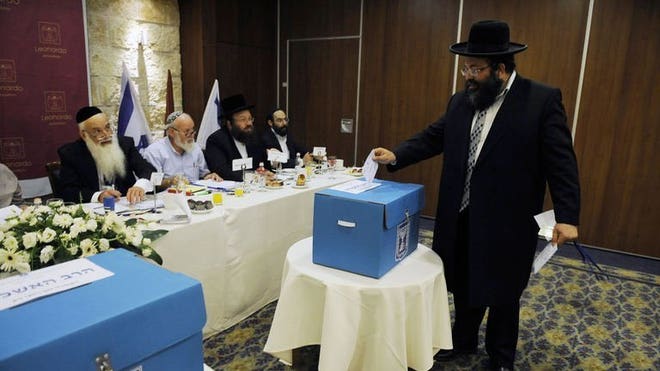
Finally, consider this remarkable video of orthodox couples who are marrying in Israel outside of the regulation of the rabbinate - חתונה בלי הרבנות - הוויה - טקס ישראלי‬‎.


כתבה ביומן בערוץ 1 ביום שישי, על זוגות שמעצבים את טקס החתונה בעצמם בלי הרבנות
עוד על חתונה יהודית בלי הרבנות באתר הוויה
www.havaya.info
Read More
Posted in israel, orthodox, rabbis, rav, soloveitchik, sports | No comments

Tuesday, 23 July 2013

Times' Frank Bruni on the Tragic Yeshiva University Sex-Abuse Scandals

Posted on 10:00 by Unknown
There's not much I can add to this op-ed except for this. When Bruni asked Yeshiva University Rabbis Hershel Schachter and Norman Lamm for comments, he reports, "Schachter, ...didn’t respond to my request Monday for comment. Neither did Rabbi Lamm."

Both of these men continue to claim "true character" and "true leadership." Schachter likes to be called a Gadol - a great man. And yet how sad that given a chance to show character and leadership, neither of them had anything at all to say to the Times about these tragic matters.
The Faithful’s Failings
By FRANK BRUNI

The men were spiritual leaders, held up before the children around them as wise and righteous and right. So they had special access to those kids. Special sway.

And when they exploited it by sexually abusing the children, according to civil and criminal cases from different places and periods, they were protected by their lofty stations and by the caretakers of their faith. The children’s accusations were met with skepticism. The community of the faithful either couldn’t believe what had happened or didn’t want it exposed to public view: why give outsiders a fresh cause to be critical? So the unpleasantness was hushed up.

This is not a column about the Catholic Church.

This is a column about Orthodox Jews, who have recently had similar misdeeds exposed, similar cover-ups revealed.

And I’m writing it, yes, because the Catholic Church over the last two decades has absorbed the bulk of journalistic attention, my own included, in terms of child sexual abuse. There are compelling reasons that’s been so: Catholicism has more than one billion nominal adherents worldwide; endows its clerics with a degree of mysticism that many other denominations don’t; and is just centralized enough for scattered cover-ups to coalesce into something more like a conspiracy. The pattern of criminality and evasion has been staggering.

But some of the same dynamics that fed the crisis in Catholicism — an aloof patriarchy, an insularity verging on superiority, a disinclination to get secular officials involved — exist elsewhere. And the way they’ve played out in Orthodox Judaism illustrates anew that religion isn’t always the higher ground and safer harbor it purports to be. It can also be a self-preserving haven for wrongdoing.

Early this month, 19 former students of the Yeshiva University High School for Boys in Manhattan filed a lawsuit alleging sexual abuse by two rabbis in the 1970s and 1980s who continued to work there even after molestation complaints. The rabbis were also allowed to move on to new employment without ever being held accountable. School administrators, the lawsuit alleges, elected not to report anything to the police.

Rabbi Norman Lamm, the president of Yeshiva at the time, admitted as much in an interview with The Jewish Daily Forward. He said that when accusations against a faculty member were “an open-and-shut case,” he’d let the accused person “go quietly.”

Back then there was less alarm about, and understanding of, child molestation, he said. Back then he was also steering Yeshiva through grave financial hardship. A sex-abuse scandal wouldn’t have been a great fund-raising tool.

“The school made the conscious and craven decision to protect its reputation,” Kevin Mulhearn, the lawyer representing the plaintiffs, told me Monday.

Is such a defensive mind-set really a relic of a less enlightened past? Earlier this year a prominent scholar at Yeshiva University, Rabbi Hershel Schachter, was caught on audiotape at a conference in London telling Orthodox leaders that Jewish communities should set up their own review boards to evaluate any complaints of child sexual abuse and determine whether to bother with the police. This contradicts state laws on mandatory reporting for teachers, counselors, physicians and such.

Schachter further discouraged police involvement by warning that accused abusers could wind up “in a cell together with a shvartze, in a cell with a Muslim, a black Muslim who wants to kill all the Jews.” Shvartze is a harshly derogatory racial term. Yeshiva University condemned the remarks but seemingly didn’t discipline Schachter, who didn’t respond to my request Monday for comment. Neither did Rabbi Lamm.

Rabbi Schachter’s aversion to law enforcement isn’t isolated. The ultra-Orthodox group Agudath Israel of America has taken the position that observant Jews should get a green light from a rabbi before notifying police about suspected molestation. It’s precisely this sort of internal policing that the Catholic Church did so disastrously, leaving abusers unpunished and children in harm’s way.

Ultra-Orthodox Jews in particular have prioritized their image and independence over justice. They have shunned Jews who took accusations outside their communities; in fact, Charles Hynes, the Brooklyn district attorney, has cited that as a reason for minimizing publicity around child sexual abuse cases among Orthodox Jews. But over the weekend he changed tacks and gave The New York Post the names of some 40 convicted people.

Community intimidation is why 17 of the 19 plaintiffs in the Yeshiva case are identified only as John Doe, said Mulhearn, their lawyer, who mentioned another insidious wrinkle reminiscent of Catholic cases.

One of the abusers, he said, used religion itself to muffle a few abused boys. The rabbi allegedly invoked the Holocaust, which their parents had survived, telling the boys not to cause mom or dad any more suffering with a public stink.

Talmudic Books
Talmud in English
Ponder the Questions of Whence and Wherefore
Experience God's Favorite Prayers
Read More
Posted in gay rights, norman lamm, orthodox, rabbis, schachter, universities, yeshiva | No comments

Tuesday, 16 July 2013

Rabbi Abraham Rosenfeld's Nachem Prayer for Tisha B'Av

Posted on 03:36 by Unknown
Rabbi Abraham Rosenfeld's Nachem Prayer for Tisha B'Av inserted in the Amidah for Minhah.

From “The Authorised Kinot for the Ninth of Av,” London, 1979. I believe that Artscroll censored out this version in their reprinted edition. This liturgy in our view is more authentic to historical reality.

Click to expand.

44 New Talmudic Books for Kindle | The Amazing 36 Volume Kindle Talmud in English | Whence and Wherefore | God's Favorite Prayers
Read More
Posted in israel, orthodox, prayer, synagogues | No comments

Monday, 8 July 2013

In Mommy Edith's Memory - Please Quit Smoking Today

Posted on 08:09 by Unknown
In 2000 my mother Edith Zahavy passed away on the 4th day of Tammuz after six months of hospitalization at Mt. Sinai in NYC. She was 79. For 63 years she smoked, mostly menthol cigarettes. The corporate tobacco pushers hooked her into addiction by giving her free samples outside her school, Hunter College, when she was a teenager. They supplied her habit for six decades. For several years prior to her death she could hardly walk because of her profound vascular disease, heart disease and emphysema. Her last months in the hospital on a respirator were awful as all of the organs of her systems weakened and failed.

My mother was a beautiful, selfless, generous, creative, religious person who dedicated her whole life to her family, to her friends and to her students. She first brought us up (myself and my brother and sister) and then went on to teach in the NYC public schools. She stood behind my father, me and my siblings through thick and thin. But through the years she always smoked, mostly Newports and Salems.

As I remember her -- an active vibrant woman -- I plead with you -- if you smoke cigarettes -- QUIT TODAY. Please for the sake of the memory of my mother -- for your own sake -- for the sake of your spouse, your parents, your children, your friends -- please stop.

(Repost annually from 2006)
Read More
Posted in atlantic beach, health, orthodox, science, smoking, teaneck, universities, women | No comments

Thursday, 4 July 2013

Free Awesome Torah and Haftorah Chanting Apps from PocketTorah

Posted on 15:38 by Unknown

Barak forwarded this from Eytan Kurshan (first posted on 4/17/12)...
Hi everyone,

I wanted to let you know that I was involved in the creation of an app which has just launched! It is called PocketTorah and is available here. 
The app contains a recording of every aliyah in the Torah as well as all Haftorot. If you'd like to hear me, I recorded the parshiyot from Tazria to Acharei-Mot.

There is also a separate module containing recordings of just the trope of Torah, Haftorah, and Megilah....
Congrats to Rabbi Charlie Schwartz and Russel Neiss for putting this all together.

Eytan
We downloaded and reviewed the apps. They are awesome.

"PocketTorah is an application that  will provide the user the ability to learn the weekly Torah and Haftarah portion anywhere, at any time, on any mobile device or computer for free."

Denominational Alert! These two apps obviously were designed for Conservative, Reform and Reconstructionist Jews. There are women Torah readers recorded on the apps, so officially they are not suitable for Orthodox users.

Learn to chant

  1. Download for iOS
  2. Download for Android
  3. Use it on any computer in a web browser using Chrome or Safari.

Ads: Talmudic Books for Kindle on the Talmud, Bible, Kabbalah and Prayer
The Kindle Edition of the Classic Soncino Talmud in English
Read More
Posted in apple, bible, google, inventions, iPad, iPhone, orthodox, prayer, synagogues, women | No comments

Sunday, 30 June 2013

Jewish Times: Are Hebrew National Hot Dogs Really Kosher?

Posted on 04:16 by Unknown
Yes. Hebrew National Hot Dogs have been kosher since 1905.

We eat them. But we know lots of more-kosher-than-thou types who don't partake. Those are the Jewish folk who answer to an even "higher authority" than Hebrew National.

Kenneth Lasson, writing in a Baltimore Jewish Times cover story in 2009, weaves together reportage about the hot dog industry, the kashrut supervision industry and baseball parks to come up with a fascinating fabric of a story, "Hebrew National and Kosher Politics - What’s kosher about answering to a higher authority?".

For years there have been some super-glatt-orthodox who whisper about whether the supervision of Hebrew National was "reliable." Lasson covers this controversy and says for instance,
...As to Triangle K, Rabbi Abadi wrote on the kashrut.org Web site, “Rabbi Ralbag is a G-d-fearing man and if he says it’s kosher, you sure can eat it. I can’t say the same for many of the other labels out there.”...more...
The Talmudic question is of course, can we trust the writing of Kenneth Lasson. Is he reliable? Is he glatt kosher? /repost from 7-9-09/

Kosher Talmud: Babylonian Talmud Hullin
Read More
Posted in baseball, Is-it-kosher?, kosher, money, orthodox, rabbis, sports | No comments

Sunday, 23 June 2013

Non-Congratulations to the New Non-Rabbis

Posted on 19:09 by Unknown
Thirty years ago, in 1983 we were happy to start sending our women Jewish Studies major graduates at the University of Minnesota to train to become rabbis in the Reform movement. We told them to go out and become full head rabbis of synagogues, not assistants or educational directors. Some did. We were proud.

This week we read of the non-ordination of three females by an Orthodox institute. We sadly shake our heads and dejectedly shrug our shoulders. This is a milestone of non-progress.

This non-event is a rare mixture of chutzpah and cowardice on the part of these women and their teachers. Their mentors dared to give a "degree" and "title" to the women and yet they fearfully refrained from ordaining them with the accepted titles "rabbis" or the feminine of the term, "rabbahs" to be more grammatical.

All of this is too perplexing for our Talmudic CPU to process. Our Talmudic processing system has short-circuited and crashed and cannot analyze this conflicted non-event any further.

Hence we can at best non-extend our non-congratulations to the new women non-rabbis.  We heartily offer our non-applause to them on their non-ordinations.What a bewildering religion.

Here is the story from JTA.
(JTA) — Yeshivat Maharat, which trains Orthodox Jewish women to be religious leaders, held its first graduation ceremony.

Ruth Balinsky Friedman, Rachel Kohl Feingold and Abby Brown Schier graduated Sunday in a ceremony in New York City attended by some 500 people.
The graduates are set to work for Orthodox synagogues and institutions.

Maharat is a Hebrew acronym for Manhiga Hilkhatit Rukhanit Toranit, or leader in legal, spiritual and Torah matters.

Each graduate of the New York yeshiva will use the title of maharat rather than rabbi or rabba — the title given to Sarah Hurwitz, the dean of Yeshivat Maharat, when she was ordained by Rabbi Avi Weiss.

The movement to confer religious authority on women in the Orthodox community, which began in 2009, remains controversial in the Orthodox community.

Last month, the Rabbinical Council of America reissued a 2010 statement that said, “We cannot accept either the ordination of women or the recognition of women as members of the Orthodox rabbinate, regardless of the title.”

Check Out 44 Talmudic Books
See the 36 Volume Kindle Talmud in English
Ponder the Questions of Whence and Wherefore
Experience God's Favorite Prayers
Read More
Posted in orthodox, rabbis, synagogues, women | No comments

Sunday, 9 June 2013

The Daily Beast: Dear Rabbi: Should I Shoot Women?

Posted on 11:21 by Unknown
It happens. When you practice irrational thuggery in the name of religion it does not take long for an impressionable young person to get a really wrong idea. On the Daily Beast we read, "Dear Rabbi: Should I Shoot Women of the Wall?" by Sigal Samuel on Jun 6, 2013.

Fortunately (did we reach rock bottom yet?) there was no violence today as women prayed at the wall under a heavy police guard. It's getting clearer every day that Orthodox Judaism has decided to resort ever more often to bullying and thuggery against what it sees as weak Jewish opponents - women who want to pray. Not brave; not heroic. But the legacy of bullying vulnerable women via rabbinic decree goes back a long way to illustrious roots.

The Daily Beast reported, "In a disturbing QandA session, a 17-year-old Jerusalem yeshiva student asked a rabbi in an online forum whether it’s permissible under Jewish law to shoot and kill members of the liberal prayer group Women of the Wall when they gather at the Kotel. The boy was arrested today after Rabbi Baruch Efrati alerted police to the question—which, true to the rabbinic tradition of she’elot u-teshuvot (responsa literature, literally “questions and answers”), he nonetheless deigned to answer...."
Read More
Posted in israel, orthodox, prayer, rav, soloveitchik, talmud, women | No comments

Friday, 7 June 2013

Times: Israel Trying to Fix the Broken Haredi Community

Posted on 08:58 by Unknown
Haredim in Israel are held captive from their birth by communal leaders who keep them from general and advanced education and bar them from socialization into the streams of Israeli cultural and commercial life.

The Times' Jodi Rudroren writes "Israel Prods Ultra-Orthodox to 'Share Burden'": "...Because of Orthodox men's commitment to full-time Torah study and a fear of assimilation, only a little more than 4 in 10 of them work, less than half the rate of other Jewish men in Israel, and their average salaries are 57 percent of other Jewish men in the country. Nearly 60 percent of Haredi families live in poverty, and by 2050 they are expected to make up more than a quarter of Israel's population..."

The Haredi community needs help.
Read More
Posted in hasidism, israel, money, orthodox, religion, zionism | No comments

Saturday, 1 June 2013

Discover Mindful Jewish Meditation

Posted on 19:47 by Unknown
The benefits of Jewish meditation are accessible to every type of Jew through acts of Jewish piety.

People tend to think that the Orthodox and Hasidic Jews are really pious, the Conservative Jews less so, and the Reform and Reconstructionist even less.

Not so. Piety is individual. You decide how pious you wish to be. Some may argue that the Liberal Jew who makes a decision to engage in piety every day is more pious than the Orthodox Jew who rarely pauses to decide for himself what endows his structured life with meaning.

If you want it to, piety can fill your life as a Jew and endow it with transcendent meaning. Piety can overshadow faith at the central defining core of your Judaism. You can bring it into your daily, weekly and annual routines, and life cycle events.

"Mindful" is a term made popular by meditation guru, Jon Kabat-Zinn and others through their writings and teachings. They brought the concept into Western life from its origins within Eastern cultures. These teachers instruct us to meditate on the here-and-now. As if this was some new idea to us in the West. Done properly, religious practice affords us this mindfulness constantly in any number of ways.

We describe some elements of the religion of the Talmudic rabbis. If this is a form of Judaism that fulfills your needs, go with it! If not, we suggest you discover and then extract the major concepts of classical Judaic practice and apply them to your circumstances. In that way you will develop mindful piety for yourself, for your community and your calendar.

The Judaic Roots of Mindful Piety

Long ago rabbis prescribed, for example, that each Jew recite one hundred blessings each day. The recitation of a blessing prior to the performance of many basic rituals helped make a Jew mindful of his every action.
R. Meir used to say, "There is no man in Israel who does not perform one hundred commandments each day [and recite over them one hundred blessings] . . . And there is no man in Israel who is not surrounded by [reminders of the] commandments. [Every person wears] phylacteries on his head, phylacteries on his arm, has a mezuzah on his door post and four fringes on his garment around him . . . [Tosefta Berakhot 6:24-25]."
From the first stirring every morning, the mindful Jew began his day with acts of religious significance.

Waking up: Washing hands upon arising took on a special meaning. The individual conducted the washing according to a simple but prescribed practice. Water had to be poured on the fingers of each hand up to the joint as specified by the masters.

Bodily functions like elimination are not ordinarily considered in the realm of religious ritual. Yet the rabbis of old said that one had to recite a blessing after that normally profane physical process as thanks for continued health.

And speaking words of wisdom, Praying. In rabbinic Judaism morning prayers were literally clothed in piety. Often they took place in a special spot. And of course, they were repeated regularly.

Dressing for prayer: The man put on the tallith (prayer shawl) and tefillin (phylacteries) while reciting the respective blessings. Each pious male obtained and maintained these prized and essential objects of piety in accord with the prescriptions of the rabbis and scribes. The man wore these objects to show compliance with the prescriptions of the verses of the Torah recited in the shema (Deut. 6:4-9, 11:13-21 and especially Num. 15:37-41). Each knot on the four fringes of the tallith garment was tied in accord with age-old tradition.

The tefillin were crafted of select leather, made into cubical containers to hold the small parchments of biblical paragraphs written by trained scribes. The head-tefillin had to rest on the worshiper between the eyes on the forehead, neither too high on the head, nor too low on the face. The leather strap that held it in place had to be tied in accord with known custom. The wearer understood that the knot of leather that sat at the base of his skull was a representation of the letter yod, the third letter of Shaddai, one of the divine names.

On the leather box of the arm-tefillin was inscribed the letter shin. The wearer knew that the knot that held it fast on his left biceps--opposite his heart--was a form of the letter dalet. Thus as he recited prayer, the Jew was bound head and heart to God, Shaddai. He wore these appurtenances each weekday from the time he reached 13, the age of maturity, the age of Bar Mitzvah. Obtaining a pair of tefillin from the scribe was the most significant overt sign of achieving adult membership in the rabbinic community.

The standard practice was to wear the tallith and tefillin during the morning prayers and then remove them. To show extreme piety some few virtuoso rabbis wore them all day as they sat immersed in the study of Torah.

Congregating for prayer: An ordinary Jewish man could recite his prayers in a designated synagogue or study hall, in private, at home, or in any orderly place. For optimal piety he went to the synagogue to pray with the minyan, the prayer quorum of ten adult Jews. The formalization of the synagogue as a standard communal institution took place over a span from the first century through the middle ages. The emphasis in Jewish custom and law was always on prayer in a public gathering of ten or more men, not on prayer in a specified building or designated place for gathering. This aspect of rabbinic piety was thus defined mainly in terms of a societal association with a community of other Jews. The rabbis placed little emphasis on the need for sacred bricks and mortar to fulfill the spiritual needs of prayer.

Repeating the process: Rabbinic piety centered on stability and repetition. On weekdays Jews gathered for the morning, afternoon and evening prayers. Major elements of prayer were repeated with small variations at the three services. A person said the shema in the morning and evening services; the amidah (standing prayer of eighteen blessings) in the morning afternoon and evening services; the alenu (a sublime prayer proclaiming God king) to conclude all three.

To these they added a morning Torah service to the public prayer on Monday and Thursday and on any festival or fast day. For this part of the service they read the first section of the seven of the Torah weekly portion that was going to be read during the Sabbath morning service at the end of the workweek. This focused attention on the coming Sabbath celebration and gave the men gathered during the week an added opportunity to hear the inspiration of the words of Torah.

During the week a fourth service, the additional prayers, called musaf, were added to celebrate special days. On New moons, celebrants added several paragraphs to the regular services and read an appropriate passage from the Torah. They concluded the morning prayers with the recitation of the amidah the standing prayer of eighteen blessings -- of the additional service. Likewise on holidays, modifications were made in the regular prayers and the additional musaf amidah was appended.

Evening prayers consisted of the shema, amidah and alenu. A widespread custom was to recite the shema once more at bedtime. Many believed this added evocation of piety would also protect the person who recited it from harm during the night.

The Mindful Challenge

Simply put the challenge is how do we take these traditions and making them over into a template for our own lives? Rabbis often tell us their answer. However, deep Piety, especially mindful piety, cannot come from the outside.

How do we find meaning through study and reflection and make all this into our own piety? No one should presume to tell us that, though many will. But that must be our own - our most personal task. (Repost)
Read More
Posted in buddhism, hasidism, kabbalah, meditation, orthodox, prayer, rabbis, religion | No comments

Friday, 24 May 2013

Imagine the Day that Religions Mellowed Out

Posted on 09:36 by Unknown
Imagine the Day that Religions Mellowed Out.

Wait. Three reasons that it looks like that happened.

1. The Pope said that atheists are okay too. "Atheists and other nonbelievers largely welcomed Wednesday's (May 22) remarks by Pope Francis that performing "good works" is not the exclusive domain of people of faith, but rather a place where they and atheists could and should meet."

Mellow pope - but what about the "bad" priests?

2. The Lubavitcher Hasidim reached out to hipsters - because they have beards too (Times): "...on Tuesday night, at Chabad of North Brooklyn, the Lubavitcher outpost on Bedford Avenue in Williamsburg, there was a forum, advertised on fliers up and down the boutique-lined strip, on the theme 'Hasid and hipster, not as different as you think.' ...But perhaps the difference is significant enough. Maybe it was the lack of Pabst Blue Ribbon beer (or alcohol at all) or special brewed coffee (there was plenty of instant), but the attendance of bearded hipsters was sparse, and possibly nonexistent."

Mellow Hasids - but no Hipster love connections.

3. And other Orthodox Jews (sorta) accept into their communities gays and Sabbath violators too ("Inclusivism: First Among Equals?"): "R. Ettlinger, for example, allowed the wine of Jews who publicly violated Shabbat by suggesting they could be categorized as tinnokot she-nishbu, people raised outside of Jewish values, who therefore could not be fully blamed for their transgressions."

Mellow rabbis - can't blame secular Jews - they were brainwashed as children (tinnokot she-nishbu) into being secular. Oh wait maybe it was the rabbis who were brainwashed. No that could not be. Never mind.
Read More
Posted in christianity, hasidism, humor, orthodox, rabbis, religion | No comments

Friday, 10 May 2013

2006: When Rabbi Aryeh Strikovsky ordained Aviva Ner-David

Posted on 14:24 by Unknown
I wrote this seven years ago:

On one level, I was overjoyed to read in the Jerusalem Post report (May 4, 2006) that a Jerusalem Orthodox rabbi Aryeh Strikovsky has ordained his woman student Aviva Ner-David as a rabbi saying that her "knowledge and mastery of Jewish law are remarkable."

This was a breakthrough that I awaited, but frankly never expected to see in my lifetime. I thought, as I read the news, that this marks the end to the male monopoly on the Orthodox rabbinate. The Reform movement had torn down this wall in the 70s. The Conservative movement had started routinely ordaining women in the 80s. And now, the Orthodox will be ordaining women.

In theory, I want to see this is a good development in the history of Judaism. With women rabbis, more talent can be unleashed into the ranks of religious leadership. With double the talent there can be double the learning and twice as much new theological insight, imagination and energy.

In theory, since the Orthodox rabbi is not a sacerdotal position, a woman should be able to fill it regardless of the patriarchal roots of the system. A woman can become an expert in Jewish law and practice and act in all capacities as a rabbi just like men have been doing for centuries.

But we don't live in a theoretical world. A real reading of the nature of contemporary Orthodoxy will lead one to conclude that it is a system run by men whose political and social power in society at large is marginalized. And yet these men do see themselves as guardians of a particularly important male-dominated world order of their own.

How do those who live by the worldview of the Orthodox rabbinate react to the ordination of an Orthodox woman? These are ten of the most likely responses.
  1. They see the growth of women's civil and familial rights as a threat to the historical male prerogatives.
  2. They use male bonding as the basis of rabbinic public organization.
  3. They see women's ordination as a feminization, a making womanly of the rabbinic estate.
  4. They experience the end of the all-male public body of the rabbinate as an admission of the vulnerability and perhaps of the impotence of the collective organization.
  5. But they extend the threat to more than just a challenge to the masculinity of the rabbi and flag bearer. They characterized it as a threat to the core beliefs of Judaism.
  6. They feel this woman's ordination is a humiliation to the Orthodox rabbinic system.
  7. They perceive the notion that a woman can be a rabbi as a foreign threat, imported first from Western feminist culture and most recently from heretical Conservative Judaism.
  8. They argue that this weakness of boundaries must be healed - the rabbis cannot allow penetration from the outside or the permeability of the borders of rabbinic life.
  9. They say that their religion must be purified of all feminization and alien contamination.
  10. Logically it follows that they will act with a vehemence or even violence to attack and defeat the forces antagonistic to their way of life.
This leads me to predict that figurative "blood" will be shed as the Orthodox male leaders battle this startling challenge to their hegemony.
To the existing Orthodox establishment this daring ordination stands out as a symptom of the disordered sexuality of the evil modern world where women try to take the roles that belong to men. The rabbis will invoke this danger and then will likely associate this act of ordination with other disorderly sexual confusions such as gay marriage. They may feel free then to predict that if they allow women to serve as rabbis that will open the door to next allow gays to follow suit.
Yet after all is said and done, Rabbis who preach the perfection of Kosher sex roles and condemn the perversion of treif disorder are speaking sense only to those colleagues in their boys' club who live by their concepts of the world.
So let's expect the onslaught of attacks by the rabbis against the new Orthodox woman rabbi. They will say that she is bad. The rabbi that ordained her is bad. The idea is bad. How low have people sunk? And so on and so on. Lo and behold, Judaism has withstood another crisis of faith and onslaught of challenge.
Read More
Posted in gay rights, orthodox, politics, rabbis, religion, women | No comments

Thursday, 25 April 2013

Inventing the Past: Michael Broyde and Morton Smith

Posted on 08:47 by Unknown
The Jewish Channel's Steven I. Weiss continued his outstanding investigative reporting with a new story on Rabbi Michael Broyde of Emory University, "Investigation Reveals Additional Questionable Identity With Connections to Broyde’s Scholarship". It now appears certain that Broyde invented letters by two imaginary rabbis to support his opinions on religious matters. Weiss also found that an 83 page article published by Broyde in the journal Tradition was bolstered in part by evidence from Broyde's manufactured authorities and was published with subventions funded by Emory and the Templeton Foundation.

The Broyde matter has reminded us of Morton Smith, another professor at a major university who went to great lengths to invent a religious letter to boost his reputation and his scholarly agenda.

Wikipedia summarizes the Smith matter in an article that starts, "Morton Smith (May 29, 1915 – July 11, 1991) was an American professor of ancient history at Columbia University. He is best known for his controversial discovery of the Mar Saba letter, a letter attributed to Clement of Alexandria containing excerpts from a Secret Gospel of Mark, during a visit to the monastery at Mar Saba in 1958."

Along with many other professors of religion, we believe that Smith's discovery was an intricate hoax that he perpetrated out of some unknown and twisted scholarly motives. Smith was quite clever in committing and defending his deception. And there remain a few scholars who still accept the authenticity of Smith's find.

Weiss now has proven conclusively in his reporting that Broyde committed equally intricate academic hoaxes. In our view though Broyde's hoaxes are far less clever and dramatic than Smith's.

Read More
Posted in christianity, inventions, morton smith, orthodox, rabbis, religion, women, yeshiva | No comments

Friday, 19 April 2013

What are the connections between religions and terrorism?

Posted on 10:45 by Unknown
What are the connections between religions and terrorism? 

That's a big set of questions. We tried to answer, explain and understand them in the past.

Here is a selected list of our blog posts of study resources in the analysis of the connections between terrorism and religion (compiled when we taught a course on religion and terrorism at FDU a few years ago).
  1. Questions about American Christian Terrorism
  2. Religion and Jewish Terrorists (and see the JTA report)
  3. What is a Religious Culture of Violence and Terror? 
  4. Who were Shoko Asahara and the Buddhist Aum Shinrikyo Religious Terrorists? 
  5. How did Religion Motivate Sikh Terrorists? 
  6. What is the Logic of the Theater of Religious Terror? 
  7. Why Do Religious Terrorist Martyrs say that they aim to kill the demons? 
  8. What do Sexuality and Humiliation have to do with Terrorism? 
  9. Will the War Against Religious Terrorism Ever End? 
  10. From Kahane to Osama: How Do Men Make Religious Terrorism Into Cosmic War? 
  11. How can we end religious terrorism and achieve the peace of God? 
  12. Concluding Questions on Religion and Terrorism
We recommend:

God's Favorite Prayers
Read More
Posted in christianity, islam, juergensmeyer, orthodox, politics, religion, sikhs, terrorism | No comments

Thursday, 18 April 2013

Rav Soloveitchik on Israeli TV

Posted on 07:03 by Unknown
Ethan Isenberg writes to us that Rav Soloveitchik will be featured on an Israeli Broadcast Premiere Sat night. Lonely Man of Faith will be on Israeli TV in two parts, on successive Saturday nights: April 20 and 27, both at 10 PM.

The 18th of Nisan marked the 20th yarhzeit anniversary of the passing of Rabbi Joseph B. Soloveitchik.  This year, that date fell out on March 28 - 29. 

Recordings are now available online of these memorial events:
  • Yom Iyun at Beit Knesset "Ohel Ari" in Ra'anana, Israel, held on March 14 (3rd of Nisan)
  • Yom Iyun at Yeshiva Chovevei Torah in New York, held on April 10 (30th of Nisan)
  • Yom Iyun at Yeshiva University in New York, held on April 14 (4th of Iyar)
Lonely Man of Faith is available on DVD. Click here to purchase the home version of the DVD.


I recommend these books for you!
Read More
Posted in film, israel, orthodox, rabbis, rav, religion, soloveitchik, videos, yeshiva | No comments

Saturday, 13 April 2013

Jewish Channel's Steven I. Weiss Reveals that Rabbi Hershel Goldwasser is the Sock Puppet identity of Rabbi Michael Broyde

Posted on 17:50 by Unknown
The tireless journalist and spirited blogger at the the Jewish Channel, Steven I. Weiss, revealed yesterday that Rabbi Hershel Goldwasser has been the sock-puppet identity of Rabbi Michael Broyde for twenty years, "An investigation by The Jewish Channel reveals a fake rabbi’s connections to a leading rabbinical court judge."

Weiss is a thorough reporter who has no sympathy for supposedly good rabbis who hide their identities to do bad things. In 2005 for example, he reported with care on goings on connected to a rabbi in Teaneck who hid behind a fake identity to rant about the State of Israel in ways that went far beyond the norms of acceptable communal discourse.

There's probably nothing criminal in making up a fake identity and having "him" praise your real identity or having "him" express opinions that you are afraid to express yourself, as Broyde did. It is creepy behavior, that's for sure. And there will be those who make the case that it is unprofessional behavior for a rabbi with a leadership position on a Jewish tribunal to engage in this level of deception for this many years.

Weiss' report is long and detailed and conveys to this blogger a clear sense that Broyde is rightfully embarrassed to have been exposed.

Late yesterday Broyde admitted his charade and tried to apologize for his actions in a strange way on a quirky Orthodox web site, including this final awful attempt at justification, "Basically we were told that given the level of unpleasant discourse in our Orthodox Jewish community, some things just need to be said pseudonymously." 

Our continued admiration goes to Steven I. Weiss for writing stories such as this one.

We recommend these books for you! 
Read More
Posted in bloggers, orthodox, rabbis, yeshiva | No comments

Friday, 12 April 2013

The Master Talmud Performer: Rabbi Joseph B. Soloveitchik

Posted on 10:44 by Unknown
In honor of Rabbi Joseph B. Soloveitchik's 20th yahrzeit we present this excerpt from our 2011 book - God's Favorite Prayers...

The Master Performer

L
et me give some background about my mentor, Rabbi Soloveitchik. His followers extolled him with a reverent nickname. They called him the Rav, simply the Master. I consider the Rav to be a master performer par excellence of the synagogue liturgy (when on occasion he led the services), a great pedagogue in the classroom, a scholar of note and interpreter of the substance of the performances of the synagogue. And finally, he was an amazing beginner.
In my family, we venerated the Rav above all other rabbis. We spoke of him with the utmost reverence that one would bestow only upon a truly saintly man. And he was one of the great Orthodox rabbis of the twentieth century. He was born into a rabbinic family in Eastern Europe. After mastering all of rabbinic literature, he studied philosophy at the University in Berlin. He was known not just as a rabbi but also as a Gadol—a title reserved for person of the greatest stature in Torah learning and highest authority in Jewish religious matters.
As a Yeshiva College senior, I started four years of learning in Rabbi Soloveitchik’s Talmud shiur. In my three post-graduate years of study with the Rav, I earned my ordination and became a rabbi.
I received in those four years so much from the Rav: a methodology of learning the Talmud, a theology of Judaism grounded in philosophy, and some secrets of exceptional pedagogy.
Let me expand on this last point. The Rav would sometimes, in an occasional moment of gently deprecating and surprising self-reflection, refer to himself as a poshutte melamed, the Yiddish description of a simple teacher of beginners. That statement puzzled me. Surely the Rav was the greatest Orthodox Talmudic sage of his generation. How could he represent himself in this ordinary way?
One day, I accidentally discovered what he might have meant. We rabbinical students convened at the fourth floor of the college building in an oversized classroom for our shiur, to begin studying a famous Talmud passage that was a discourse about the laws in Tractate Shabbat. That day, I was using a Talmud volume from a small, bound set that my uncle Rabbi Noah Goldstein had used when he studied in the Rav’s shiur. I found interleaved in this hand-me-down book a page of my uncle’s notes from the Rav’s discourse on this same Talmud passage, fifteen or twenty years earlier.
As we started reading the text, the Rav sat at his desk at the front of the class, as usual, with books of the Talmud arrayed all around him. He opened to the page for the day and began to perform the pedagogic magic in which he was so skilled. He started the class: “All right. Where were we?” He made it seem to us all as if he was looking at the text for the very first time. He made every question he raised appear as if he was discovering a problem afresh. Every answer and each explanation that he examined in the medieval commentators, Rashi or the Tosafot, he made appear to us as if it were new to him—a complete surprise.
Over the course of a class that lasted more than two hours, the Rav dramatically unfolded a complex and intricate exposition of the sugya, the text and its topic—and each stage of the discourse seemed so original and alive. Yet, as I followed along and read my uncle’s notes, I saw that the Rav was repeating—in order—each and every element of the shiur exactly as he had given it years before, insight by insight, question by question and answer by answer. He had all of us students in the room convinced that he had just newly discovered every element of his learning. Yet I had proof in front of me to the contrary.
I saw that day how the Rav had the ability to make every act of learning a new, exciting and living revelation. I have striven to emulate him ever since, to replicate this ability and to achieve as a learner and as a teacher some small element of this revelation.
Hanging over my desk where I write, I have a quotation from the great German poet Rainer Maria Rilke, “If the angel deigns to come it will be because you have convinced her not by tears but by your humble resolve to be always beginning: to be a beginner.” I believe the Rav echoed that sentiment in his teaching and learning and, certainly, in his praying.
The Rav’s ability to find the freshness in learning and in praying inspires this book. In part, in this extended discourse, I try to present content for fresh solutions to the frustrating issue of how to escape the monotony of the repetitive rituals of prayer. Indeed, it is a challenge to rediscover meaning and insight continually within the routine. It’s easier said than done—to be a beginner.
I try here in this volume to present as new my humble discoveries of voices and personalities in the prayer book to satisfy my own need to find what is fresh in what I repeat daily, weekly and annually. And in the spirit of my teacher the Rav, I aspire throughout this volume to provide you, the reader, with insights that will allow you to discover your own ways to always be a simple beginner in the appreciation and practice of your own praying.
To help us appreciate an important representative example of the expression of the artist-poet-musician archetype in the synagogue services, I now turn to a sample of the Rav’s comments on a few of our liturgy texts.

A Shofar Opera Libretto

H
ere, then, is the traditional libretto of a shofar opera in three acts. These texts are more familiarly known as the foundational High Holiday prayers in the Musaf Amidah. I interleave into the prayers below a selection of a few basic examples of the insights that the Rav and other interpreters of the past have taught about the Rosh Hashanah Additional Service.
In fact, this is not a complicated section of the Jewish liturgy. To expand on what I said just above, the Kingship-Covenant-Revelation liturgy—Malchiyot, Zichronot and Shofrot—accompanies the sounding of the ram’s horn in the additional service on Rosh Hashanah, as follows.
Act 1: The prayer opens with the Aleinu, a text that characterizes the dramatic archetype whom I call in this book the celebrity-monotheist.
Historians of the liturgy believe that the Aleinu originally found its way into Jewish prayer as this inaugural segment of the Malchiyot—Kingship prayers. Later, it was appropriated into the daily prayers and became the closing liturgy of every service.
In this Rosh Hashanah context, the Aleinu announces the theme of God the King and the section after it provides us with our first set of selected biblical passages:
It is our duty to praise the Lord of all things, to ascribe greatness to him who formed the world in the beginning, since he has not made us like the nations of other lands, and has not placed us like other families of the earth, since he has not assigned unto us a portion as unto them, nor a lot as unto all their multitude. For we bend the knee and offer worship and thanks before the supreme King of kings, the Holy One, blessed be he, who stretched forth the heavens and laid the foundations of the earth, the seat of whose glory is in the heavens above, and the abode of whose might is in the loftiest heights. He is our God; there is none else: in truth he is our King; there is none besides him; as it is written in his Torah, “And you shall know this day, and lay it to your heart, that the Lord he is God in heaven above and upon the earth beneath: there is none else.”
We therefore hope in you, O Lord our God, that we may speedily behold the glory of your might, when you will remove the abominations from the earth, and the idols will be utterly cut off, when the world will be perfected under the kingdom of the Almighty, and all the children of flesh will call upon your name, when you will turn unto yourself all the wicked of the earth. Let all the inhabitants of the world perceive and know that unto you every knee must bow, every tongue must swear. Before you, O Lord our God, let them bow and fall; and unto your glorious name let them give honor; let them all accept the yoke of your kingdom, and do you reign over them speedily, and forever and ever. For the kingdom is yours, and to all eternity you will reign in glory.
The theme of the Aleinu announced above is that God is King, he is One, there is no other and that all the peoples of the earth will come to acknowledge that. I will explain at length below, in the chapter called “The Celebrity’s Prayers,” that this prayer speaks for a particular archetype of the synagogue. The viewpoint and personality it communicates believes in the coming of an age of struggle that will see the ultimate victory of the Israelite people over all the nations, of the Lord over all the contending gods.
And, now, let us see how the liturgy writer makes the ten assembled verses that follow in the New Year prayer try to articulate this theme.
The Rav observed that the verses, as we shall now see, are drawn first from the Torah, then from the Writings, then from the prophets. He asked why this is so, considering that the canonical Tanakh, the Hebrew Bible as we have it today, is ordered Torah, Neviim (Prophets) and Ketuvim (Writings). To answer, he says simply that the prayer writer wanted to address God’s actions in chronological order, past (as found in the Torah), present (as found in the Writings) and future (as foretold in the Prophets).
The first three verses from the Torah do not express the complete idea of the liturgy. In fact, the idea of a King-God triumphing over other gods and the coming of an ultimate era where all peoples will worship him is not found in the Torah. Instead, the verses pick texts that have echoes of God called “King” or of his “reign.”
[1] As it is written in your Torah, “The Lord shall reign forever and ever (Exodus 15:18).”
[2] And it is said, “He has not beheld iniquity in Jacob, neither has he seen perverseness in Israel: the Lord his God is with him, and the trumpet shout of a King is among them (Numbers 23:31).”
[3] And it is said, “And he became King in Yeshurun, when the heads of the people were gathered, the tribes of Israel together (Deuteronomy 33:5).”
The next three verses from the Writings do express more of the ideas of the complete narrative embedded in the liturgy. In fact, the idea of a King-God ruling over other nations is a present theme in the Psalms. Yet the story of the coming of an ultimate era where all peoples will worship God is not found there. The verses again pick texts with echoes of God called “King” or of his “reign.”
[4] And in your Ketuvim it is written, saying, “For the kingdom is the Lord’s, and he is ruler over the nations (Psalms 22:29).”
[5] And it is said, “The Lord reigns; he has robed him in majesty; the Lord has robed him, yea, he has girded himself with strength: the world also is set firm; that it cannot be moved (Psalms 93:1).”
[6] And it is said, “Lift up your heads, O you gates, and be you lifted up, you everlasting doors, that the King of glory may come in. Who, then, is the King of glory? The Lord, strong and mighty, the Lord mighty in battle. Lift up your heads, O you gates; yea, lift them up, you everlasting doors, that the King of glory may come in. Who, then, is the King of glory? The Lord of hosts, he is the King of glory. (Selah.) (Psalms 44:7-10)”
The last of the Psalms citation is actually four verses. The Rav notes that they express a single kingship theme, a “challenge to humanity to voluntarily recognize the dominion of God.”
The next set of three verses is from the Prophets. They do express the complete idea of the liturgy because the idea of a King-God triumphing over other gods and the coming of an ultimate era where all peoples will worship him is derived from the prophetic works of ancient Israel. The verses from the books of Isaiah, Obadiah and Zechariah directly support the notion of the ultimate triumph of our one true God over the others after a day and time of judgment over the nations of the earth.
[7] And by the hands of your servants, the prophets, it is written, saying, “Thus says the Lord, the King of Israel and his Redeemer, the Lord of hosts: I am the first, and I am the last; and beside me there is no God (Isaiah 44:16).”
[8] And it is said, “And saviors shall come up on Mount Zion to judge the Mount of Esau, and the kingdom shall be the Lord’s (Obadiah 1:21).”
[9] And it is said, “And the Lord shall be King over all the earth: in that day shall the Lord be One and his name One (Zechariah 14:9).”
The final verse is again culled from the Torah, a bookend closing off the set of ten. It cites one of the best-known verses of the Torah and a centerpiece of the liturgy itself, the first verse of the Shema, Deuteronomy 6:4. That passage also does not express the complete idea of the liturgy because, while, in fact, it does declare the monotheistic unity of one God, it does not relate a struggle with the other deities or hint at a coming age when the oneness of God will be realized for the whole of the earth. For the purposes of this kingship liturgy, it appears to be enough that the verse declares God to be one. Specifying literally that God is King is not a necessary component for the inclusion of the verse.
 [10] And in your Torah it is written saying, “Hear, O Israel: the Lord our God, the Lord is One (Deuteronomy 6:4).”
The Rav says that the tenth proof text verse in each of the three sections is part of the closing appeal of the liturgy. The first part concludes with a reiteration of the basics of the main story line, and a “request” that God will reveal his reign as king over all the earth. The closing petition of the prayer then continues:
Our God and God of our fathers, reign you in your glory over the whole universe, and be exalted above all the earth in your honor, and shine forth in the splendor and excellence of your might upon all the inhabitants of your world, that whatsoever has been made may know that you have made it, and whatsoever has been created may understand that you have created it, and whatsoever has breath in its nostrils may say, the Lord God of Israel is King and his dominion rules over all.
[Our God and God of our fathers, accept our rest.] Sanctify us by your commandments, and grant our portion in your Torah; satisfy us with your goodness, and gladden us with your salvation: [and in your love and favor, O Lord our God, let us inherit your holy Sabbath; and may Israel, who hallow your name, rest thereon]. O purify our hearts to serve you in truth, for you are God in truth, and your word is truth, and endures forever. Blessed are you, O Lord, King over all the earth, who sanctifies [the Sabbath and] Israel and the Day of Memorial.
[And then the shofar is blown.]
Act 2: The next theme of the Rosh Hashanah Musaf to be announced is Zichronot, that God remembers his covenants with Israel. This theological statement begins with a liturgy that states an underlying assumption of the High Holidays, namely that an all-knowing God will judge all nations and all individuals on this day, the day that he created the world. God also knows all the thoughts and merits of each individual and judges them. And then the prayer switches abruptly to Noah as the example of one man who was spared the harsh judgment brought upon the earth and whose covenant with God protects us from destruction:
You remember what was wrought from eternity and are mindful of all that has been formed from of old: before you all secrets are revealed and the multitude of hidden things from the beginning; for there is no forgetfulness before the throne of your glory; nor is there anything hidden from your eyes. You remember every deed that has been done: not a creature is concealed from you: all things are manifest and known unto you, O Lord our God, who looks and sees to the end of all generations. For you will bring on the appointed time of memorial when every spirit and soul shall be visited, and the multitudinous works be remembered with the innumerable throng of your creatures.
From the beginning you did make this your purpose known, and from aforetime you did disclose it. This day, on which was the beginning of your work, is a memorial of the first day, for it is a statute for Israel, a decree of the God of Jacob.
Thereon also sentence is pronounced upon countries—which of them are destined to the sword and which to peace, which to famine and which to plenty; and each separate creature is visited thereon, and recorded for life or for death. Who is not visited on this day?
For the remembrance of every creature comes before you, each man’s deeds and destiny, his works and ways, his thoughts and schemes, his imaginings and achievements.
Happy is the man who forgets you not, and the son of man who strengthens himself in you; for they that seek you shall never stumble, neither shall any be put to shame who trust in you. Yea, the remembrance of all works comes before you, and you enquire into the doings of them all.
Of Noah also you were mindful in your love, and did visit him with a promise of salvation and mercy, when you brought the waters of the flood to destroy all flesh on account of their evil deeds. So his remembrance came before you, O Lord our God, to increase his seed like the dust of the earth, and his offspring like the sand of the sea.
The Rav finds in the liturgy several themes. First, God’s dominion over humankind crosses all of time from the beginning to the end of days. Second, God sees all and remembers all, every act of every individual. Third, God relates uniquely through the covenant to the Jewish people.
And, now, let us see how the liturgy writer makes the ten assembled verses in the prayer try to articulate the themes. The first three verses are from the Torah. They do not express the complete idea of the discursive liturgy but appear to focus on God remembering his covenants with Noah, and with Abraham, Isaac and Jacob.
[1] As it is written in your Torah, “And God remembered Noah, and every living thing, and all the cattle that were with him in the ark: and God made a wind to pass over the earth, and the waters subsided (Genesis 8:3).”
[2] And it is said, “And God heard their groaning, and God remembered his covenant with Abraham, with Isaac and with Jacob (Exodus 2:24).”
[3] And it is said, “Then will I remember my covenant with Jacob; and also my covenant with Isaac, and also my covenant with Abraham will I remember; and I will remember the land (Leviticus 26:42).”
The next three verses are from the Writings. They also do not express the full range of ideas of the introductory prayer. Each verse alludes to remembrance of a covenant:
[4] And in your Ketuvim it is written saying, “He has made a memorial for his wondrous works: the Lord is gracious and full of compassion (Psalms 91:4).”
[5] And it is said, “He has given food unto them that fear him: he will ever be mindful of his covenant (Psalms 91:5).”
[6] And it is said, “And he remembered for them his covenant, and repented according to the multitude of his loving-kindness (Psalms 106:45).”
The final set of three verses is from the Prophets. Again, each verse alludes to remembrance of a covenant:
[7] And by the hands of your servants, the prophets, it is written saying, “Go and cry in the ears of Jerusalem, saying, Thus says the Lord, I remember for you the kindness of your youth, the love of your bridal state; how you went after me in the wilderness, in a land that was not sown (Jeremiah 2:2).”
[8] And it is said, “Nevertheless, I will remember my covenant with you in the days of your youth, and I will establish unto you an everlasting covenant (Ezekiel 16:60).”
[9] And it is said, “Is Ephraim a precious son unto me? Is he a caressed child? As often as I spoke against him, I earnestly remembered him. Therefore my heart yearns for him: I will surely have mercy upon him, says the Lord (Jeremiah 31:20).”
The Rav develops a homily based on the choice and order of the three verses above. The first two promise that God will remember Israel as innocent and worthy, as young people who have not yet become corrupt. This is like a father’s love, says the Rav. His compassion is aroused when he remembers when his children were young.
The nuance in the third verse is that Israel is depicted as though still a child. This is like a mother’s love, says the Rav. A mother can always vividly see her children as her babies and thereby have compassion for them more immediately.
The last verse, below, is again culled from the Torah, a bookend closing off the set of ten drawn from a chapter in Leviticus where the idea of the covenants is treated in detail. The verse is embedded in the closing liturgical statement, at the end of the paragraph that evokes the dramatic covenant of the Torah that God made with Abraham at the binding of Isaac on Mount Moriah:
Our God and God of our fathers, let us be remembered by you for good: grant us a visitation of salvation and mercy from your heavens, the heavens of old; and remember unto us, O Lord our God, the covenant and the loving-kindness and the oath which you swore unto Abraham our father on Mount Moriah: and may the binding with which Abraham our father bound his son Isaac on the altar appear before you how he overbore his compassion in order to perform your will with a perfect heart. So may your compassion overbear your anger against us; in your great goodness may the fierceness of your wrath turn aside from your people, your city and your inheritance.
Fulfill unto us, O Lord our God, the word in which you have bidden us trust in your Torah through the hand of Moses your servant, from the mouth of your glory, [10] as it is said, “But I will remember unto them the covenant of their ancestors, whom I brought forth out of the land of Egypt in the sight of the nations, that I might be their God: I am the Lord” (Leviticus 26:45).
For you are he who remembered from eternity all forgotten things, and before the throne of whose glory there is no forgetfulness. O remember the binding of Isaac this day in mercy unto his seed. Blessed are you, O Lord, who remembers the covenant.
[And then the shofar is blown.]
Act 3: The final section, Shofarot, blasts of the horn, deals with the notions of God’s revelations to Israel at Sinai. The Rav emphasized that Maimonides directly linked the shofar to repentance. Its sounds rouse the Jew from his slumber to recognize his sins and seek forgiveness. And recall that the shofar itself is bent, says the Rav. According to the Talmud, this symbolized a person humbly bent over in prayer.
You did reveal yourself in a cloud of glory unto your holy people in order to speak with them. Out of heaven you did make them hear your voice and was revealed unto them in clouds of purity. The whole world trembled at your presence, and the works of creation were in awe of you, when you did thus reveal yourself, O our King, upon Mount Sinai to teach your people the Torah and commandments, and did make them hear your majestic voice and your holy utterances out of flames of fire. Amidst thunders and lightning you did manifest yourself to them, and while the shofar sounded you did shine forth upon them.
The theme is clear and unambiguous. God revealed himself to Israel, and the shofar accompanied those events. The first three verses from the Torah spell this out:
[1] As it is written in your Torah, “And it came to pass on the third day, when it was morning, that there were thunders and lightning, and a thick cloud upon the mount, and the sound of the shofar exceedingly loud; and all the people that were in the camp trembled (Exodus 19:16).”
[2] And it is said, “And the sound of the shofar waxed louder and louder; Moses spoke, and God answered him by a voice (Exodus 19:19).”
[3] And it is said, “And all the people perceived the thundering and the lightning, and the sound of the shofar, and the mountain smoking: and when the people saw it, they were moved and stood afar off (Exodus 20:15).”
The next three verses from the Writings extend the theme of the prayer. The shofar is used in celebration and praise of the Lord, God the King. The set concludes with an added bonus set of verses from Psalms.
[4] And in your Ketuvim it is written, saying, “God is gone up with a shout, the Lord with the sound of a shofar (Psalms 47:16).”
[5] And it is said, “With trumpets and sound of shofar shout joyously before the King, the Lord (Psalms 98:6).”
[6] And it is said, “Blow the shofar on the new moon, at the beginning of the month, for our day of festival; for it is a statute for Israel, a decree of the God of Jacob (Psalms 81:45).”
[6a] And it is said, “Praise you the Lord. Praise God in his sanctuary: praise him in the firmament of his power. Praise him for his mighty acts: praise him according to his abundant greatness. Praise him with the blast of the shofar: praise him with the harp and the lyre. Praise him with the timbrel and dance: praise him with stringed instruments and the pipe. Praise him with the clear-toned cymbals: praise him with the loud-sounding cymbals. Let everything that has breath praise the Lord. Praise you the Lord (Psalms 150).”
The Rav explains that the verses above describe how revelation from God is not confined just to a past event at Sinai and a future messianic time. A more subtle form of revelation is accessible in the present to every Jew who can experience God’s presence and know that he is not alone. The Rav calls this need to find God in the here-and-now a “halakhic imperative”—a requirement of Jewish law. To pray properly, a person must feel he is in proximity to God.
The Rav adds that the last set of verses [6a] breaks the structure of the prayer. The verses are not just proof texts of the theological theme of the section. They are a burst of song in God’s presence. The Jew today must visualize himself as if he was at the Temple in the days of old in the presence of God. And, hence, he needs to break out in song.
The last set of verses from the Prophets extends the message. The shofar is not just a sign of God’s revelation to Israel. It heralds God’s ultimate, universal revelation to all the nations of the earth. In this manner, the final section here serves as a bookend to the opening section of the first part of the liturgy above in Malchiyot, where God’s dominion over the nations of the earth is announced.
[7] And by the hands of your servants, the prophets, it is written saying, “All you inhabitants of the world, and you dwellers on the earth, when an ensign is lifted up on the mountains, see you, and when the shofar is blown, hear you (Isaiah 18:3).”
[8] And it is said, “And it shall come to pass on that day, that a great shofar shall be blown; and they shall come who were lost in the land of Assyria, and they that were outcasts in the land of Egypt; and they shall worship the Lord in the holy mountain at Jerusalem (Isaiah 27:13).”
[9] And it is said, “And the Lord shall be seen over them, and his arrow shall go forth as the lightning: and the Lord God shall blow the shofar, and shall go with the whirlwinds of the south. The Lord of hosts shall be a shield unto them (Zechariah 9:14).”
So be a shield unto your people Israel with your peace.
Our God and God of our fathers, sound the great shofar for our freedom, lift up the ensign to gather our exiles; bring our scattered ones among the nations near unto you, and gather our dispersed from the ends of the earth. Lead us with exultation unto Zion, your city, and unto Jerusalem the place of your sanctuary with everlasting joy; and there we will prepare before you the offerings that are obligatory for us.
And again, the last verse is culled from the Torah, and embedded in the concluding liturgy, and extends and associates the shofar with the sacrifices of the Tabernacle.
The Rav points out that [8] implies at the end of days that God himself will sound the shofar. Hence, this suggests that the revelation of the future in the age of the messiah will replicate that of the past when God revealed himself with the sound of a shofar at Mount Sinai.
As is commanded us in your Torah through the hand of Moses your servant, from the mouth of your glory, [10] as it is said, “And in the day of your gladness, and in your set feasts, and in the beginnings of your months, you shall blow with the trumpets over your burnt offerings, and over the sacrifices of your peace offerings; and they shall be to you for a memorial before your God: I am the Lord your God” (Numbers 10:10).
For you hear the sound of the shofar and give heed to the trumpet-blast, and there is none like unto you. Blessed are you, O Lord, who in mercy hears the sound of the trumpet-blast of your people Israel.
[And then the shofar is blown.]
There’s much more to be said about the theology and artistry of the prayers. My purpose is to show, through the liturgy of the dramatic central part of the Rosh Hashanah additional service, how the performer—the artist-poet-musician—weaves Bible verses together to create from many Bible-strands some elaborate liturgy-fabrics, the cloth of the expressions of synagogue prayers. 
I discovered along my spiritual journeys that the other ideal people that I met in the synagogue took all of this biblical material and much more and performed it so as to express their inner—sometimes mystical—longings in accord with their distinctive, slightly otherworldly personalities, as we see on the next leg of our journey, when we meet the mystic and her prayers. 

Buy God's Favorite Prayers
Read More
Posted in archetypes, book serialization, orthodox, prayer, rabbis, rav, soloveitchik, synagogues, yeshiva, zev zahavy | No comments
Older Posts Home
Subscribe to: Posts (Atom)

Popular Posts

  • Thanksgiving Turkey Drumstick Jack-O-Lantern Pumpkin Pie Table Song - A Lone Pumpkin Grew
    Thanksgiving will be upon us soon and we sing traditional holiday songs at our Thanksgiving dinner. Here are the words to one of our favorit...
  • Is Paul Volcker Jewish?
    No, we do not think that former Federal Reserve Chairman Paul Volcker is a Jew. According to reporter Roni Sofer of the usually reliable Is...
  • Is Carlos Slim Helú Jewish?
    No, Carlos Slim Helú is not a Jew. He is of Lebanese origins and a Maronite Catholic by religion. This Mexican businessman and philanthropis...
  • Is Sigourney Weaver Jewish?
    Now it is far-fetched that anybody would think that actress Sigourney Weaver is Jewish. No, Sigourney Weaver is not a Jew. The tall actress ...
  • Is Caroline Kennedy's Husband Edwin Schlossberg Jewish?
    Yes, Edwin Arthur Schlossberg is a Jew. All four of Schlossberg's grandparents were Russian (Ukranian) Jews born near Poltava and arrive...
  • Update on the Insults: A Battle Over a Book: Haym Soloveitchik v. Talya Fishman
    Our once-upon-a-time teacher at Yeshiva University has panned a new book about rabbinic cultural development. It's a veritable battle ov...
  • Free Download of the Soncino Talmud in English Online at Halakhah.com: 25,000+ satisfied customers a month
    The Soncino Babylonian Talmud English translation is online - at a site that is not anti-Semitic or polemical. Download the Talmud in Englis...
  • Rav Soloveitchik's Dissertation at the University of Berlin
    In honor of the 20th yahrzeit of the Rav's passing (on Hol HaMoed Pesach, the 18th of Nisan, in 1993) and of the 110th year since his bi...
  • Is Marissa Mayer Jewish?
    Yes, the new CEO of Yahoo!, Marissa Mayer is a Jew. Hat tip to our friend David who points out, "I find it interesting that Google, Fac...
  • Note to Self: Do not wear Geox shoes in the rain or snow. They have little holes in soles!
    We wear Geox shoes almost all the time nowadays. They are truly more comfortable for someone like us who mainly sits at a desk throughout th...

Categories

  • 9/11 (1)
  • Alan F. Segal (1)
  • amazon (33)
  • antiSemitism (14)
  • apocalyptic (1)
  • apple (11)
  • archetypes (35)
  • are-they-jewish? (73)
  • ariely (1)
  • art (18)
  • atlantic beach (3)
  • audio book (1)
  • barack (20)
  • baseball (2)
  • beyond belief (1)
  • bible (48)
  • bloggers (12)
  • bobby knight (1)
  • book club (3)
  • book serialization (14)
  • books (83)
  • boteach (2)
  • brooklyn (10)
  • buddhism (5)
  • christianity (59)
  • circumcision (3)
  • copyright (4)
  • daf yomi (4)
  • daphne (1)
  • dead-sea-scrolls (4)
  • dirty tricks (4)
  • egalitarianism (3)
  • einstein (2)
  • film (20)
  • footnote (2)
  • gay rights (12)
  • golf (8)
  • google (15)
  • haaretz (5)
  • haggadah (9)
  • Harvard (1)
  • hasidism (17)
  • health (36)
  • heath (1)
  • hebrew (18)
  • history (12)
  • Holocaust (18)
  • huckabee (1)
  • hullin (3)
  • humor (76)
  • inventions (30)
  • iPad (12)
  • iPhone (9)
  • Is-it-kosher? (46)
  • islam (19)
  • israel (108)
  • juergensmeyer (2)
  • kabbalah (12)
  • kaddish (6)
  • kindle (33)
  • kosher (16)
  • kugel (1)
  • kushner (1)
  • laptops (1)
  • lex talionis (1)
  • madoff (15)
  • madonna (4)
  • Maimonides (5)
  • meditation (22)
  • menorah (2)
  • Merkin (10)
  • microsoft (1)
  • Minnesota (8)
  • Mishnah (2)
  • money (65)
  • mormons (5)
  • morton smith (3)
  • music (29)
  • nazis (3)
  • netanyahu (1)
  • New York Jews (46)
  • norman lamm (5)
  • obama (19)
  • orthodox (86)
  • Passover (20)
  • politics (91)
  • pools (13)
  • prayer (92)
  • Purim (9)
  • rabbis (124)
  • rahm emanuel (1)
  • rav (15)
  • recipes (2)
  • religion (170)
  • schachter (1)
  • science (45)
  • shaiel (1)
  • sikhs (3)
  • smoking (2)
  • software (6)
  • soloveitchik (17)
  • soul (2)
  • sports (47)
  • statins (1)
  • supreme court (1)
  • Surfing (1)
  • synagogues (73)
  • talmud (117)
  • Talmudic Books (30)
  • teaneck (37)
  • terrorism (6)
  • texas (1)
  • Thanksgiving (4)
  • theodicy (1)
  • tim tebow (3)
  • universities (56)
  • videos (19)
  • wikipedia (1)
  • wine (3)
  • wingnuts (22)
  • women (64)
  • yeshiva (41)
  • yiddish (5)
  • youkilis (2)
  • zev zahavy (21)
  • zichron ephraim (12)
  • zionism (21)

Blog Archive

  • ▼  2013 (187)
    • ▼  August (5)
      • Free Download of the Soncino Talmud in English Onl...
      • Selichot are Not Outcries
      • Is Google NOW incredible or creepy? Is NOW kosher?
      • Is Israel's National bird the Hoopoe - Duchifat - ...
      • JStandard: My Dear Rabbi Talmudic Advice Column fo...
    • ►  July (30)
    • ►  June (23)
    • ►  May (25)
    • ►  April (30)
    • ►  March (33)
    • ►  February (17)
    • ►  January (24)
  • ►  2012 (313)
    • ►  December (31)
    • ►  November (23)
    • ►  October (16)
    • ►  September (15)
    • ►  August (20)
    • ►  July (20)
    • ►  June (34)
    • ►  May (19)
    • ►  April (38)
    • ►  March (39)
    • ►  February (31)
    • ►  January (27)
Powered by Blogger.

About Me

Unknown
View my complete profile