BlackballingTimTebow

  • Subscribe to our RSS feed.
  • Twitter
  • StumbleUpon
  • Reddit
  • Facebook
  • Digg
Showing posts with label islam. Show all posts

Friday, 26 July 2013

Trayvon and the Talmud

Posted on 08:34 by Unknown
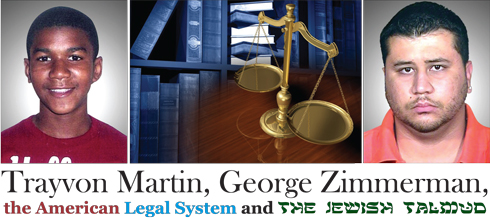
According to the Nation of Islam web site www.FinalCall.com you ought to blame the tragic killing of Trayvon Martin on the Jews and the Talmud. The NOI is the organization of the Hon. Elijah Muhammad, Hon. Minister Louis Farrakhan, Jabril Muhammad and Mother Tynnetta Muhammad, all known for their lifelong anti-Semitism and racism.


It is not a surprise that in the article "Trayvon Martin, George Zimmerman, the American Legal System and The Jewish Talmud," the "NOI Research Group" published racist anti-Jewish and anti-Talmudic assertions of the NOI.  I cite specifically these offensive anti-Talmudic statements:
In Our Saviour Has Arrived, Mr. Muhammad further identified the society to which we all belong as “the Jew’s civilization,” using the possessive form—meaning that this civilization (its culture, science, industry, and government) belongs to the Jews. So if this is “the Jew’s civilization,” then we are, in fact, under Jewish Law—which comprises the codes and statutes found in the holy book of the Jewish religion, the Talmud...

And ONLY under the Jewish Law found in their Talmud does Trayvon’s murder and George Zimmerman’s acquittal start to make perfect sense....

But Black people should take the hardest look at this book, because the very origin of race hatred and race-based slavery entered the Western mindset by way of the Jewish Talmud...

The Talmudic mentality lives in Florida and in the hearts and minds of its people and their laws...
I sent this feedback to the NOI:
I am deeply sorry about the tragedy of the violent killing of a young boy. But the Talmud had nothing to do with Zimmerman or Trayvon. Your anti-Talmudic and anti-Semitic article offends me. I urge you for the benefit of your own souls to repudiate your baseless racism and to abandon your irrational hatred of the Jews.
You can tell the NOI that you disagree with their opinions by sending feedback to them.

To end hatred and bigotry, we must never practice and spread more hatred and bigotry. We must respond with compassion, with legislation and with justice.
Talmudic Books
Kindle Talmud in English
Read More
Posted in antiSemitism, Holocaust, islam, politics, talmud | No comments

Monday, 8 July 2013

Politics Derailed the Film about Cyrus the Great

Posted on 06:41 by Unknown
The Cyrus Cylinder is on display at the Metropolitan Museum of Art in NYC, through August 4, 2013. This reminds us...

From my post of 1/29/2010: Cyrus was supposed to be the subject of a historical epic film. We wonder what ever happened to that film. Our best guess is that the film industry has closed ranks and decided that given the current political leadership in that country, there will be no film made that extols the culture of Persia, modern day Iran. Not surprising then, modern reality trumps ancient history.

Here is what we said in a blog post about Cyrus and the film - way back in March 2005...

Critics say that Russell Crowe and the movie Gladiator helped revive the Hollywood genre of the so-called sword and sandals historical epic. Warner Brothers released Troy, an adaptation of The Iliad, with Brad Pitt as Achilles. Universal made a film hurling the Spartans into battle against the Persians at the Battle of Thermopylae. Sony Pictures filmed a movie about Hannibal the Carthaginian general from the third century B.C.E.. Dino De Laurentiis produced a movie about Alexander the Great, co-financed by Universal and DreamWorks.

For the Jewish community this trend has been a mixed bag. In February 2004 Mel Gibson's The Passion of the Christ, appeared. It is an epic retelling of twelve days of the life of Jesus. Because it implicates Jews in the death of Jesus, many feared that Gibson's film would be used by anti-Semites to trigger an onslaught of hatred and violence against Jews here in the US and around the world.

But there is reason for Jews and for all proponents of multiculturalism to be more sanguine about this revived sword and sandals fashion in film. In particular, a London-based company, co-owned by Marinah Embiricos, a relative of the Aga Khan and a member of the Greek shipping family that controls the Embiricos Group, has teamed with the Sultan of Brunei to finance a multi-million dollar film about Cyrus the Great.

These backers want to tell the story of Cyrus not just for the entertainment value. They believe that their film will inspire goodwill and world peace.

The title character, Cyrus the Great, lived from 580-529 BCE. Notably he founded the Achaemenian empire in Persia. Impressively, more than 2500 years ago, as emperor he freed the slaves in his empire.

Additionally, Cyrus has been admired by history as an enlightened liberator, not a heroic conqueror, because of his tolerance and respect for the customs and religions of every region of his great empire. Some might argue that Cyrus was the founder of multiculturalism.

From a global point of view, Cyrus was a trailblazer of epic proportions. A decree of Cyrus' social and political views inscribed on a clay cylinder, now in the British Museum, has been described as the first declaration of human rights. The pronouncement concerning his enlightened goals and policies has been recognized as a charter of the rights of nations. A replica of the cylinder is displayed at the United Nations. It declares,
History especially records that Cyrus was very good for the Jews. When he conquered Babylonia in 539 BCE he allowed the Jews to return to Judea. The Hebrew Bible records the Israelite perspective on his great magnanimity at the beginning of the book of Ezra,
. . .When my soldiers in great numbers peacefully entered Babylon... I did not allow anyone to terrorize the people... I kept in view the needs of people and all its sanctuaries to promote their well-being... Freed all the slaves... I put an end to their misfortune and slavery (referring to the Jews and other religious minorities). The Great God has delivered all the lands into my hand; the lands that I have made to dwell in a peaceful habitation...
The Persian Kurash Prism tells of this same multicultural generosity by Cyrus for many peoples and sanctuaries, and from the Persian perspective, Ms. Embiricos, the primary backer of the film, has said that she wants her production to promote harmony among all the world's religions. "We wanted to send out the message that people should be tolerant of each other's religion. It was a very spiritual time and we want to rekindle this. It is not that I want to make movies - I want to make this particular film."
In the first year of Cyrus king of Persia, that the word of the Lord by the mouth of Jeremiah might be accomplished, the Lord stirred up the spirit of Cyrus king of Persia so that he made a proclamation throughout all his kingdom and also put it in writing: "Thus says Cyrus king of Persia: The Lord, the God of heaven, has given me all the kingdoms of the earth, and he has charged me to build him a house at Jerusalem, which is in Judah. Whoever is among you of all his people, may his God be with him, and let him go up to Jerusalem, which is in Judah, and rebuild the house of the Lord, the God of Israel -- he is the God who is in Jerusalem; and let each survivor, in whatever place he sojourns, be assisted by the men of his place with silver and gold, with goods and with beasts, besides freewill offerings for the house of God which is in Jerusalem." Then rose up the heads of the fathers' houses of Judah and Benjamin, and the priests and the Levites, every one whose spirit God had stirred to go up to rebuild the house of the Lord which is in Jerusalem; and all who were about them aided them with vessels of silver, with gold, with goods, with beasts, and with costly wares, besides all that was freely offered.
I am Kurash [ "Cyrus" ], King of the World, Great King, Legitimate King, King of Babilani, When I entered Babilani as a friend and when I established the seat of the government in the palace of the ruler under jubilation and rejoicing, Marduk, the great Lord, induced the magnanimous inhabitants of Babilani to love me, and I was daily endeavoring to worship him.... As to the region from as far as Assura and Susa, Akkade, Eshnunna, the towns Zamban, Me-turnu, Der as well as the region of the Gutians, I returned to these sacred cities on the other side of the Tigris the sanctuaries of which have been ruins for a long time, the images which used to live therein and established for them permanent sanctuaries. I also gathered all their former inhabitants and returned them to their habitations. Furthermore, I resettled upon the command of Marduk, the great Lord, all the gods of Kiengir and Akkade whom Nabonidus had brought into Babilani to the anger of the Lord of the gods, unharmed, in their former temples, the places which make them happy.  
Evidently there is now some good news for the Jews from the world of film.

All who support tolerance and peace in our precarious world must herald with enthusiasm the coming epic about the reign of Cyrus the Great.
The First Declaration of Human Rights By Cyrus The Great (The Cyrus Cylinder at the British Museum)
Read More
Posted in antiSemitism, bible, film, islam, politics | No comments

Sunday, 7 July 2013

GulfNews.com: Is ‘World War Z’ a pro-Israel film? Movie-goers in the gulf region share Talmudic views

Posted on 14:22 by Unknown


Paramount Pictures’ World War Z movie, starring Brad Pitt, imagined that the world was overrun by zombies and that Israel, one of the few countries that knew they were coming, built a wall around itself to prevent zombies from invading.

Gulf News has a fairly balanced report about a new zombie movie. Pro-Israel? Some say yes, some say no.
Dubai/Muscat: Movie goers from the region had mixed feelings regarding the zombie apocalypse film World War Z, which has sparked controversy for an alleged supposed pro-Israel bias.

The movie, starring Brad Pitt, imagined that the world was overrun by zombies and that Israel, being one of the few countries that knew they were coming, built a wall around itself to prevent zombies from invading.

People from all over the world took to social media to point out the resemblance between the barrier built in the movie and the separation wall built by Israel in the West Bank to separate it from the occupied Palestinian population, adding that the movie was promoting Israel’s policies.

“While I was watching the movie I did feel like I was supposed to feel good about the wall, the fear of the zombies made the wall look comforting rather than atrocious. I felt like they were attempting a mind shift. It was also interesting that only the [Israeli intelligence agency] Mossad was able to figure out the problem before everyone,” said Canadian national Mohammad Syed, works in the oil trade sector in Dubai.

Dubai resident Aleena Khan, from Pakistan, also said she believed that the movie was glorifying Israel, adding that the movie presented a misleading picture of the relationship between Palestinians and Israelis.

“I don’t think it was trying to justify Israel’s occupation, but it was glorifying the Israelis by emphasising on peace and harmony of the two nations, which is far from the truth. One has to face facts and admit that Israel is hostile towards Palestinians. It was a very rose-tinted version of what the relationship between the Israelis and Palestinians actually is,” she added.

Dr Abdul Khaleq Abdullah Professor of Political Science at UAE University on the other hand thought that the wall symbolised Israel’s insecurity.

“Plenty of Israeli propaganda came from the movie but the fact that they built a wall in my opinion shows how Israel feels insecure and so would go to any length to protect itself even if it meant coming up with over-the-top solutions like building the barrier or wall”

Palestinian national Saif Khalil, did not think much about the wall symbolism however thought that referring to Occupied Jerusalem as part of Israel was uncalled for.

Other movie-goers in the region said some people, especially Arabs and Muslims, were reading too much into the movie.

Palestinian national Maen Hadid, who works in a Dubai-based media company, said he did not feel the movie was trying to convey a pro-Israeli policy message.
“I think that the movie showed Israel as a country that normally exists just like any other country but their solution was to build a wall to protect those left inside, including the Palestinian Muslims,” said Hadid.

Bader Al Lawati, an Omani, said that after watching the movie, he read about the controversial views in the media and, “didn’t even think about it that way while watching the movie.”

British teenager Gwynfor Callaghan, who was born and brought up in Oman, said those viewing the wall scene as symbolising the situation of Palestinians were overreacting.

“It is a fiction made by Americans, so don’t think that the scene was intended against a group,” the British School Muscat student said...
Read More
Posted in film, islam, israel, politics, religion, science | No comments

Sunday, 26 May 2013

Is Saudi Arabia a Barbaric Islamic Kingdom?

Posted on 19:39 by Unknown
According to Reuters yes, Saudi Arabia is a barbaric Islamic kingdom, "Saudi Arabia to punish men over Christian woman convert: paper."

Reuters reported, "A Lebanese man was sentenced to six years in prison and 300 lashes for converting the woman, while a Saudi man was sentenced to two years and 200 lashes for aiding her escape abroad, the English-language daily said. It added that the pair had challenged the verdict and would appeal..."

Read More
Posted in islam, religion | No comments

Wednesday, 1 May 2013

Is the author and spiritual seeker Paulo Coelho Jewish?

Posted on 16:39 by Unknown
No Paulo Coelho is not a Jew. He was brought up Catholic and attended a Jesuit school in Brazil. Coelho is not a big fan of any organized religion. He speaks with lyrical disdain and disparagement in his books about the wisdom and ritual of religions.

His current publication, Manuscript Found in Accra, is set in Jerusalem before a battle. The people in the book gather to ask about life so that they can learn enough to save "the soul of Jerusalem." The publisher tells us:
July 14, 1099. Jerusalem awaits the invasion of the crusaders who have surrounded the city’s gates. There, inside the ancient city’s walls, men and women of every age and every faith have gathered to hear the wise words of a mysterious man known only as the Copt. He has summoned the townspeople to address their fears with truth:

“Tomorrow, harmony will become discord. Joy will be replaced by grief. Peace will give way to war. . . . None of us can know what tomorrow will hold, because each day has its good and its bad moments. So, when you ask your questions, forget about the troops outside and the fear inside. Our task is not to leave a record of what happened on this date for those who will inherit the Earth; history will take care of that. Therefore, we will speak about our daily lives, about the difficulties we have had to face.”

The people begin with questions about defeat, struggle, and the nature of their enemies; they contemplate the will to change and the virtues of loyalty and solitude; and they ultimately turn to questions of beauty, love, wisdom, sex, elegance, and what the future holds. “What is success?” poses the Copt. “It is being able to go to bed each night with your soul at peace.” ...

Now, these many centuries later, the wise man’s answers are a record of the human values that have endured throughout time. And, in Paulo Coelho’s hands, The Manuscript Found in Accra reveals that who we are, what we fear, and what we hope for the future come from the knowledge and belief that can be found within us, and not from the adversity that surrounds us.
This book is new age in every respect that we can think of especially in the way that it wanders through spiritual landscapes and themes without a care for a conventional framework of organization or presentation.

One passage struck us because it sounded like the utter opposite of the philosophy of life and values that we heard espoused at Yeshiva University by our teacher the Rav, Rabbi Soloveitchik and by his followers.

We will cite Coelho's passage and leave it without explanation; and we wish that understanding will flow to those who understand:
Beauty is present in all creation, but the dangerous fact is that, because we human beings are often cut off from the Divine Energy, we allow ourselves to be influenced by what other people think... And we become ugly and embittered.

At that moment, we can draw comfort from so-called wisdom, an accumulation of ideas put together by people wishing to define the world instead of respecting the mystery of life. This "wisdom" consists of all the unnecessary rules, regulation, and measurements intended to establish a standard of behavior. 
According to that false wisdom, we should not be concerned about beauty because it is superficial and ephemeral. 
That isn't true. All the beings created under the sun, from birds to mountains, from flowers to rivers, reflect the miracle of creation. 
If we resist the temptation to allow other people to define who we are, then we will gradually be able to let the sun inside our own soul shine forth... (pp. 60-61)
Back in 2011 we wrote about his previous book Aleph saying that the book... will greatly entertain the spiritual seeker. By that we mean if you are open to the concepts of past lives and the mystical energies of the universe, this book will speak to you. But even if you are such a seeker, you may feel, as we do, that at times the book overdoes some of its themes.

Within the story Coelho provides some gems of writing. We identified with his metaphor of the Chinese bamboo plant since we had spent several years putting down the roots of our latest book. And now, that book (God's Favorite Prayers) has sprouted up boldly after its publication.

Coelho explains that the Chinese Bamboo first, “...spends 5 years as a little shoot, using that time to develop its complex root system. And then from one moment to the next, it puts on a spurt and grows up to 25 meters high.”

Within the narrative Coelho casts in what can be wonderful observations, if they resonate for you. On the life-value of mistakes he tells us, “...only mediocrity is sure of itself, so take risk and do what you really want to do. Seek out people who aren’t afraid of making mistakes and who, therefore, do make mistakes. Because of that, their work often isn’t recognized, but they are precisely the kind of people who change the world and, after many mistakes, do something that will transform their own community completely”.

He does get this inspiring exhortation partly right. We'd say to seek out people who are afraid to make mistakes -- that is a human trait -- but who nevertheless go ahead and make them. And he does need to differentiate and specify what he means by "mistakes". He surely means the worthy and meaty and bold and creative mistakes, not the foolish ones. And then of course, we all need to know some definition of the notion of "transform" -- but we never do get that from most of those who throw out the idea. We just know that they mean that transformation is something good and different and fresh and original.

It's all in a narrative that is highly intuitive and new age. And we get it and we like it. We also like the title.
Read More
Posted in archetypes, are-they-jewish?, art, audio book, books, buddhism, christianity, dead-sea-scrolls, hebrew, islam, israel, kabbalah, kindle, meditation, prayer, religion, women | No comments

Friday, 19 April 2013

What are the connections between religions and terrorism?

Posted on 10:45 by Unknown
What are the connections between religions and terrorism? 

That's a big set of questions. We tried to answer, explain and understand them in the past.

Here is a selected list of our blog posts of study resources in the analysis of the connections between terrorism and religion (compiled when we taught a course on religion and terrorism at FDU a few years ago).
  1. Questions about American Christian Terrorism
  2. Religion and Jewish Terrorists (and see the JTA report)
  3. What is a Religious Culture of Violence and Terror? 
  4. Who were Shoko Asahara and the Buddhist Aum Shinrikyo Religious Terrorists? 
  5. How did Religion Motivate Sikh Terrorists? 
  6. What is the Logic of the Theater of Religious Terror? 
  7. Why Do Religious Terrorist Martyrs say that they aim to kill the demons? 
  8. What do Sexuality and Humiliation have to do with Terrorism? 
  9. Will the War Against Religious Terrorism Ever End? 
  10. From Kahane to Osama: How Do Men Make Religious Terrorism Into Cosmic War? 
  11. How can we end religious terrorism and achieve the peace of God? 
  12. Concluding Questions on Religion and Terrorism
We recommend:

God's Favorite Prayers
Read More
Posted in christianity, islam, juergensmeyer, orthodox, politics, religion, sikhs, terrorism | No comments

Saturday, 6 April 2013

Video: Bangladesh Fanatics Demand Death Penalty for Blog Blasphemy

Posted on 18:34 by Unknown
Bangladesh fanatics gathered to demand the death penalty for blog blasphemy:

"Hundreds of thousands of people have held protests in Bangladesh to demand that the government introduce an anti-blasphemy law that would include the death penalty for bloggers who insult Islam."

See the video report on AlJazeera.
Read More
Posted in bloggers, islam, religion, wingnuts | No comments

Sunday, 23 December 2012

NYTimes: A Dissident Egyptian Blogger's Visit to Israel

Posted on 07:10 by Unknown
Inspiring courage. From The New York Times:

THE LEDE BLOG: A Dissident Egyptian Blogger's Visit to Israel

Maikel Nabil, an Egyptian blogger who was jailed for eight months last year by Egypt's military for expressing his views on politics and religion, began a tour of Israel...

http://nyti.ms/VV7HSt


Read More
Posted in bloggers, christianity, islam, israel, politics | No comments

Saturday, 27 October 2012

The Talmud Bandied about at Lincoln Center in 'Disgraced'

Posted on 20:26 by Unknown
The AP reported, "Comic actor shows dramatic chops in 'Disgraced'"
It’s an oft-used device in theater: The doomed dinner party, a gathering that starts out politely, with house gifts of wine or pastries and glasses clinking over civilized chatter, and ends up in horrific, angry chaos.

But when that party chatter touches on Islamic and Judaic tradition, the Quran and the Talmud, racial profiling and Sept. 11 and the Taliban and Mahmoud Ahmadinejad and Benjamin Netanyahu — along with the requisite alcohol intake — well, that’s a whole other level of chaos.

And it all unfolds with speed, energy and crackling wit in ‘‘Disgraced,’’ a terrific new play by the actor, novelist and playwright Ayad Akhtar.

Fans of Jon Stewart will have an extra motivation to head over to Lincoln Center’s Claire Tow Theater — the new home of the LCT3 series, which promotes rising playwrights. The lead character, a Pakistani-American corporate lawyer in New York, is played by Aasif Mandvi, the very funny correspondent on Stewart’s ‘‘The Daily Show.’’ Here Mandvi shows a dramatic depth and perceptiveness his TV fans likely never have seen before....

Read More
Posted in humor, islam, New York Jews, talmud | No comments

Saturday, 1 September 2012

Chloe Breyer in the Times on how Blasphemy Laws Deny Human Rights

Posted on 20:22 by Unknown
What is the opposite of freedom of speech? Blasphemy law.

In the NYTimes.com Chloe Breyer discusses the negative impact of those laws.

She says, "...Beyond bad doctrine, blasphemy codes can be legally dangerous. A 2012 report by Human Rights First — “Blasphemy Laws Exposed: The Consequences of Criminalizing ‘Defamation of Religions”’ [pdf] — outlines several types of problems with the application of blasphemy laws worldwide. In addition to stifling dissent and discussion in the public sphere, such laws can actually spark assaults, murders and mob outbreaks..."


Read More
Posted in islam, religion | No comments

Monday, 23 July 2012

Is Tisha B'Av Relevant?

Posted on 18:03 by Unknown
Is Tisha B'Av relevant? No we do not think that the fast of Tisha B'Av is relevant anymore. We need a holiday from Tisha B'Av.

That day was for a long time a commemoration through fasting and prayer over the destroyed city of Jerusalem and the Temple. We've last visited Jerusalem in May of 2011 and can attest that the city is not desolate. It is without reservations, glorious.

Who then wants the bleak story to be told? Archetypally the "celebrity" archetype wants to keep recalling defeat, destruction and desolation, to spur team Jews on to fight the foes and to triumph at the end of time. That scheme may work for that archetype as long as the facts of reality do not fly smack in the face of the narrative. And when they do, what then? The narrative loses all of its force. We cannot imagine Jerusalem in ruins. Period. And indeed, why should we perpetuate an incendiary story of gloom and doom into a diametrically opposite positive world of building and creativity? The era of desolation has ended.

For at least twenty-five years, we've been lamenting the irony of lamenting over a city that is rebuilt. It's more rebuilt now -- way more -- than it was twenty five years ago. What do we do then about Tisha B'Av, the Jewish fast day of lament and mourning? Here is what we said those many years ago.

We wrote this op-ed for the Jerusalem Post in 1986 where we summed up many of our thoughts about Israel in our day, and of Jerusalem in particular. The article appeared in the Post on the day before Tisha B'Av:
I shall be fasting this week from sundown Wednesday until sundown Thursday. But this year, more than ever before, I feel silly mourning over the destruction of Jerusalem. I really do not know what to do when it comes time to listen to and to recite for myself the classical laments for the fast of Tisha B'Av.
Much of what we say about Jerusalem in the synagogue is just not true any more.

It is obvious to anyone and everyone that Jerusalem does not lay in ruins. On the contrary, this is my fourth extended visit to Jerusalem in the last seven years. [They say: your not in galut if you commute.] Over the last seven years I have watched as buildings spread out from the center of town to the new neighborhoods. Now Jerusalem sprawls across the hills of Judea, south and north from Gilo to Ramot and beyond.

On the ninth day of Av this year the observant Jews of Jerusalem will congregate in synagogues throughout the city to mourn and lament. What they say inside these halls will not reflect the reality immediately outside them.

And so this year I have resolved to add some few paragraphs for myself, silently, to my prayers. Then when I leave the synagogue and step out into the rebuilt city of our people, I will feel that I have been candid in my meditations and forthright in my worship. I shall say something like this:

"Jerusalem is not desolate. It stands glorious above our Land. Our capital looks down on the miracle of the modern state of our people, rebuilt by the sweat and labor of our brethren and sisters. A thousand settlements testify to our return and we our homeless no more.

"The inhabitants of Jerusalem are not homeless. Beautiful buildings abound. Apartments, condominiums, villas, large and small. Hotels and hostels, old and new. Whosoever wishes may come and live here. Whosoever is hungry shall find sustenance here.

"Enemies do not govern our land. The Kenesset building, the site of our self-government, stands at the center of our new metropolis, a vibrant testimony to our freedom. Independent and sovereign we struggle with each other, and with the states of the world, and somehow we manage to live in harmony among ourselves, and to survive in the swirling community of nations.
"Yes, the Temple was destroyed. But we have built other edifices in its stead. Long ago, in another age, our national center was taken from us by forces we could not resist. But now we have built new structures where we symbolize and express our spirit, our minds and our creative energies, and most of all, our freedom.

"A great synagogue and many more stand in our capital. They serve as the many beating hearts of our spiritual organs. In dozens of Yeshivot teachers build the religious minds of our youth. Schools abound. When school is in session, wherever you turn their are children on their way to classes from kindergartens to high schools, soaking up the knowledge of our world.

"A great Hebrew University answers to the essence of our wider educational appetites, right here in the capital of our nation. In its laboratories, classrooms and libraries, students try to unravel the mysteries of nature and society and strive to construct a new and better order.

"The Israel Museum, the Bezalel School, the Jerusalem Theater and other institutions small and large, cater to our cultural needs. In Jerusalem today we display our past and our present. We sing and dance and we mourn no more. We paint and draw and sculpt and adorn the urban hub of our people, the crown of our Land.

"As we watch, day-by-day, luxury hotels go up and up. Lush green gardens bloom before us. We repose in parks and swimming pools. We find our needs in supermarkets, bakeries, and department stores. And we indulge our extravagances in shops and markets, elegant restaurants and offbeat cafes.

"The city of Jerusalem has been rebuilt. Still, the work is never done. And the struggle will not end. But our city is not desolate. How can we mourn? We must, yes, we are obliged, indeed, it is the highest duty, for us to celebrate. For with God's help, but in accord with our own will and with our own hands we have raised Jerusalem beyond its highest heights. Never before in all of our history has this city attained such glory.

And so that is what I shall add as I conclude my lamentations on Tisha B'Av this year. I shall be cheerful this year, and I will not mourn. But I shall do so silently because this is my own private devotion. Will others join me?
In a public lecture in Minneapolis in October 1986 I read this editorial and expanded upon it:
The personal response I received to this article was enormous. More people read this than any other piece I have written and almost all agreed with its sentiments. Only a few Orthodox friends hesitated in their praise because they interpreted my words as a call to abolish Tisha B'Av. Not at all, I told them. And they had better be more careful in what they read lest they make a mistake in interpretation when they consult the shulchan aruch. More than a month later I am still hearing good words about my reflections on the rebuilding of our holy city.

I could say much more, though the Jerusalem Post is not the only forum for criticism and discussion of the impact of modern Israel on the future of Judaism.

I felt strongly and for the first time without equivocation that we in the galut do not adequately appreciate the achievements of those who built the modern state. Never, even in the greatest ages of our people's history, in the kingdoms of David and Solomon, after the rebuilding of the Temple by Ezra and Nehemiah, or in the era of Herod the Great, never did our people achieve so much in the building of our land. Israel today is a true marvel. Its streets and infrastructures in all of its settlements, its political system, and of course, its military might, make it one of the great countries in the world.

And this accomplishment is even greater in light of the destruction and devastation which preceded it in Jewish history. Yet does the average American Jew understand or appreciate the modern state? I often doubt it.
[edit and repost from 2007]
Read More
Posted in archetypes, are-they-jewish?, hebrew, history, Holocaust, islam, israel, kaddish, meditation, Minnesota, norman lamm, politics, pools, prayer, rabbis, religion, synagogues, terrorism, universities, zionism | No comments

Tuesday, 19 June 2012

Is David Yerushalmi Jewish?

Posted on 16:53 by Unknown
Previously we wrote about anti-Shariah crusader David Yerushalmi. He is back in the news again at the National Review and Mother Jones, according to Sarah Posner at Religion Dispatches.

A strong objection at NR to Yerushalmi's crusade is that he proposes a preemptive solution to a problem that does not yet exist.

On 7/31/11 we wrote: The Times has a front page article on the lawyer, David Yerushalmi, "The Man Behind the Anti-Shariah Movement" by Andrea Elliot. It is quite negative in tone, critical of his anti-Shariah agenda, his campaign against Islamic law.

We are opposed to every facet of Yerushalmi's bigoted campaign. Let us make it as clear as possible. Attacking Sharia as an evil by association with terrorism is equivalent to attacking Nike shoes because terrorists wear them. Law, scripture, propaganda -- all those can be the clothing of evil and terror. Going after the garb to make it outlawed is a misdirection of gargantuan proportions that will accomplish nothing except to engender a backlash.

Finally, the Times is catching up and catching on. Nearly five months ago we criticized this agenda, based on what we read in a Mother Jones article. On 3/7/2011, we posted this about David Yerushalmi:

Yes, David Yerushalmi is a Jew. According to an email by him published in Mother Jones, he is an Orthodox, practicing Jew. He says, "My parents are Russian Jewish immigrants who came to this country ...in the 20th century." Yerushalmi is an attorney and a right wing political activist.

The article in Mother Jones is quite negative and accusatory from the title on through, "Meet the White Supremacist Leading the GOP's Anti-Sharia Crusade." Its author Tim Murphy summarizes his attack on Yerushalmi, "States across the country are considering far-right bills to ban Islamic law. For that, we have hate-group leader David Yerushalmi to thank."

He goes on to describe the Yerushalmi campaign quite negatively:
Last week, legislators in Tennessee introduced a radical bill that would make "material support" for Islamic law punishable by 15 years in prison. The proposal marks a dramatic new step in the conservative campaign against Muslim-Americans. If passed, critics say even seemingly benign activities like re-painting the exterior of a mosque or bringing food to a potluck could be classified as a felony.

The Tennessee bill, SB 1028, didn't come out of nowhere. Though it's the first of its kind, the bill is part of a wave of related measures that would ban state courts from enforcing Sharia law. (A court might refer to Sharia law in child custody or prisoner rights cases.) Since early 2010, such legislation has been considered in at least 15 states. And while fears of an impending caliphate are myriad on the far-right, the surge of legislation across the country is largely due to the work of one man: David Yerushalmi, an Arizona-based white supremacist who has previously called for a "war against Islam" and tried to criminalize adherence to the Muslim faith.
The anti-Sharia movement gets quite Talmudic in the ways that tries to avoid the appearance of racism, while accomplishing its anti-Islamic aims. Yerushalmi's sample legislation, which he promotes, cloaks itself in language substitutions, as in,
...a sample bill Yerushalmi drafted at the behest of the American Public Policy Alliance, a right-wing organization established with the goal of protecting American citizens from "the infiltration and incursion of foreign laws and foreign legal doctrines, especially Islamic Shariah Law."

In a 40-minute PowerPoint that's available on the organization's site, Yerushalmi explained the ins and outs of the sample legislation. His bills differ from the failed Oklahoma amendment in one key way: They don't mention Sharia. Instead, they focus more broadly on "foreign laws and foreign legal doctrines." As Yerushalmi explained in an interview with the nativist New English Review in December, the language is "facially neutral," thereby achieving the same result while "avoiding the sticky problems of our First Amendment jurisprudence."
We are not pleased to read about Yerushalmi accusations that he supports racists and racism,
Yerushalmi has suggested that Caucasians are inherently more receptive to republican forms of government than blacks—an argument that's consistent with SANE's mission statement, which emphasizes that "America was the handiwork of faithful Christians, mostly men, and almost entirely white." And in an article published at the website Intellectual Conservative, Yerushalmi, who is Jewish, suggests that liberal Jews "destroy their host nations like a fatal parasite." Unsurprisingly, then, Yerushalmi offered the lone Jewish defense of Mel Gibson, after the actor’s anti-Semitic tirade in 2006. Gibson, he wrote, was simply noting the "undeniable Jewish liberal influence on western affairs in the direction of a World State."

Despite his racist views, Yerushalmi has been warmly received by mainstream conservatives; his work has appeared in the National Review and Andrew Breitbart's Big Peace. He's been lauded in the pages of the Washington Times. And in 2008, he published a paper on the perils of Sharia-compliant finance that compelled Sen. Minority Whip John Kyl (R-Ariz.) to write a letter to Securities and Exchange Commission chairman Chris Cox.
Oy, we are liberal and Jewish and simply don't like being compared to "a fatal parasite" -- so Mr. Yerushalmi has not exactly won us over, even with his sharply argued Talmudic rhetoric.

The man replies after the fact to the article, having refused to be interviewed by the writer whom he accuses of "bigoted journalism." Okay but why now write an email? In it Yerushalmi denies that he is a "white supremacist" because, "As an Orthodox Jew, whose grandparents and parents were immigrants to this country, I am the first person that real white supremacists wish to murder. Have you not read neo-Nazi or KKK literature?" Murphy probably did read that literature, which adds to the contradictions that enhance the newsworthiness of this story.

Yerushalmi denies he is racist, even though he admits that his writings are suffused with racist discussions.

And he gets worked up because something else Murphy says.
Secondly, you suggest I am a racist because I criticize liberal Jews. I dare say that insofar as I am an orthodox, practicing Jew, my criticism of liberal Jews can hardly be counted as "racism;" yet, indeed, you make this asinine argument.
This fails the Talmud test, there is no logic here in the refutation. If Murphy sees fit to apply the tag racist to a Jew because of how he attacks other Jews, that is his right - and it is all the more ironic and interesting.

And then we listen as Mr. Yerushalmi calls other charges in Murphy's essay, "patently absurd" or a "patent falsehood" or "a bigoted ad hominem attack" and threatens Murphy with "a legal brief" and implies that he will sue Murphy for "actual malice."

Whew!

We are grateful that this article and reply came out before the Jewish holiday of Purim. It gives us a chance to point out a timely seasonal irony.

To preface this, when we were twelve we wrote a school report on Judah P. Benjamin, a Jewish politician who supported slavery in the US Senate and then rose to political prominence in the Confederacy during the civil war. While in the Senate, once after Benjamin delivered an eloquent pro-slavery speech, one of his opponents rose to criticize Benjamin, calling him "an Israelite with Egyptian tendencies." Even at the age of twelve we could see that this a was delicious political rhetorical irony.

Shifting to the case at hand, the enemy of the Jews in the book of Esther is the nefarious Haman, the Agagite.

He conspires with the King of Persia in a racist anti-Semitic plot to have the Jews killed,
Then Haman said to King Ahasverus, "There is a certain people scattered abroad and dispersed among the peoples in all the provinces of your kingdom; their laws are different from those of every other people, and they do not keep the king's laws, so that it is not for the king's profit to tolerate them. If it please the king, let it be decreed that they be destroyed..." (Esther 3:8-9).
Well certainly, Yerushalmi is not seeking to pass legislation to kill all the Muslims in our kingdom.

But  he does go after a certain people dispersed among us, the Muslims. And he does go after their laws that are different from those of every other people. We do think it is fair to rise in the chamber of debate and to ask ironically, is Mr. Yerushalmi a Jew with Agagite tendencies? Is he acting in ways that appear nefarious and racist against another people? Obviously, Murphy thinks that he is, and it makes for an interesting article.
Read More
Posted in antiSemitism, islam, politics, Purim, religion, wingnuts | No comments

Saturday, 2 June 2012

ADL: Arabic Talmud has 'dangerous and defamatory' introduction

Posted on 18:30 by Unknown
The Times of Israel reports that the ADL has filed a complaint with Jordan over the new Arabic translation of the Talmud.
The Anti-Defamation League has harshly criticized an editor’s introduction to the first-ever Arabic translation of the Talmud for propagating age-old anti-Semitic concepts about Jews and Judaism, and called on the Jordanian government to step in and take action.

The ADL contends that the introduction to this translation charges the Talmud with promoting trickery, cheating and the murder of non-Jews. The translation in question, published by a Jordanian think tank, the Middle East Studies Center (MESC), includes an introduction which misquotes some Talmudic passages while taking others out of context, all of which leave the reader with the impression that religious Jewish law, teachings and tradition view non-Jews with contempt....
We said when we first heard about the Jordanian project that it was fraught with potential danger - antisemitism and the like is a commonplace motivating assumption for such a project in the Arab world.
Read More
Posted in antiSemitism, islam, talmud | No comments

Wednesday, 16 May 2012

What does the Talmud say about Islam?

Posted on 18:35 by Unknown
The Talmud says nothing at all about Islam.

The Talmud was published around 499 CE and Islam was founded may years later, around 622 CE. The Talmud mentions Arabs in numerous places, but that has nothing to do with Islam, the later religion.

For some reason a recent story about the new Arabic translation of the Talmud, "Lebanon news -Jordanian center translates Babylonian Talmud into Arabic" tells us that Mohammad Najem, spokesperson of the Amman-based Middle East Studies Center, said about the Talmud translation project, "It is important to understand how Jews view Islam as well as their own religion." Given the historical facts, the implication of this statement makes little direct sense.
Read More
Posted in islam, religion, talmud | No comments

Sunday, 15 April 2012

Will the War Against Religious Terrorism Ever End?

Posted on 09:45 by Unknown
Will the War Against Religious Terrorism Ever End?

Mark Juergensmeyer, in Terror in the Mind of God, lays out five ways that the reign of religious terror can come to an end. Let's consider each. First consider the end will come with the forceful eradication of the terrorists, what appears to have been the US response to the 9/11 attacks, continued with the more recent killing of OBL.

Juergensmeyer outlines,
The first scenario is one of a solution forged by force. It encompasses instances in which terrorists have literally been killed off or have been forcibly controlled. If Osama bin Laden had been in residence in his camp in Afghanistan on August 10, 1998, along with a large number of leaders of other militant groups when the United States launched one hundred Tomahawk cruise missiles into his quarters, for instance, this air strike might have removed some of the persons involved in planning future terrorist acts in various parts of the world.

It would not have removed all of them, however, and the attempt may well have elevated the possibility of more terrorist acts in reprisal. The war-against-terrorism strategy can be dangerous, in that it can play into the scenario that religious terrorists themselves have fostered: the image of a world at war between secular and religious forces. A belligerent secular enemy has often been just what religious activists have hoped for. In some cases it makes recruitment to their causes easier, for it demonstrates that the secular side can be as brutal as it has been portrayed by their own religious ideologues.

The 1998 U.S. attack on Osama bin Laden's camp neither destroyed the militant Muslim's operations nor deterred his aggression. Immediately after the attack several other American embassies were targeted, and several months later, in February
1999, George Tenet, head of the U.S. Central Intelligence Agency, announced to the press that he had "no doubt" that "Osama bin Laden and his world-wide allies and sympathizers" were plotting "further attacks" against U.S. installations and symbols of American power. In Algeria, attempts to eliminate Muslim militants also had violent repercussions. When the military junta in Algeria halted the elections and began running the country with an iron hand, popular support for the Islamic party and violent resistance against the junta escalated.
In order for the destructive strategy to work, a secular government must be willing to declare total war against religious terrorism and wage it over many years, as the Israeli government attempted to do against its terrorist opponents.
Second consider the approach of "cracking down" -- one step back from wiping them out. Juergensmeyer suggests this has not been and will not be a fruitful path.
A second scenario is once in which the threat of violent reprisals or imprisonment so frightens religious activists that they hesitate to act. This is the strategy adopted by many law enforcement agencies to "crack down" on terrorists: even if the authorities cannot eliminate the terrorists completely, they can at least frighten them by raising the stakes associated with involvement in terrorist activity.

Though some fringe members of activist groups may have been sobered by such threats, it is doubtful that the "get tough with terrorists" strategy has had much of an effect on the more dedicated members. In the view of most of them, the world is already at war, and they have always expected the enemy to act harshly. In fact, they would be puzzled if it did not. So the threat of an additional increment of penalty to be meted out for their actions has had little if any deterrent effect.

The case that is sometimes offered as a successful instance of terrorist intimidation is the one involving Libya. In the mid-1980s Libya was thought to harbor Muslim activists responsible for a series of acts of international terrorism against the United States. In 1986 the United States undertook an air strike against the leader of the country, Muammar el-Qaddafi, in reprisal. The missiles were aimed at one of his residences, and in fact a member of his family was killed in the attack, but el-Qaddafi himself survived. Over ten years later there were very few terrorist acts aimed at the United States attributed to Libya. Were the air strikes effective?

It is doubtful. Although it is possible that Libya was eventually intimidated by the strikes, the immediate response was quite different. According to the RAND--St. Andrews Chronology of International Terrorism, the number of terrorist incidents linked to Libya and directed against the United States rose in the two years following the U.S. air strikes: fifteen in 1987 and eight in I988. The most devastating terrorist attack against the United States in which Libya has been implicated--the tragic explosion of Pan Am flight 103 over Lockerbie, Scotland, killing all 259 on board--occurred in December 1988.
Third consider the possibility of violence winning. This example that Juergensmeyer cites seems less compelling when you consider that Rantisi was assassinated in April 2004:
The third scenario is the reverse of those cases in which terrorism is defeated or diffused: it is when terrorism, in some way, wins. This is the outcome for which every religious activist, understandably, has yearned. When I asked the Hamas leader Dr. Abdul Aziz Rantisi whether Jews and Muslims could live in harmony in the area he described as Palestine, he affirmed that they could--but not under the present arrangement. He could not accept "Israel's sovereignty over Palestinian land," he said. But the two groups could live in peace if the situation were reversed and the land were controlled by Palestinian Arabs. "Jews would be welcomed in our nation," Rantisi explained, adding that he did not hate Jews as such. He pledged not to mistreat them "when we become strong." He hoped for a South Africa-type solution, where the whole of the area would be united--Israel, Gaza, and the West Bank--and the Palestinians who had left the region would be allowed to return. With Arabs then a majority, Rantisi would accept democratic rule over the united region, which would be called something other than Israel.
It is a solution that would delight Palestinians both inside and outside the Hamas movement. Needless to say, it has not been a solution enthusiastically embraced by Israel. Given that fact, and considering that Israel holds a preponderance of military power in the region, could any part of the radical Islamic Palestinian objective be achieved? As I suggested earlier, acts of terrorism tend to be strategically unproductive and do not usually lead to transformations of power. If one is not willing to wait, as Dr. Rantisi claimed he was willing to do, beyond his own generation and perhaps the next, symbolic action will have to be replaced by the kind of strategic planning aimed at achieving goals either totally or incrementally. Revolutionary changes can occur through a well-organized mass movement, as in Iran, or an effective military force, as in Afghanistan. They might also come about through political pressures, as in Sudan and Pakistan, where regimes have capitulated to religious nationalist ideologies in what have been incremental but virtually bloodless coups. But as noted earlier, none of these cases has involved terrorist acts as the primary means of achieving power.
A fourth path to resolution entails the separation of religion from politics. Many would like to see this happen, but the likelihood now seems more remote than ever. Juergensmeyer discusses,
The fourth scenario for peace is one in which religion is taken out of politics and retired to the moral and metaphysical planes. As long as images of spiritual warfare remain strong in the minds of religious activists and are linked with struggles in the social world around them, the scenarios we have just discussed--achieving an easy victory over religious activists, intimidating them into submission, or forging a compromise with them--are problematic at best. In some cases where religious politics had previously been strong, however, the image of cosmic war itself has been transformed. A more moderate view of the image of religious warfare has been conceived, one that is deflected away from political and social confrontation.

The extreme form of this solution--one in which religion returns to what Casanova described as its privatization in the post-Enlightenment world--is unlikely, however. Few religious activists arc willing to retreat to the time when secular authorities ran the public arena and religion remained safely within the confines of churches, mosques, temples, and synagogues. Most religious activists regard the social manifestation of cosmic struggle to be at the very heart of their faith and dream of restoring religion to what they regard as its rightful position at the center of public consciousness.

Yet, in the 1990s, many Islamic countries witnessed a certain reaction against politicized religion. In 1999, Iranian students demonstrated in support of such leaders as the moderate theologian Abdol Karim Soroush, who argued that interpretations of religion are relative and change over time. He made a distinction between ideology and religion, and claimed that Muslim clergy had no business being in politics. Similar statements have been made by such moderate Islamic thinkers as Hassan Hanafi in Egypt, Rashid Ghannouchi in Tunisia, and Algeria’s Mohammed Arkoun. For them, the image of struggle consists largely of a spiritual battle or a contest between moral positions rather than between armed enemies.
The fifth path is one wherein, "secular authorities embrace moral values, including those associated with religion." Juergensmeyer gives several examples,
These moderate solutions have required the opponents in the conflict to summon at least a minimal level of mutual trust and respect. This respect has been enhanced and the possibilities of a compromise solution strengthened when religious activists have perceived governmental authorities as having a moral integrity in keeping with, or accommodating of, religious values. This, then, is the fifth solution: when secular authorities embrace moral values, including those associated with religion.

In some cases where religious violence has been quelled, religion has literally been subsumed under the aegis of governmental authorities. In Sri Lanka, for instance, the efforts of the government to destroy the Janarha Vimukthi Peramuna (JVP)--the People's Liberation Front--a movement supported by many radical Buddhist monks, were double-pronged. The harsh measures involved tracking down and killing the most dedicated members of the movement. The more accommodating measures included efforts to win the support of militant religious leaders. In 1990
President Ranasinghe Premadasa provided a fund for the financial support of Buddhist schools and social services, and created a Ministry of Buddhist Affairs, naming himself the first minister. Premadasa created a council of Buddhist advisers, including Buddhist monks who had been quite critical of the secular government previously. One of these told me in 1991 that after Premadasa's pro- religious measures, the government was finally beginning to "reflect Buddhist values."

In other cases, such as the British response to Irish terrorism, the government's stance in following the rule of law and not overreacting to terrorist provocations demonstrated its subscription to moral values. This made it difficult for religious activists--with the exception of Rev. Ian Paisley--to portray the government as a satanic enemy. It also increased the possibility of some sort of accommodation with religious activists on both sides of the Northern Ireland dispute--leading to the signing of a peace accord in 1998.
So, will the War Against Religious Terrorism Ever End? We hope it will. [reposted]
Read More
Posted in 9/11, history, islam, israel, juergensmeyer, politics, religion, sikhs, terrorism, wingnuts | No comments

Thursday, 29 March 2012

Is the Jordan Think Tank Arabic Babylonian Talmud Kosher?

Posted on 08:40 by Unknown
JPost reports that and Arabic translation of the Talmud has been published.
A think tank on Middle East affairs in Jordan has for the first time published a translation of the Babylonian Talmud in Arabic.

Middle East Studies Center based in Amman produced the 20-volume work, which took six years to complete and is the labor of 95 translators, language experts and editors.
Sketchy details leave questions open about whether the motives of the translators are kosher or not.

We will follow up as more information becomes available.
Read More
Posted in Is-it-kosher?, islam, talmud | No comments

Tuesday, 21 February 2012

Religion Dispatches: Is sport religion or is religion sport?

Posted on 17:38 by Unknown
Jay Michaelson writes on RD, "Does God Want Jeremy Lin to Win?" And in the op-ed he ponders some questions about the religious sports figure of the hour.
If you’ve unplugged your computer and TV for the last week, you may not have heard of Jeremy Lin, the sudden basketball phenomenon, Asian-American hero, and, like Denver Broncos quarterback Tim Tebow before him, out-of-nowhere success story who wears his faith on his sleeve.

Lin, like Tebow, is a deeply religious evangelical Christian. And while his own religious utterances have been both humble and thoughtful (Lin went to Harvard, after all), the press swirling around him has led to a spate of bad theology—which is a shame, because sports stories have the ability to capture the public imagination and have the potential to inspire us to reflect on truly important religious values, instead of truly awful ones.

The awful values, of course, have to do with theodicy: that God picks sides, and roots for one sports team over another. In the case of athletics, this belief is both ridiculous and widespread...
Okay let's just stop right there.

We think Michaelson misuses the term theodicy. But more difficult, he thinks that God does not "pick sides" or "root for one team over another."

Wait, stop. It is a belief at the core of Judaism, Christianity and Islam that God does "pick sides" and "root for one team over another."

End of critique.
Read More
Posted in christianity, islam, religion, sports | No comments

Monday, 16 January 2012

Daily Beast: Is there a moderate islam?

Posted on 16:34 by Unknown
We don't know what the question means when people ask, "Is there a moderate Islam?" There is no denying that Islam lends itself to radicalism and part of that agenda is deeply embedded in the Koran.

Sure, we wish to encourage moderate politics in Islam, especially when radical Islam is aimed at the US. But wishful thinking must not replace scholarship and analysis.

Chris Dickey writes that prominent Dutch politician, "Geert Wilders Says There's No Such Thing as Moderate Islam." He opines, "Can't Someone Tell Geert Wilders to Stop His Anti-Muslim Diatribes Before Somebody Gets Hurt?"

Is Dickey worried about Wilders getting hurt? That is not clear to us. In some ways there is no denying that Wilders is right. Moderate Islam exists when Muslims actively ignore core preachings of their religion.

It's much like Modern Orthodoxy in Judaism. To live it, you have to actively ignore deep seated essences of the rabbinic religious tradition.
Read More
Posted in islam, religion, terrorism | No comments

Saturday, 14 January 2012

Are Goldman Sach's Islamic Bonds Kosher?

Posted on 16:08 by Unknown
Reuter's reports that some Islamic oriented bonds issued by Goldman Sachs may be overstating their "rabbinic" certifications ("Goldman Sachs in new flap over Islamic bond suspected to be not 100% halal"). Whoops.
Goldman Sachs’ controversial $2 billion Islamic bond programme faced a fresh challenge on Wednesday as it emerged that at least two scholars named as potential approvers had not even seen the prospectus.

Asim Khan, an adviser to Goldman on the issue which needs approval from sharia scholars to proceed, confirmed media reports that three of the eight scholars listed as potential approvers had not responded to requests to endorse the issue, but he said their lack of co-operation had no bearing on its sharia credentials.

Goldman’s first sukuk, also the first by any U.S. bank, is already facing suggestions that it may contravene religious principles by using proceeds to lend money to clients for interest, accusations rejected by the bank’s adviser.

Adviser Khan named the three who had not responded as Daud Bakar, Sheikh Abdullah Bin Sulaiman Al Manea and Mohamed Ali Elgari.

“Given that the issuance was not to take place at that stage and this was only a preliminary prospectus, it was appropriate not to pre-judge the eventual outcome or speculate which sharia scholars would eventually be available to consider, evaluate and sign off on the sharia compliance of this complex transaction,” said Khan, who is managing director at Islamic finance advisor Dar Al Istithmar.

But some of those scholars contacted by Reuters said they had been both surprised and concerned that their name was on the prospectus. Two scholars, neither of whom wanted to be identified, said they had not seen any documentation.
Read More
Posted in Is-it-kosher?, islam, money | No comments
Older Posts Home
Subscribe to: Posts (Atom)

Popular Posts

  • Thanksgiving Turkey Drumstick Jack-O-Lantern Pumpkin Pie Table Song - A Lone Pumpkin Grew
    Thanksgiving will be upon us soon and we sing traditional holiday songs at our Thanksgiving dinner. Here are the words to one of our favorit...
  • Is Paul Volcker Jewish?
    No, we do not think that former Federal Reserve Chairman Paul Volcker is a Jew. According to reporter Roni Sofer of the usually reliable Is...
  • Is Carlos Slim HelĂș Jewish?
    No, Carlos Slim HelĂș is not a Jew. He is of Lebanese origins and a Maronite Catholic by religion. This Mexican businessman and philanthropis...
  • Is Sigourney Weaver Jewish?
    Now it is far-fetched that anybody would think that actress Sigourney Weaver is Jewish. No, Sigourney Weaver is not a Jew. The tall actress ...
  • Is Caroline Kennedy's Husband Edwin Schlossberg Jewish?
    Yes, Edwin Arthur Schlossberg is a Jew. All four of Schlossberg's grandparents were Russian (Ukranian) Jews born near Poltava and arrive...
  • Update on the Insults: A Battle Over a Book: Haym Soloveitchik v. Talya Fishman
    Our once-upon-a-time teacher at Yeshiva University has panned a new book about rabbinic cultural development. It's a veritable battle ov...
  • Free Download of the Soncino Talmud in English Online at Halakhah.com: 25,000+ satisfied customers a month
    The Soncino Babylonian Talmud English translation is online - at a site that is not anti-Semitic or polemical. Download the Talmud in Englis...
  • Rav Soloveitchik's Dissertation at the University of Berlin
    In honor of the 20th yahrzeit of the Rav's passing (on Hol HaMoed Pesach, the 18th of Nisan, in 1993) and of the 110th year since his bi...
  • Is Marissa Mayer Jewish?
    Yes, the new CEO of Yahoo!, Marissa Mayer is a Jew. Hat tip to our friend David who points out, "I find it interesting that Google, Fac...
  • Note to Self: Do not wear Geox shoes in the rain or snow. They have little holes in soles!
    We wear Geox shoes almost all the time nowadays. They are truly more comfortable for someone like us who mainly sits at a desk throughout th...

Categories

  • 9/11 (1)
  • Alan F. Segal (1)
  • amazon (33)
  • antiSemitism (14)
  • apocalyptic (1)
  • apple (11)
  • archetypes (35)
  • are-they-jewish? (73)
  • ariely (1)
  • art (18)
  • atlantic beach (3)
  • audio book (1)
  • barack (20)
  • baseball (2)
  • beyond belief (1)
  • bible (48)
  • bloggers (12)
  • bobby knight (1)
  • book club (3)
  • book serialization (14)
  • books (83)
  • boteach (2)
  • brooklyn (10)
  • buddhism (5)
  • christianity (59)
  • circumcision (3)
  • copyright (4)
  • daf yomi (4)
  • daphne (1)
  • dead-sea-scrolls (4)
  • dirty tricks (4)
  • egalitarianism (3)
  • einstein (2)
  • film (20)
  • footnote (2)
  • gay rights (12)
  • golf (8)
  • google (15)
  • haaretz (5)
  • haggadah (9)
  • Harvard (1)
  • hasidism (17)
  • health (36)
  • heath (1)
  • hebrew (18)
  • history (12)
  • Holocaust (18)
  • huckabee (1)
  • hullin (3)
  • humor (76)
  • inventions (30)
  • iPad (12)
  • iPhone (9)
  • Is-it-kosher? (46)
  • islam (19)
  • israel (108)
  • juergensmeyer (2)
  • kabbalah (12)
  • kaddish (6)
  • kindle (33)
  • kosher (16)
  • kugel (1)
  • kushner (1)
  • laptops (1)
  • lex talionis (1)
  • madoff (15)
  • madonna (4)
  • Maimonides (5)
  • meditation (22)
  • menorah (2)
  • Merkin (10)
  • microsoft (1)
  • Minnesota (8)
  • Mishnah (2)
  • money (65)
  • mormons (5)
  • morton smith (3)
  • music (29)
  • nazis (3)
  • netanyahu (1)
  • New York Jews (46)
  • norman lamm (5)
  • obama (19)
  • orthodox (86)
  • Passover (20)
  • politics (91)
  • pools (13)
  • prayer (92)
  • Purim (9)
  • rabbis (124)
  • rahm emanuel (1)
  • rav (15)
  • recipes (2)
  • religion (170)
  • schachter (1)
  • science (45)
  • shaiel (1)
  • sikhs (3)
  • smoking (2)
  • software (6)
  • soloveitchik (17)
  • soul (2)
  • sports (47)
  • statins (1)
  • supreme court (1)
  • Surfing (1)
  • synagogues (73)
  • talmud (117)
  • Talmudic Books (30)
  • teaneck (37)
  • terrorism (6)
  • texas (1)
  • Thanksgiving (4)
  • theodicy (1)
  • tim tebow (3)
  • universities (56)
  • videos (19)
  • wikipedia (1)
  • wine (3)
  • wingnuts (22)
  • women (64)
  • yeshiva (41)
  • yiddish (5)
  • youkilis (2)
  • zev zahavy (21)
  • zichron ephraim (12)
  • zionism (21)

Blog Archive

  • ▼  2013 (187)
    • ▼  August (5)
      • Free Download of the Soncino Talmud in English Onl...
      • Selichot are Not Outcries
      • Is Google NOW incredible or creepy? Is NOW kosher?
      • Is Israel's National bird the Hoopoe - Duchifat - ...
      • JStandard: My Dear Rabbi Talmudic Advice Column fo...
    • ►  July (30)
    • ►  June (23)
    • ►  May (25)
    • ►  April (30)
    • ►  March (33)
    • ►  February (17)
    • ►  January (24)
  • ►  2012 (313)
    • ►  December (31)
    • ►  November (23)
    • ►  October (16)
    • ►  September (15)
    • ►  August (20)
    • ►  July (20)
    • ►  June (34)
    • ►  May (19)
    • ►  April (38)
    • ►  March (39)
    • ►  February (31)
    • ►  January (27)
Powered by Blogger.

About Me

Unknown
View my complete profile