BlackballingTimTebow

  • Subscribe to our RSS feed.
  • Twitter
  • StumbleUpon
  • Reddit
  • Facebook
  • Digg
Showing posts with label talmud. Show all posts

Friday, 9 August 2013

Free Download of the Soncino Talmud in English Online at Halakhah.com: 25,000+ satisfied customers a month

Posted on 14:09 by Unknown
The Soncino Babylonian Talmud English translation is online - at a site that is not anti-Semitic or polemical.

Download the Talmud in English free at http://www.halakhah.com/ - 25,000+ downloads each month! 300,000+ each year.

TRANSLATED INTO ENGLISH WITH NOTES, GLOSSARY AND INDICES UNDER THE EDITORSHIP OF RABBI DR. I. EPSTEIN B.A., Ph.D., D. Lit. FOREWORD BY THE VERY REV. THE LATE CHIEF RABBI DR. J. H. HERTZ. INTRODUCTION BY THE EDITOR. THE SONCINO PRESS, LONDON.

Contains the Sedarim (orders, or major divisions) and tractates (books) of the Babylonian Talmud, as translated and organized for publication by the Soncino Press in 1935 - 1948.

The site has the entire Soncino Talmud edition in PDF format and  about 8050 pages on line in browser compatible HTML format, comprising 1460 files — of the Soncino Talmud.

Please add a link to the site http://www.halakhah.com on your web site or blog.

Highlights:
  • A newly formatted 2-column PDF version of the Soncino Talmud at Halakhah.com.
  • A Kindle edition of the Soncino Talmud available from Amazon.com: The Kindle Soncino Talmud in English


Read More
Posted in amazon, antiSemitism, bloggers, book club, books, dead-sea-scrolls, hebrew, history, Is-it-kosher?, israel, kindle, rabbis, religion, talmud, women, yeshiva | No comments

Friday, 2 August 2013

JStandard: My Dear Rabbi Talmudic Advice Column for August

Posted on 07:23 by Unknown
Published in the Jewish Standard, Dear Rabbi: Your Talmudic advice column

Dear Rabbi,

My son, his wife and children have decided to make aliyah to Israel. My husband and I understand their practical and idealistic motivations for this decision. We applaud what they are doing and feel pride in their Judaic and Zionist ardor. We plan to visit them in Israel periodically, but we have no plans to move there.

At times we both admit to ourselves that we worry about them and that we will sorely miss them. What advice can you give us to help us cope with this bittersweet situation that we face?

Stuck in Bergen County
New Milford

Dear Stuck,

First, know that you are not alone. In our area, a good number of Modern Orthodox families with young children make aliyah. An underlying motive for this uprooting is the financial burden of local day school tuition. That concern combines with years of sincere devotion to the Zionist dream. Modern Orthodox education encourages pride in the miracle of the State of Israel. And many Jews simply feel a mystical attachment to the Land of Israel.

When younger couples and single college age children decide to make aliyah, that move is logistically less complex. But it also leaves parents with long distance communications challenges and airplane trips to see their offspring.

Many of our area families boast three generations of dedicated Zionists. I recall the excitement in our family when I was a young child and my grandparents announced they were making aliyah. That event took place way before such moves became more common among American Jews, when living in Israel meant making sacrifices and accepting a lower standard of living, even hardships.

Based on what I know from experience and from friends and what I sense in your inquiry, I don’t entertain the notion that you try to dissuade your children from going. Yet there are several ways to reduce the anxiety and loneliness that you fear.

First, do the travel. It’s been said for decades about the situation of American Jews, “There is no galut if you commute.” You are not fully in the exile if you make enough periodic visits to Israel. And you will feel close to your children and grandchildren as you see them progress and grow at intervals.

Next, use the technology. When my grandparents went to live in Israel, plain old telephones were a rarity and long distance calls were expensive and low-quality. Nowadays, even with the time differential, you can vividly see and interact with your Israeli family via Internet video applications such as Skype and FaceTime. Voice phone calls cost little or nothing.

Third, try to form informal social support mechanisms. You can make efforts to connect to other nearby parents and grandparents whose children have made aliyah to share concerns and, of course, to keep abreast of the best airfares and apps to use for the suggestions above.

Last, you can heed your children, when they inevitably suggest to you that you join them in their adventures, and you can make aliyah yourselves.

Dear Rabbi,

After many years of regular worship I started to pay more attention to the Alenu prayer that we recite at the end of every service. I do not understand why we say this so frequently and at the end of each synagogue session. Also, I have become uncomfortable with what I feel is the confrontational tone of the prayer and its proclamation that we are the only true faith and all other gods are worthless and powerless.

Can you help me find renewed relevant meaning in this regular recitation?

Pluralistic, not Pugilistic
Teaneck

Dear Pluralistic,

Your question draws attention to one of the great complexities of our prayer book – the different moods and motivations that flow throughout our services. One of those distinct philosophies, succinctly expressed in the Alenu, is that we are in constant competition with other faiths, that there will be an end to the contest of history, and that there will be only one winner – us.

In religious terms we refer to the “last minutes of the game” as the messianic age, the time at which we will emerge from the battles of the ages and the all the world will recognize us as the worthy people who worship the one true God.

In the services in the synagogue this theme comes to the forefront at particular times. The Alenu is famously one of the crucial liturgies in the Musaf additional service of Rosh Hashanah in the section of the Amidah that we call Malchiyot – kingship. We enthrone God on the New Year as our sovereign and we initiate our declarations of that with the Alenu.

The prayer concludes, “And the Lord shall be king over all the earth: in that day shall the Lord be One, and his name One.”

Most of the rest of the year, and throughout our prayers, we allow other themes to dominate at the core of our services. I suspect with reasonable certainty that we are not yet at the end of time. But permit me to offer this metaphor to help explain why it makes sense to me that we conclude every service before we leave the synagogue with the not-really-inclusive, and actually somewhat combative, Alenu prayer.

I see our synagogue as our team’s locker room where we gather together at our half-time breaks. We share our diverse team talk there for a while. And when we are done, right before we go outside onto the field to resume the contest and competition in the arena of our communities, we engage in a spirited spiritual pep-talk.

We say team-like things: that we are number-one, that our God is number one, and that we will crush our opponents! In the theological language of our prayer that comes out: “We therefore hope in you, O Lord our God, that we may speedily behold the glory of your might, when you will remove the abominations from the earth, and the idols will be utterly cut off, when the world will be perfected under the kingdom of the Almighty, and all the children of flesh will call upon your name…”

Whether you see yourself as an active team player or as an avid spectator, you should be able to root heartily for your team, the Jewish People, and do so with the Alenu prayer.

Dear Rabbi,

What does it mean when you say you offer in your column “Talmudic Advice”?

Seeking answers
Fort Lee

Dear Seeking,

By saying I supply Talmudic advice I mean that I offer in my column advice only, and not halakhic rulings or decisions. And I also mean that in Talmudic fashion I try to see more than one dimension of an issue and encourage the questioner to find his or her own best solution.

The Dear Rabbi column offers timely advice based on timeless Talmudic wisdom. It aspires to be equally respectful and meaningful to all varieties and denominations of Judaism. You can find it here on the first Friday of the month. Send your questions to DearRabbi@jewishmediagroup.com

Groove with God's Favorite Prayers
Read More
Posted in archetypes, israel, prayer, rabbis, religion, synagogues, talmud | No comments

Friday, 26 July 2013

New Yorker Cartoon: The Origin of Midrash

Posted on 10:22 by Unknown

Hat tip to Barak.

Experience God's Favorite Prayers
Read More
Posted in bible, humor, talmud | No comments

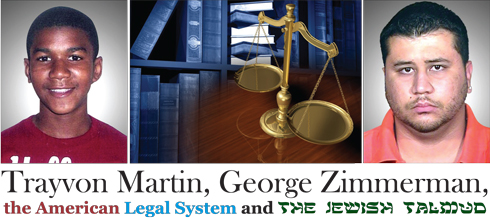
Trayvon and the Talmud

Posted on 08:34 by Unknown
According to the Nation of Islam web site www.FinalCall.com you ought to blame the tragic killing of Trayvon Martin on the Jews and the Talmud. The NOI is the organization of the Hon. Elijah Muhammad, Hon. Minister Louis Farrakhan, Jabril Muhammad and Mother Tynnetta Muhammad, all known for their lifelong anti-Semitism and racism.


It is not a surprise that in the article "Trayvon Martin, George Zimmerman, the American Legal System and The Jewish Talmud," the "NOI Research Group" published racist anti-Jewish and anti-Talmudic assertions of the NOI.  I cite specifically these offensive anti-Talmudic statements:
In Our Saviour Has Arrived, Mr. Muhammad further identified the society to which we all belong as “the Jew’s civilization,” using the possessive form—meaning that this civilization (its culture, science, industry, and government) belongs to the Jews. So if this is “the Jew’s civilization,” then we are, in fact, under Jewish Law—which comprises the codes and statutes found in the holy book of the Jewish religion, the Talmud...

And ONLY under the Jewish Law found in their Talmud does Trayvon’s murder and George Zimmerman’s acquittal start to make perfect sense....

But Black people should take the hardest look at this book, because the very origin of race hatred and race-based slavery entered the Western mindset by way of the Jewish Talmud...

The Talmudic mentality lives in Florida and in the hearts and minds of its people and their laws...
I sent this feedback to the NOI:
I am deeply sorry about the tragedy of the violent killing of a young boy. But the Talmud had nothing to do with Zimmerman or Trayvon. Your anti-Talmudic and anti-Semitic article offends me. I urge you for the benefit of your own souls to repudiate your baseless racism and to abandon your irrational hatred of the Jews.
You can tell the NOI that you disagree with their opinions by sending feedback to them.

To end hatred and bigotry, we must never practice and spread more hatred and bigotry. We must respond with compassion, with legislation and with justice.

Talmudic Books
Kindle Talmud in English
Read More
Posted in antiSemitism, Holocaust, islam, politics, talmud | No comments

Tuesday, 2 July 2013

Summer Sale -- We Reduced Prices on Our Talmudic Books

Posted on 06:50 by Unknown
Summer Sale. Wow. Our Talmudic Kindle Book Prices are Reduced!

Kosher Talmud: Hullin $.99

God's Favorite Prayers $2.99

Define Judaism: Ten Seminars $2.99

God Bless You: The Origins of Jewish Prayers and Blessings $2.99

Eleazar: Rabbi, Priest, Patriarch $2.99

Kosher Prayers: Talmud Yerushalmi Berakhot $2.99

Rashi: The Greatest Exegete $.99

Six People You Meet in Synagogue $.99

Whence and Wherefore $2.99
Read More
Posted in bible, book club, books, Holocaust, kabbalah, kaddish, meditation, money, politics, prayer, rabbis, religion, synagogues, talmud, Talmudic Books, universities, yeshiva, zionism | No comments

Sunday, 9 June 2013

The Daily Beast: Dear Rabbi: Should I Shoot Women?

Posted on 11:21 by Unknown
It happens. When you practice irrational thuggery in the name of religion it does not take long for an impressionable young person to get a really wrong idea. On the Daily Beast we read, "Dear Rabbi: Should I Shoot Women of the Wall?" by Sigal Samuel on Jun 6, 2013.

Fortunately (did we reach rock bottom yet?) there was no violence today as women prayed at the wall under a heavy police guard. It's getting clearer every day that Orthodox Judaism has decided to resort ever more often to bullying and thuggery against what it sees as weak Jewish opponents - women who want to pray. Not brave; not heroic. But the legacy of bullying vulnerable women via rabbinic decree goes back a long way to illustrious roots.

The Daily Beast reported, "In a disturbing QandA session, a 17-year-old Jerusalem yeshiva student asked a rabbi in an online forum whether it’s permissible under Jewish law to shoot and kill members of the liberal prayer group Women of the Wall when they gather at the Kotel. The boy was arrested today after Rabbi Baruch Efrati alerted police to the question—which, true to the rabbinic tradition of she’elot u-teshuvot (responsa literature, literally “questions and answers”), he nonetheless deigned to answer...."
Read More
Posted in israel, orthodox, prayer, rav, soloveitchik, talmud, women | No comments

Friday, 7 June 2013

JStandard: Dear Rabbi on Standing for the Sh'ma and Wearing a Tie in Synagogue

Posted on 08:52 by Unknown
Your Talmudic Advice Column by Rabbi Dr. Tzvee Zahavy
Dear Rabbi,
I don’t understand why we Jews in most synagogues sit when we recite one of our most important prayers – the Sh’ma. I have heard that it is permitted to recite this core affirmation of our faith either sitting or standing. Why then do we most commonly choose to sit when reciting it?
Wants to take a stand
Bergenfield
Dear Wants:
Other rabbis offer social and historical reasons to explain the postures that we prefer for praying. I prefer to listen to the contents of each prayer and understand how its distinct personality dictates its proper postures.
Consider, by contrast, that because of its personality we do stand to recite the Amidah. That prayer is a formal set of rabbinic blessing-declarations, containing praises and petitions that express a mixture of theological, personal, communal, political, and national beliefs and aspirations.
When I recite the words, to me it seems as if I am a priest performing a repeated ceremonial rite at the altar in the Temple in Jerusalem. Just as a priest stands up to perform his official public actions, it makes sense to me that I stand up and perform this prayer.
I find in the Sh’ma an altogether other form and personality. It’s easy to see that this expression of beliefs and values comes directly from carefully chosen Torah passages that emphasize a special subset of Jewish values and beliefs. The texts emphasize that we should love our one God, who keeps accounts and rewards and punishes us based on our actions. The passages further underscore that we should patronize our scribes — that is, we should wear their t’fillin on our bodies and affix their mezzuzot to our homes.
To me the Sh’ma encompasses the personality of Torah study and the values of the scribes who write our texts and who keep our accounts. Study, writing, and accounting are done almost always while sitting down at a table or desk. And so, since the contents and personality of our prayer dictates the posture of our prayer, I find it altogether fitting and proper that we should sit down like scribes and students to recite the Sh’ma.


Dear Rabbi,
I am sad for my good friend, a respected community leader and a member of a local Orthodox synagogue for many years, who does not like to wear a tie. His synagogue follows an idiosyncratic rule that no matter how nicely dressed he may be, a man who does not wear a tie cannot receive an aliyah to the Torah on a Shabbat or a holiday. So my friend has not received an aliyah to the Torah on any of those days for many years, even on the special occasions of his parents’ yahrzeits. It hurts me to see him suffer this arbitrary form of petty ostracism and humiliation. What should I do?
Fit to be tied
Teaneck
Dear Fit:
Common sense would dictate that you and your friend not go to places where you feel uncomfortable, even if it is a mere trifling practice that creates a sense of annoyance and intimidation for you. You know that an Orthodox synagogue must follow the many laws and customs that govern who should receive an aliyah. For example, a Cohen receives the first aliyah, and a Levite gets the second. A man who has a yahrzeit often gets precedence, and so does the father of a newborn child and a groom before his wedding. Major donors to a synagogue get some preferential treatment, as do important rabbis. I’ve noticed also that the gabbai who allocates aliyot gets his fair share of them too. And a woman is not called to the Torah at all.
You may know that some non-Orthodox Jews find the exclusion of women from this process of public honors to be troubling or even offensive. Orthodox spokesmen point out that women receive due respect and honor in their community, just not by receiving aliyot.
Forty years ago, when I asked Rabbi Joseph B. Soloveitchik about the possibility of women receiving aliyot in an Orthodox minyan, he quipped to me, “When women write the checks, then they will receive the aliyahs.” The Rav dodged my inquiry. I understood his reply to be a clever observation or a social comment, but not any halachic guidance.
Now, the synagogue that you describe in your question definitely created for itself a heightened odd character when it adopted an additional “tie rule” to further govern its members’ roles and aliyah-rights. Even if its eccentric practice is an approved requirement of synagogue committees, officers, and boards, it still fits the category of a socially undesirable “because-we-say-so” intimidation.
That said, you and your friend may be able to ignore and rise above this nonsense if you keep in mind that Moses, King Solomon, Jeremiah, Rabbi Akiva, Maimonides, the Vilna Gaon, and many other great non-tie-wearing-Jews would not be offered a Torah honor if they somehow, via time and space travel, showed up in your suburban shul.
The Dear Rabbi column offers timely advice based on timeless Talmudic wisdom. It aspires to be equally respectful and meaningful to all varieties and denominations of Judaism. You can find it here on the first Friday of the month. Send your questions to DearRabbi@jewishmediagroup.com


Check Out Talmudic Books
See the Kindle Talmud in English
Ponder Whence and Wherefore
Experience God's Favorite Prayers
Read More
Posted in bible, prayer, religion, synagogues, talmud | No comments

Sunday, 26 May 2013

Music Video: Talmud Beach - Time on Highway 5

Posted on 08:17 by Unknown
Great name for a band. Nice sound. I like it. Except the end is a little strange...


Talmud Beach – Time On Highway 5 from Hevosburger on Vimeo.
Read More
Posted in music, talmud | No comments

Friday, 24 May 2013

The Talmud is Not Like a TV Series

Posted on 07:25 by Unknown
The Forward's comparison of the Talmud to the TV series Arrested Development is a flop.

Simply put - I don't know what Ezra Glinter is talking about in his column when he says that the Talmud's, "discussions wander into areas that are only tangentially related." It's important to know what that means because that is one basis for his comparison between the Talmud and the TV series. The Talmud that I know does not wander tangentially.


The other point Glinter makes is that the TV series and the Talmud have recurring interrelated tropes:

...putting those pieces together is not so different — in a way — from connecting the parts of “Arrested Development” on the basis of recurring jokes. James Joyce famously remarked of “Ulysses” that “I’ve put in so many enigmas and puzzles that it will keep the professors busy for centuries arguing over what I meant, and that’s the only way of insuring one’s immortality.” And in fact, both the Talmud and “Arrested Development” are similar in this respect to “Ulysses,” with its immense web of internal references and allusions.
I'm thinking why not throw in Superman comic books, Golf Digest Magazine and the Wall Street Journal? Lots of interrelated tropes in those works. 

Bottom line, if you don't pay any attention to the contents of the TV series, of James Joyce and of the Talmud, and if you have imbibed a large quantity of alcohol or some chemical substance, then the comparisons at the Forward make perfect sense. Otherwise, not really. The Talmud is not a stream of consciousness about Dublin Ireland on June 16, 1904. The Talmud is not a comedy about a fictitious Bluth family from Newport Beach, California. Content does matter when you make comparisons, even attempted comical comparisons.
Read More
Posted in books, film, humor, talmud | No comments

Thursday, 16 May 2013

Top Ten Reasons We Eat Dairy on Shavuot

Posted on 19:48 by Unknown
It seems we can never remember exactly why we eat dairy on Shavuot. Multiple thanks to our good friend who researched and thought about this question and sent us a retrospective for this year and reminder for years to come.

After immersing myself and my family in milk, cheese, eggs and noodles for the past two days, the question remained, why? Why do we eat dairy on Shavuot? Here are the top ten reasons that I came up with.

My first thought was to look for some Biblical or Talmudic reason and for that, I turned to "The Jewish Book of Why", which gave three reasons:

1. "Dairy foods should be eaten on the day the Tora was received on Mount Sinai because the words in the Song of Songs, 'honey and milk under thy lips' (4:11) imply that, like milk products and honey, the words of the Tora are pleasant and good for our spirits".

2. From Exodus 23:19: "'The choicest first fruits shalt thou bring to the House of the Lord. Thou shalt not cook a kid in its mother's milk.' The 'first fruits'... refers to the Shavuot holiday. The second part... is taken to mean that the two main dishes to be served at the holiday meal are to be first a dairy dish, followed later by a meat dish".

3. According to a legend repeated in "The Jewish Book of Why", the Israelites returning from Mount Sinai did not have enough time so slaughter an animal and instead made the quickest possible meal, which was dairy.

I don't find any of these explanations convincing, so I turned to the experts. We are, after all, talking about food, so where better to look than in Jewish cookbooks? So, here we go:

Joan Nathan, noting the origin of Shavuot as a harvest festival in the iconic "The Jewish Holiday Kitchen", asks "how do dairy dishes fit into a barley harvest festival?" and she gives the following explanations:

4. "At this time of year...such foods are eaten because of the large amount of cheese produced. Churning and cheesemaking are common features of spring harvest festivals the world over, when goats, sheep, and cows begin to graze more and thus produce more milk."

But wait, there's more from Joan Nathan:

5. Psalm 68:16-17 refers to Mount Sinai as the "mountain of peaks (har gavnunim). She notes that gavnunim comes from the same root as gevinah, Hebrew for "cheese". "Thus (writes Joan Nathan), it could also be called Cheese Mountain, a common folk image."

6. Another reason Nathan cites is a follow-up to Reason #3, in which the Israelites returning to camp after receiving Ten Commandments or Torah, found that they had been gone so long that their milk turned sour and was made into cheese.

7. Nathan cites another rabbinic source which says "the Israelites fasted while they went to receive the Ten Commandments and returned so hungry that they drank milk immediately rather than go through the long process of preparing a meat meal."

Marlene Sorosky's "Fast and Festive Meals for the Jewish Holidays" refers to Reason #4 above, but suggests there is an abundance of milk, rather than cheese, and to another explanation

8. that "the Hebrews abstained from eating meat the day before they received the Torah".

9. Sorosky also suggests that "perhaps it's because the whiteness of milk is symbolic of the purity of the Torah".

So I offer Reason #10. Yes. Let's eat dairy meals because they're fun to make, and when the holiday is over, you can work off all that cheesecake and those blintzes.

Check Out Talmudic Books
See the Kindle Talmud in English
Ponder Whence and Wherefore
Experience God's Favorite Prayers
Read More
Posted in bible, humor, israel, kosher, religion, talmud | No comments

Friday, 10 May 2013

JStandard: Do Angels Speak Aramaic?

Posted on 14:48 by Unknown
My Dear Rabbi column (May 3) sparked an urgent letter to the editor at the Jewish Standard. I answered it.
The Dear Rabbi Column, “ ...based on timeless Talmudic wisdom” (May 3), writes the following about the Kaddish: “Yet this prayer is especially apropos for a mourner because we believe that it is the Aramaic praise that the angels recite in God’s presence in the heavens.”

1.The Talmud (Shabbos 12 A) states that the angels do not understand and certainly do not communicate in Aramaic.

2.The prophets, Isaiah 6 and Ezekiel 3, inform us of the praises that the angels recite to God, verses that are incorporated in the daily prayers as the Kedusha, not the Kaddish.

3.The rabbis have explained that the unique quality of the Kaddish, which elevates it even beyond the Kedusha ( Berachos 21 B), derives from the fact that it is the result of human initiative.

Israel Polak
Teaneck

Dear Rabbi, aka Rabbi Dr. Tzvee Zahavy, replies:

I thank Mr. Polak for his letter. My column targets the issues of people, not of angels. Since I have not yet been to heaven, I can only speculate on the language skills of angels and their activities based on the assertions of our traditions. The Talmud passage Mr. Polak refers to cites the individual view of one rabbi regarding the language skills of angels. Other authoritative rabbis in the Talmud and later times argue that some angels do know Aramaic or that the question is moot, because angels know what you are thinking. Putting the language and angel issues aside, I do agree, as I proposed in my column, that the Kaddish is a powerful prayer of praise, a “human initiative” that mourners recite here on earth to act as if they are intercessors to gain heavenly immortality for the soul of a departed loved one.
Check Out 45 Talmudic Books
See the 36 Volume Kindle Talmud in English
Ponder the Questions of Whence and Wherefore
Experience God's Favorite Prayers
Read More
Posted in humor, kaddish, rabbis, talmud | No comments

Wednesday, 8 May 2013

Happy Mishna Day

Posted on 12:48 by Unknown
On this day in history the first Mishna was printed. Joshua Solomon ben Israel Nathan Soncino, the first member of the distinguished family of printers, completed publication of the work in 1492.

From Ha`aretz by David B. Green:

On May 8, 1492, Joshua Solomon ben Israel Nathan Soncino completed publication of what is believed to be the first printed edition of the Mishna. The text is accompanied by Maimonides’ commentary on the Mishna, in Hebrew translation.

Joshua Solomon Soncino (died 1493) was the first member of the distinguished Soncino family of printers to publish a book, a tractate of the Talmud (Berakhot), which he created in 1484. (Johannes Gutenberg had produced his first block-printed Bible in 1455.) The family took its name from the Italian town of Soncino, in northern Italy, east of Milan, where it lived for some time, but it could trace its origins to a German Jew called Moses of Speyer, in the 14th century.

The family moved its press around frequently, depending on the political situation it encountered, so that Soncino was just one of its homes. For example, Joshua Solomon Soncino was based in Soncino from 1483 to 1488 and in Naples from 1490 to 1492, when the Mishna was published. That year, many Jews expelled from Spain found a refuge in Naples, whereas by 1495, Naples was under French control, and things were far less comfortable for Jews. By 1510, Spain had conquered the city, and began expelling the Jews outright. By then, however, the Soncino press was operating out of Pesaro, to the southeast, on the Adriatic coast.

The most prolific and accomplished member of the family was Gershom ben Moses Soncino (died in 1534), the nephew of Joshua Solomon. He set up a press in Thessaloniki in 1527, and another in Istanbul three years later. Gershom published more than 100 different volumes, branching out from Hebrew into Greek, Latin and Italian. The last book produced by the family was issued in Cairo in 1557.

The Mishna comprises part of the book we know today as the Talmud. It is a collection of rabbinic commentaries and explications of the commandments as delineated in the Torah, and was redacted (edited) early in the 3rd century C.E., by Rabbi Judah Hanasi. Its six “orders” break down into 63 tractates that organize the commandments according to topic, for example Sabbath or the laws related to sacrifices in the Temple.

During the three centuries that followed the completion of the Mishna, the rabbis supplemented the Mishnaic text with additional commentaries. These commentaries constitute the Gemara. Together the Mishna and the Gemara make up the Talmud, which was edited into two versions, the Jerusalem -- or Palestinian -- Talmud, finalized around the year 400, and the more definitive Babylonian Talmud, completed about a century later.

The 1492 Soncino Mishna also contained the commentary of Rabbi Moses ben Maimon, who lived 1135 to 1204. The Rambam’s Commentary on the Mishna was composed in Judeo-Arabic, and finished in 1168. In it, he takes into account not only the Palestinian and Babylonian Talmuds, but also the Tosefta and midrashic works.

The Soncino Naples edition of the Mishna was followed by a Prague version, edited by Yom Tov Lipman Heller, with his own commentaries, in 1614-17. But the basis for most Mishnaic study today is the Romm publishing house edition, published in Vilna in 13 volumes in 1908.

Check Out Talmudic Books
See the Kindle Talmud in English
Ponder Whence and Wherefore
Experience God's Favorite Prayers
Read More
Posted in books, haaretz, Mishnah, talmud, Talmudic Books | No comments

Thursday, 25 April 2013

Update: Rabbi Michael Broyde is Sinking Fast

Posted on 18:06 by Unknown
Yet another update 4/25/2013: 

The Jewish Channel's Steven I. Weiss reports that it turns out that Broyde himself (posing as David Weissman) circulated the story that he was being considered as a candidate for the British Chief Rabbi post. And so it was Broyde who called Broyde "the finest mind of his generation" in the name of Norman Lamm in a claim to a reporter at The Times of Israel on 8/8/2012. More on all of this here.

Isn't that nice. But we wonder now. Why stop there if you are making all of this up? Why not have Rabbi Lamm call you, "The Greatest Jew Since Moshe Rabbenu"? Or why not have the Lubavitcher Rebbe call out from his grave and proclaim that you indeed are the Messiah and that he is but your humble servant?

On our 4/15/2013 update we said:

We wrote about a book by Michael Broyde in 2011 and reposted it in 2012.

Due to the recent revelations about Broyde, we repost our review again. In 2011 in short we concluded that Broyde's book called "Innovation in Jewish Law" is not about any innovation and not about any Jewish law. It is about the atrophy of a prayer and discusses the customs and regulations for that prayer. Accordingly we thought that the title was misleading. Nevertheless, at the time, we politely complimented the book as "learned." Here is our 2012 post...


The Times of Israel reported (8/8/12) that Rabbi Michael Broyde "emerges as frontrunner for British chief rabbi post."

A "source close to the search process" supplied information on the process to the TOI including this tidbit, "There has also been strong lobbying for Broyde by the chancellor of Yeshiva University, Norman Lamm, who in a letter called Broyde 'the finest mind of his generation,' says the source."

Not knowing this reputation, we commented on a book by Broyde on 2/20/2011 on this blog. We found the book filled with imprecisions of language and analysis and overstatements of broad conclusions drawn from a non-representative sample of religious liturgical regulations (called by the author "laws"). We were not overly impressed with the work for these additional reasons that we gave back in 2011....

The author of Innovation in Jewish Law: A Case Study of Chiddush in Havineinu has wonderful credentials as the publisher tells us:

Michael Broyde is a Professor of Law at Emory University School of Law and a Senior Fellow and a Project Director at the Center for the Study of Law and Religion at Emory University. He was the founding Rabbi of the Young Israel of Toco Hills in Atlanta, GA, and serves as a rabbinical judge (dayan) at the Beth Din of America, the largest Jewish law court in America. Rabbi Broyde received advanced rabbinical (dayanut) ordination at Yeshiva University and a Juris Doctor from New York University, and has published more than seventy five articles and three books on various aspects of Jewish law, ethics and religion.
The book he published has a stated agenda:
Havineinu, an abridged version of the daily prayer (Shemoneh Esreh), was once a useful, well known prayer said in pressing situations. Because it is brief, it is an ideal prayer for dangerous situations where one's ability to pray or concentrate on the longer text of the daily prayer is compromised.

Yet, over the last several hundred years, the recitation of Havineinu has functionally ceased. This book addresses the legal analysis used to explain that change. This shift in perspective has been gradual, yet the resulting profound change in the interpretation of halachic texts has had a direct influence on the understanding and practice of Jewish law. This book examines the sources and processes that have shaped the contours of Havineinu over time, exemplifying the subtle changes that occur in the development of halacha as a result of chiddush -- innovation.
We have had the book since November, when we read it, nearly four months, and now without much enthusiasm, offer a few observations on it, not all that positive.

Over all, the author is an expert in his fields of general American law and Talmudic learning. He commands and controls the texts and concepts of each of these distinct areas of learning. And he demonstrates an inquisitive mind that seeks to state and resolve problems within the areas of his expertise.

His goal here is to, "Trace the development of the halacha in on particular are: the recitation of the abstract, abridged for of Shemoneh Esreh commonly referred to in the rabbinic literature as Havineinu. (page 5)." He notes that this is an example in, "a relatively small, self-contained area of Jewish law, affording readers an opportunity to not only immerse themselves in study, but also to encounter the relevant sources with a degree of confidence and even mastery... there are many aspects relevant to Havineinu that could not be fully addressed in this book, and these omissions should not be viewed as oversights." But why omit them? We are not told.

It would be useful to learn about how laws develop and change over time, especially if the subject matter were major, central religious practices affecting economy, society or religion. Our teacher, Rabbi Haym Soloveitchik engaged in such work and produced important studies on the intersection of laws of religion and the economics of wine production and on the practices that governed money lending in the middle ages. (See his influential books Halakha, Economy and Self-Image, Jerusalem 1985, Responsa as an Historical Source, Jerusalem 1990, and Principles and Pressures: Jewish Trade in Gentile Wine in the Middle Ages, Tel Aviv, 2003.)

But this study does not explore such a case. It looks at the atrophy of a short religious prayer and concludes that such a "process is gradual; decisors of Jewish law examined the sources and interpreted them in light of their times and challenges (p. 7)."

The author hopes, "that readers will come away with a newfound understanding of and appreciation for the mechanisms of analysis, interpretation, and change that are central to the methodology of Jewish law."

And then he adds, "In truth, the journey of chiddush cannot be described. It must be experienced. Thus, we embark."

What follows in this book though is not an experiential journey. It is a learned review of ancient, medieval and modern sources on the subject of the recitation of the prayer in question with many intermediate conclusions and observations about the practice of reciting or not  reciting this prayer.

The final conclusion of the book is, "Sometimes technology and sociology change, and thus applying the basic principles formed in the Talmud to a later time requires innovative application of the halachic texts." We confess to not understanding this statement. Next, "Prayer in an ancient, dangerous, and bookless society is quite different from prayer in a modern, safe, and text-rich place." We do understand this obvious point, and it is obvious. And next, "As we observed earlier, the needs of a situation often call for revisiting the corpus of Jewish law texts..."  We do not follow, once again. And then, "...honestly analysing and interpreting the sources, and perhaps reviving a dormant line of thinking within the tradition -- an opinion or opinions that may once again prove relevant." Missing here is the description of the thinking -- the abstraction of concepts and any account of actual judicial, legal or liturgical creativity, i.e., ideas.

And the last point, "That is the essence of innovation in Jewish law."

We disagree with the basic premises, methods and resultant conclusions of this study. The author has used a coarse category in his analysis -- "innovation" -- when he should have been refining a variety of movements within the legal discussions, mainly justifications and textual manipulations in this case for accounting for the atrophy of a secondary liturgical practice, in no way innovative in any constructive sense, not generative of any idea or concept -- hence not worthy as we see it of the title description "innovation".

Innovations of significance do appear in Jewish law, especially in its intersection with Jewish-Gentile relations, in its control of marital and internal social conventions, and, hardly ever studied, its profound and long standing influence over the individual psyche of every Jew.

This exceedingly learned book is not about any of these, nor does it articulate a theory of any transportability for the study of other cases. It examines the presumptive demise of one short prayer from the practices of Jewish life and does not explain at the end why that matters, if at all it does.
Read More
Posted in books, morton smith, prayer, rabbis, synagogues, talmud, universities, yeshiva | No comments

Monday, 22 April 2013

Free Download of Reuven Brauner's Revised Version of Pirkei Avos from Talmudic Books

Posted on 17:29 by Unknown
Free: Updated, revised version of Pirkei Avos with the complete Hebrew text of the Perek and Reuven Brauner's translation. He says, "I added footnotes based on the commentary of Prof. Hanoch Albeck in his commentary on Mishna, which I found succinct and enlightening."

The new Pirkei Avos is now more useful and user-friendly, and looks wonderful when printed out. Nice for these days between Pesach and Shavuous, too. Great to read to the kids at the Shabbos table.

Talmudic Books
Kindle Talmud in English
Read More
Posted in books, rabbis, religion, talmud, Talmudic Books | No comments

Introduction to Judaism - Online Course

Posted on 16:45 by Unknown

Open publication
Introduction to Judaism
Online Course Guide
Professor Tzvee Zahavy
Read More
Posted in books, history, Holocaust, israel, kabbalah, Maimonides, talmud, universities, yeshiva | No comments

Talmudic Chaos v. Halakhic Linearity in the Logic of Judaism

Posted on 06:07 by Unknown
In 2011 we published an article, "In Search Of The Logic Of Judaism: From Talmudic Chaos To Halakhic Linearity," which you can download and read from the link here.   

We used mathematical ideas to differentiate the linear organization of the halakhah from non-linear thinking of the Talmud. Our abstract says: 

In this paper we examine some common views of scholars concerning the idea of the halakhah in Judaism. We then explain why their methods failed to account for the main philological and historical evidence regarding the term from the Talmudic texts. Then we suggest as a heuristic explanation that the logic of the Talmud defies linearity and can be discussed productively using chaos theory.

The authors in this volume cover varied topics with sophistication and erudition. The publisher's page provides details about the book, as copied below. 

Schumann, Andrew, Tzvee Zahavy, Avi Sion, Aviram Ravitsky, Stefan Goltzberg,  Judaic Logic

Title:Judaic Logic
Series:Judaism in Context 8
Publisher:Gorgias Press
ISBN:978-1-61719-194-7
Language:English
Format:Hardback, Black, 6 x 9 in
  1. Introduction, Andrew Schumann
  2. In Search of The Logic of Judaism: From Talmudic Chaos To Halakhic Linearity, Tzvee Zahavy
  3. Maimonides’ Use of Logic In The Guide of The Perplexed, Joseph A. Buijs
  4. Structure And Sources of The Hebrew Commentary on Petrus Hispanus's Summulae Logicales By Hezekiah Bar Halafta, Alias Bonenfant De Millau, Mauro Zonta
  5. Aristotelian Logic and Talmudic Methodology: The Commentaries on the 13 Hermeneutic Principles and Their Application of Logic, Aviram Ravitsky
  6. A Fortiori Reasoning In Judaic Logic, Avi Sion
  7. The A Fortiori Argument In The Talmud, Stefan Goltzberg
  8. Sense In Making: Hermeneutical Practices of The Babylonian Talmud Against The Background of Medieval And Contemporary Views, Sergey Dolgopolski
  9. Judaic Syllogistics: The Baba Qama From The Logical Point Of View, Andrew Schumann
  10. Symbolic Computation And Digital Philosophy In Early Ashkenazic Kabbalah, Yoel Matveyev 
The Publisher's Description of the book tells us: 

Judaism differs considerably from other theistic religions. One of the main features is that Jewish religious laws are not dogmatic but based on specific legal reasoning. This reasoning was developed by the first Judaic commentators of the Bible for inferring Judaic laws from the Pentateuch. The book is about Judaic reasoning from the standpoint of modern logic. Its first goal is to define Judaic logic. This logic was aimed to be a methodology for deducing religious laws. The idea that this methodology can be viewed as original logic that is not less deductive than Aristotle’s logic did not emerge until the Late Middle Ages. At that time Medieval Hebrew works about Judaic reasoning were influenced by Arabo-Islamic philosophy as well as by Latin Scholastic logic. In this volume we discuss different forms of influence of the Aristotelian logic on developing the Talmudic methodology. Then we aim to sketch semantics for the Judaic reasoning, explicating Talmudic case study and Rabbinic situation analysis to develop general approaches to formalizing Judaic logic. This consideration of Judaic logic has relevance for modern logic and analytic philosophy and may be compared with the contribution made by the formalization of Ancient Greek logical systems to 20th-century logic and language philosophy.
Read More
Posted in books, Maimonides, rabbis, religion, science, talmud, universities | No comments

Saturday, 13 April 2013

Tiger Woods Gets Talmudic Defense at the Masters

Posted on 19:48 by Unknown
The Times reported that golfer Tiger Woods was penalized for an illegal ball drop at the Masters at Augusta, but was not disqualified.

He was not disqualified based on a clever Talmudic interpretation of the golf rules. Although he did violate one rule, another rule says that he need not be disqualified for that violation based on his intent and the intent of others at the time of the infraction and at the subsequent time of his signing his scorecard for the round.

The Times' explaination makes us wonder whether the PGA soon will be hiring Talmudic rabbinic authorities  to help them interpret their own complex codes of rules:
...On the 15th hole, Woods’s third shot hit the flagstick and rolled off the green and into the water. After taking a one-stroke penalty, Woods dropped his ball in the fairway, a few feet behind his original divot to give himself a more comfortable distance to the pin for his wedge shot. It was a good tactic — his ball stopped 3 feet from the pin — but it also violated Rule 26, which states that when choosing to drop near one’s original divot, a golfer should play his ball “as nearly as possible” at the spot from which the first ball was played.

“You know, I wasn’t even really thinking,” Woods said Saturday. “I was still a little ticked at what happened and I was just trying to figure, ‘O.K., I need to take some yardage off this shot.’ “ He added, “Evidently, it was pretty obvious I didn’t drop it in the right spot.”

Before Woods finished his second round, a television viewer texted a Masters rules official to call attention to the infraction. The rules committee, led by Fred Ridley, reviewed Woods’s drop and saw nothing wrong. In a television interview after his round, Woods said he purposely dropped the ball two yards behind his first divot, which raised some questions in Ridley’s mind.

Ridley spoke with Woods on the phone Friday night and met with him at the club on Saturday morning. After hearing Woods’s explanation, Ridley said, “I told Tiger that in light of that information that we felt that he had, in fact, violated Rule 26 under the Rules of Golf and that he was going to have to be penalized.”

Woods could have been disqualified for signing an incorrect scorecard. In allowing him to remain in the field, the Rules Committee invoked Rule 33-7, which allows a penalty of disqualification to be waived or modified in exceptional cases. The rule was instituted in 2011 to protect the players from retroactive disqualifications in instances in which armchair rules officials called in from home, as happened Friday, to report incidental violations that can be picked up on high-definition telecasts, like touching a twig on a backswing or a ball oscillating on the green.

“If it was done a year or two ago, whatever, I wouldn’t have the opportunity to play,” Woods said. “But the rules have changed, and under the Rules of Golf I was able to play.”

The committee’s decision not to disqualify Woods, who has 77 tour wins, for hitting his ball from the wrong place reinforced how the Rules of Golf, once as black and white as records on a page, have grown blurry. From the definition of a legal putting stroke to the enforcement of slow play, there has been confusion about the way to interpret and apply the rules....


Read More
Posted in sports, talmud | No comments

Tuesday, 2 April 2013

What made Rav Soloveitchik a great Talmud teacher?

Posted on 20:13 by Unknown


When we published this short essay in 2005 in the Commentator, the YU undergraduate newspaper, we were proud to extol our rebbe in the most glowing terms we could imagine. After further review, as they say in the NFL, we still feel that way...

R. Joseph B. Soloveitchik: Indelible Beginner


In the fall of 1969, as a college senior, I started four years of learning in Rabbi J. B. Soloveitchik's Talmud shiur. In my family we venerated the Rav above all other rabbis. We spoke of him with the utmost reverence that one would bestow only upon a truly saintly man.

I received in those four years so much from the Rav: a methodology of learning, a theology of Judaism and, above all, a secret of pedagogy.

Let me explain briefly this last point. The Rav would sometimes in an occasional moment of surprising self-reflection refer to himself as a "poshutte melamed," just a teacher of beginners. That statement puzzled me. Surely the Rav was the greatest sage of our generation. How could he represent himself in this ordinary way?

One day I accidentally discovered what he meant. We convened on the fourth floor classroom for our shiur - about to begin studying a famous sugya in Massechet Shabbat. That day I was using a Talmud volume from a small shas that my uncle had used when he studied in the Rav's shiur many years earlier, in the fifties. I found interleaved in this book a page of my uncle's notes (i.e., Rabbi Noah Goldstein, my dad's brother) from the Rav's discourse on this sugya fifteen or twenty years earlier.

As we started reading the text, the Rav began to perform the magic that he was so good at. He made it seem to us all as if he was looking at the text for the very first time. He made every question he raised appear as if he was discovering a problem afresh. He made every answer and explanation that he examined in Rashi or the Tosafot appear to us as if it was new to him - a complete surprise.

The Rav dramatically unfolded a complex and intricate exposition of the sugya - and each stage of the discourse seemed so new and alive. Yet as I followed along and I read in my uncle's notes, I saw that the Rav was repeating each and every element of the shiur exactly as he had given it years before, insight by insight, question by question and answer by answer. He had me convinced that he had just discovered every element of his learning. Yet I had proof in front of me to the contrary.

I saw that day how the Rav had the ability to make every act of learning a new, exciting and living revelation. I have striven to emulate him ever since to replicate this ability and to achieve as a learner and as a teacher some small element of this revelation.

Hanging over my desk as I write this I have a quotation from the great German Poet Rainer Maria Rilke, "If the angel deigns to come it will be because you have convinced her not by tears but by your humble resolve to be always beginning: to be a beginner."

I believe the Rav would agree.

//repost from 8/2009//
Read More
Posted in rabbis, rav, soloveitchik, talmud, universities, yeshiva | No comments

Thursday, 28 March 2013

Free at Last from Friday through Sunday: Six People You Meet in Synagogue

Posted on 08:50 by Unknown
For the Passover holidays, the Talmudic Blog and Talmudic Books is giving away a new book:  Six People You Meet in Synagogue.

In this book, the author, Tzvee Zahavy, presents six ideal personalities of Jewish prayer and their respective prayers.

This is a condensed version of the author's previous work, God's Favorite Prayers (Talmudic Books, 2011) where he first developed the notion of the six distinct prayer archetypes: the performer, the mystic, the scribe, the priest, the meditator and the celebrity.

Six People You Meet in Synagogue
For Kindle from Amazon: FREE for Passover -- from Friday through Sunday, March 29-31.

Check Out all the Talmudic Books
See the Kindle Edition Talmud in English
ALSO FREE 
for Passover -- Ponder the Questions of Whence and Wherefore -- FREE 
Read More
Posted in amazon, archetypes, Holocaust, kabbalah, kaddish, kindle, meditation, money, politics, prayer, rav, soloveitchik, synagogues, talmud, Talmudic Books | No comments

Monday, 25 March 2013

Free Passover Books

Posted on 08:34 by Unknown
This one is $.99 the rest are free for Passover from Talmudic Books - Soncino Babylonian Talmud Pesahim

Babylonian Talmud Pesahim deals with regulations for the Passover holiday, prohibitions of leavened food and prescriptions for the Paschal lamb. It is the third treatise of the order Mo'ed. It is divided into ten chapters.

Chapter ten deals with the Seder meal eaten on the evening of Passover; the four cups of wine, and the benedictions pronounced over them; the questions of the son and the father's answers and instructions; other benedictions and the Hallel.

From Talmudic Books special free for Passover by Reuven Brauner:

In preparation for Pesach- Laws of the Red Cow

For Pesach and particularly Seder Night- Laws of Korban Pesach

And for the days of Sefiras Ha’Omer - Pirkei Avos Synthesized

Not to mention the entire Reformatted Soncino Talmud and lots more goodies, at: Halakhah.com

and our Kindle books at Amazon: Talmudic Books for Kindle on the Talmud, Bible, Kabbalah and Prayer and  The Kindle Edition of the Classic Soncino Talmud in English
Read More
Posted in books, Passover, talmud, Talmudic Books | No comments
Older Posts Home
Subscribe to: Posts (Atom)

Popular Posts

  • Thanksgiving Turkey Drumstick Jack-O-Lantern Pumpkin Pie Table Song - A Lone Pumpkin Grew
    Thanksgiving will be upon us soon and we sing traditional holiday songs at our Thanksgiving dinner. Here are the words to one of our favorit...
  • Is Paul Volcker Jewish?
    No, we do not think that former Federal Reserve Chairman Paul Volcker is a Jew. According to reporter Roni Sofer of the usually reliable Is...
  • Is Carlos Slim HelĂș Jewish?
    No, Carlos Slim HelĂș is not a Jew. He is of Lebanese origins and a Maronite Catholic by religion. This Mexican businessman and philanthropis...
  • Is Sigourney Weaver Jewish?
    Now it is far-fetched that anybody would think that actress Sigourney Weaver is Jewish. No, Sigourney Weaver is not a Jew. The tall actress ...
  • Is Caroline Kennedy's Husband Edwin Schlossberg Jewish?
    Yes, Edwin Arthur Schlossberg is a Jew. All four of Schlossberg's grandparents were Russian (Ukranian) Jews born near Poltava and arrive...
  • Update on the Insults: A Battle Over a Book: Haym Soloveitchik v. Talya Fishman
    Our once-upon-a-time teacher at Yeshiva University has panned a new book about rabbinic cultural development. It's a veritable battle ov...
  • Free Download of the Soncino Talmud in English Online at Halakhah.com: 25,000+ satisfied customers a month
    The Soncino Babylonian Talmud English translation is online - at a site that is not anti-Semitic or polemical. Download the Talmud in Englis...
  • Rav Soloveitchik's Dissertation at the University of Berlin
    In honor of the 20th yahrzeit of the Rav's passing (on Hol HaMoed Pesach, the 18th of Nisan, in 1993) and of the 110th year since his bi...
  • Is Marissa Mayer Jewish?
    Yes, the new CEO of Yahoo!, Marissa Mayer is a Jew. Hat tip to our friend David who points out, "I find it interesting that Google, Fac...
  • Note to Self: Do not wear Geox shoes in the rain or snow. They have little holes in soles!
    We wear Geox shoes almost all the time nowadays. They are truly more comfortable for someone like us who mainly sits at a desk throughout th...

Categories

  • 9/11 (1)
  • Alan F. Segal (1)
  • amazon (33)
  • antiSemitism (14)
  • apocalyptic (1)
  • apple (11)
  • archetypes (35)
  • are-they-jewish? (73)
  • ariely (1)
  • art (18)
  • atlantic beach (3)
  • audio book (1)
  • barack (20)
  • baseball (2)
  • beyond belief (1)
  • bible (48)
  • bloggers (12)
  • bobby knight (1)
  • book club (3)
  • book serialization (14)
  • books (83)
  • boteach (2)
  • brooklyn (10)
  • buddhism (5)
  • christianity (59)
  • circumcision (3)
  • copyright (4)
  • daf yomi (4)
  • daphne (1)
  • dead-sea-scrolls (4)
  • dirty tricks (4)
  • egalitarianism (3)
  • einstein (2)
  • film (20)
  • footnote (2)
  • gay rights (12)
  • golf (8)
  • google (15)
  • haaretz (5)
  • haggadah (9)
  • Harvard (1)
  • hasidism (17)
  • health (36)
  • heath (1)
  • hebrew (18)
  • history (12)
  • Holocaust (18)
  • huckabee (1)
  • hullin (3)
  • humor (76)
  • inventions (30)
  • iPad (12)
  • iPhone (9)
  • Is-it-kosher? (46)
  • islam (19)
  • israel (108)
  • juergensmeyer (2)
  • kabbalah (12)
  • kaddish (6)
  • kindle (33)
  • kosher (16)
  • kugel (1)
  • kushner (1)
  • laptops (1)
  • lex talionis (1)
  • madoff (15)
  • madonna (4)
  • Maimonides (5)
  • meditation (22)
  • menorah (2)
  • Merkin (10)
  • microsoft (1)
  • Minnesota (8)
  • Mishnah (2)
  • money (65)
  • mormons (5)
  • morton smith (3)
  • music (29)
  • nazis (3)
  • netanyahu (1)
  • New York Jews (46)
  • norman lamm (5)
  • obama (19)
  • orthodox (86)
  • Passover (20)
  • politics (91)
  • pools (13)
  • prayer (92)
  • Purim (9)
  • rabbis (124)
  • rahm emanuel (1)
  • rav (15)
  • recipes (2)
  • religion (170)
  • schachter (1)
  • science (45)
  • shaiel (1)
  • sikhs (3)
  • smoking (2)
  • software (6)
  • soloveitchik (17)
  • soul (2)
  • sports (47)
  • statins (1)
  • supreme court (1)
  • Surfing (1)
  • synagogues (73)
  • talmud (117)
  • Talmudic Books (30)
  • teaneck (37)
  • terrorism (6)
  • texas (1)
  • Thanksgiving (4)
  • theodicy (1)
  • tim tebow (3)
  • universities (56)
  • videos (19)
  • wikipedia (1)
  • wine (3)
  • wingnuts (22)
  • women (64)
  • yeshiva (41)
  • yiddish (5)
  • youkilis (2)
  • zev zahavy (21)
  • zichron ephraim (12)
  • zionism (21)

Blog Archive

  • ▼  2013 (187)
    • ▼  August (5)
      • Free Download of the Soncino Talmud in English Onl...
      • Selichot are Not Outcries
      • Is Google NOW incredible or creepy? Is NOW kosher?
      • Is Israel's National bird the Hoopoe - Duchifat - ...
      • JStandard: My Dear Rabbi Talmudic Advice Column fo...
    • ►  July (30)
    • ►  June (23)
    • ►  May (25)
    • ►  April (30)
    • ►  March (33)
    • ►  February (17)
    • ►  January (24)
  • ►  2012 (313)
    • ►  December (31)
    • ►  November (23)
    • ►  October (16)
    • ►  September (15)
    • ►  August (20)
    • ►  July (20)
    • ►  June (34)
    • ►  May (19)
    • ►  April (38)
    • ►  March (39)
    • ►  February (31)
    • ►  January (27)
Powered by Blogger.

About Me

Unknown
View my complete profile